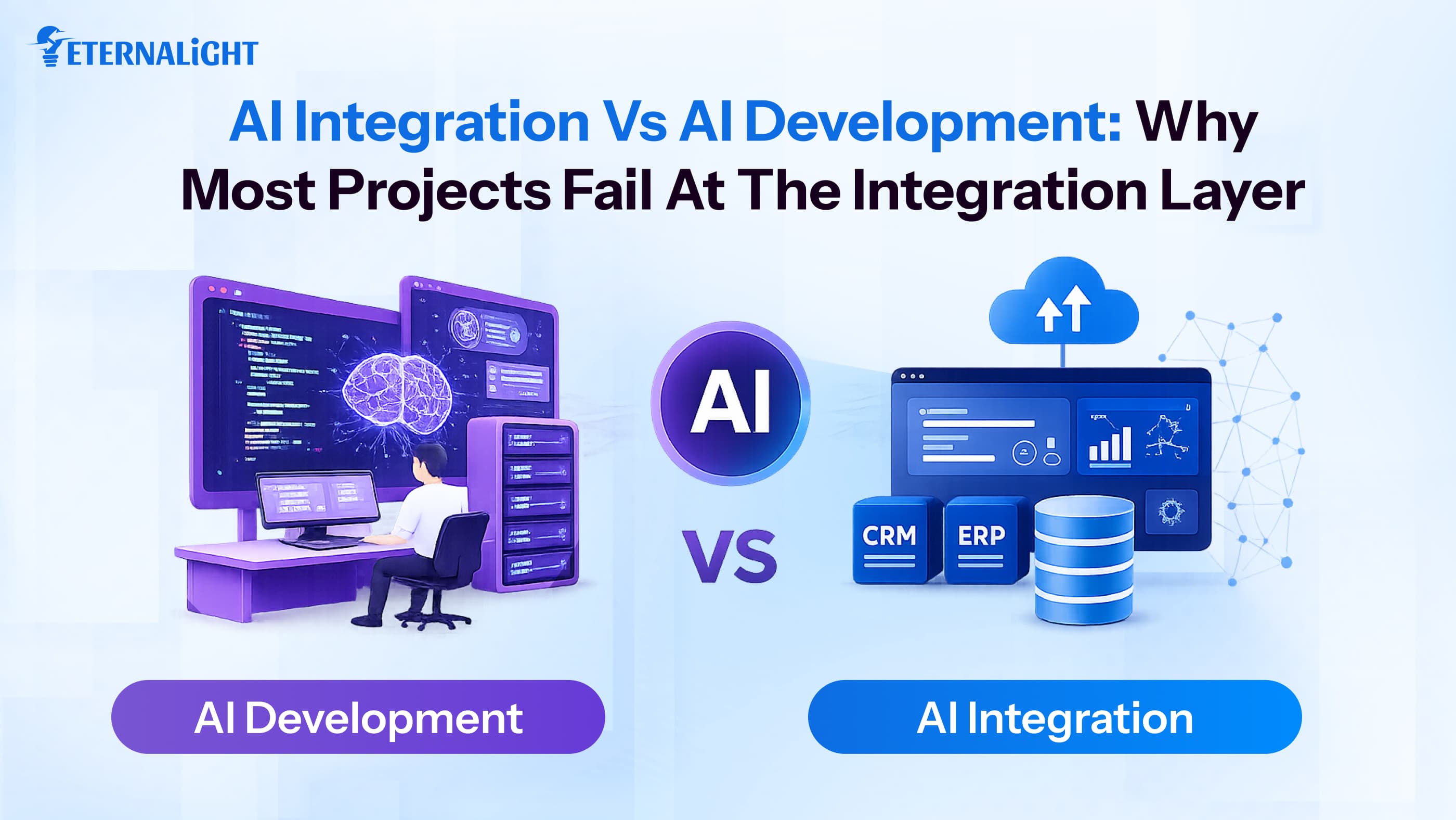
Do you think AI is just overhyped, or has it become an experimental step that is becoming a growth enabler for startups and enterprises?
The journey includes many elements, such as AI agents, chatbots, and large language models, that have built confidence in businesses through custom AI solutions. These solutions are helping improve customer experiences, efficiency, and automation across business operations.
Some AI patterns and integrations work perfectly for pilot projects during the initial development stage. However, when developers move these solutions toward deployment, things often become more complicated.
The agents and models may be trained well on existing data, patterns, and insights, so businesses expect the effort to deliver the desired results. But in reality, these solutions may fail to fit into legacy systems or integrate properly with existing workflows.
After investing hours of effort and resources, businesses may still struggle to deliver what they expected for end users. The reasons often come down to system compatibility issues, data readiness, planning, and execution.
In this blog, we will discuss the challenges and solutions involved in AI development vs. AI integration, and why businesses sometimes fail to deliver the results they expect.
Avoid Confusion Between AI Integration and AI Development
When we write or hear these terms, AI Integration and AI Development, in the first instance, for all the people who don’t belong to the technical or development world, will assume that these are the same. Most software companies keep them in the same category, which also creates confusion.
Whether we talk about the time, cost, output, or ownership, both are distinct.
What is AI Development?
AI Development means we’re actually building something from scratch, combining different modules and existing datasets, taking inspiration from clients' imaginations to tackle real-world problems. Not only are we creating, but we are also training the systems and keeping the data refined to fit them as they evolve.
Building any AI-powered software from scratch takes time, high-level engineering skills, and data readiness, as AI is the main driver, taking full control of the system.
While involved in AI development services, you have full control over the system and model, which can evolve over time and give you a competitive edge with a bunch of advantages.
What is AI Integration?
By integration, we mean embedding something into an existing tool or system. It takes less time and effort to manage real-world problems without indulging in extensive development or a long-term sprint plan. We can receive the outcome in a few days. As
- We don’t have to pour effort and time into intensive development practice
- Quick integration drives quick financial value
- Modernize existing system or tool
At Eternalight, we first listen to the client's requirements, business objectives, and current hurdles, and then take the initiative to build from scratch or integrate AI.
Comparison: AI Integration vs AI Development
Integration is like connecting the tools to extend the functionality of an existing system. Where the organization eagerly wants to launch something to improve rapid sales, visibility, and global reputation. AI development is a multi-step process for building systems and models. Here we are differentiating the aspects from the table below:
AI Integration | AI Development |
Elevating the level of capabilities with new tools for efficiency and automation of existing systems | Unlocking innovation: system and model building from scratch |
The provider company is the main owner and has the right to make any changes | Full ownership of the organization |
A few weeks are enough | 6 months to Years |
Quick value but need upgrade over time | Sustainable growth but slow returns |
Instant feedback | Longer development curve means need to wait for the client approval |
Subscription-based or one-time cost | Need a fixed amount for entire development, including the buffer for any uncertainty |
Low risk | High maintenance risk |
Problem: Why AI Projects Fail After Development
Suppose you have spent 6 months developing AI-powered software to address a complex problem. You have chosen the best tech stack with all the essential libraries and advanced-level features and functionalities. Training the product to leverage human-like intelligence through ML and LLM models to enhance its capabilities; it passed every test case, but the outcome still doesn’t meet expectations.
The product can’t generate accurate responses, fails to understand context, and is inefficient at delivering the best results.
Things become more complicated than before. Although you have tested the application before launch, when it is exposed to users, it may fail to process data as quickly, disrupting workflows.
From the first stage to the last, we have addressed all the pain points and worked on architecture design, tools, and backend support. But there’s still something missing that needs fixing, and that’s where AI integration becomes important.
Why AI Projects Fail at the Integration Layer?

You have a brilliant team to build AI systems and models with Llama, Mistral that can manage data privacy, latency, workflows, and other adoption considerations.
When they are given an in-house demo to prove the imagination and validate the operational design, it works fine in isolation during the pilot phase. But if the system and model aren’t defined by real-world constraints, it can hamper.
When the project is in the prototype phase, the data is limited; the scope is limited to traffic.
But when it reaches production and the final launch, traffic and data increase, coming from different sources in different formats. The system may be inefficient and fail to respond when the load exceeds.
The organization uses data warehouses to store data, but that data is unstructured, fragmented, or insufficient and not fit for an AI-driven model or system; before that, it needs to be organized and structured.
Also, some data is accessed and stored through CRM and ERP integration.
There is no verified source to confirm the truth. What seems comfortable to users can be a blocker.
Authentication and authorization access controls are absent during the prototype phase because they are handled only by the admin, but when it is delivered to real users, undocumented APIs and privacy concerns may expose it to cyber threats.
The prototype is only proof of the idea, but how it will function and respond in real life becomes clear when it is launched.
If compliance and security are overlooked at the initial stage, it will lead to technical security breaches, leaving your project at risk.
The project failed during the integration layer because the product is not built keeping the real world in mind. You paid attention to every technical aspect but overlooked minor details that caused the project to fail. Budget planning, disconnected workflows, and a lack of monitoring are among the major reasons for failure.
Common Challenges During AI Integration
You have followed the requirements and built an AI-driven solution, but when it is connected to real systems, common challenges like data workflows, and security breaches, bugs and logging are encountered.
During production, QA tested them, and the system performed well in the internal grow-up team, but just before the launch, it encountered issues.
- Legacy System Limits AI Adoption: Some legacy systems don’t meet essential system requirements, so integration couldn't occur, and the workload remains as it is.
- Poor Data Migration: Data backup was not performed properly during the move to the production stage.
- Undefined ownership across teams.
- Delayed Compliance & Security: Addressing data privacy at the end of production frequently results in technical breaches.
Best Practices for Successful AI Integration Before Deployment

Teams find AI Integration complex because they are unclear about the right approach to integrate engines, models, and data pipelines. Until you have clarity on exact expectations, architectural design, and data to integrate with retrieval systems, it becomes harder to achieve the goal. They have not discovered the touchpoints before connecting the models. Even top engineers make costly mistakes due to a lack of a proper strategy.
- Have an integration plan before the discovery phase and code execution
- Integration and access control before model setup
- Track every activity with an AI-driven analytical dashboard for intense observability
- Take baby steps and plan short scopes, then scale as things evolve
Money can’t buy strategy, approach, or intelligence; they come from your instincts and real-life experience. So, lay out the proper AI integration strategy to develop high-performance AI agents and applications and avoid delays or project failure.
Prevention Strategies for AI Integration: How to Integrate Successfully
Conduct a Data Audit First
Must conduct a data audit to avoid all the blockers impacting the data pipeline process
Organize the data first, moving on to the final deployment, identifying the sources in a structured format. Data integrity and discipline are prime factors for successful AI integration.
Build Around Security & Compliance
Don’t forget to add compliance standards that align the domain industry to avoid any data or security-related issues. Integrate the GDPR, HIPAA, or other standards, along with secure, role-based access control, to ensure conflict-free, authorized access and detect all potential threats.
Simulate Real-world Scenarios
Identify the risks, real-world scenarios, architecture design, authorization & authentication in depth. Develop a strategy to navigate the situation that aligns with real-world requirements.
Observation & Analytics Analysis
Adapt rollback, guardrail, safe mode, and audit logging mechanisms to secure endpoints.
When planning AI integration into any app, include dashboard analytics with KPIs to measure performance, behavior, and security from the first stage of requirements gathering. Integration doesn’t come after launch; it comes before deployment, after the prototype phase.
Our AI Integration Process to Reduce Project Failure

At Eternalight Infotech, we have a team of 20+ engineers. They have great technical excellence and real-world experience, and are ready to go the extra mile, pouring in hours of effort to build scalable solutions. Our engineers follow the below steps to execute the AI integration:
First Phase: System Audit
Audit the existing system, its design and architecture, data pipelines, and the load from multiple user requests.
Second Phase: Work on the Data and APIs
Where the data comes from, and what the workflows are.
Can the API be properly integrated to manage frontend and backend workflows, ensure smooth data transmission, and handle load?
Third Phase: Test the Pilot Project with AI Models and Engines
Reduce the risk of project failure by evaluating the MVP's functionality with the required integrations, so you can test whether the system will work properly or lose its rhythm.
Fourth Phase: Observe System and Perform CI/ CD Practices
When the application runs firmly at the MVP stage with AI integration, leverage other features and extend the scope through tech evolution
Following these steps reduces the technical struggle in the final deployment phase, enables system connectivity beyond isolated environments, and helps your system perform well in a real competitive market.
Final Thoughts
In recent 2-3 years, Chatbots, AI agents and LLMs have raised the competition and became the growth enablers for 70% to 80% of startups and enterprises. Success doesn't come from expensive tools or a high-level technology stack; it's driven by the proper AI integration strategy. An AI solution built with the latest technology doesn’t guarantee success if the AI tools aren't well integrated into business operations. You don’t need to focus on technical brilliance, but on the impact and value the solution delivers.

Ayushi Shrivastava
Senior Content Writer
Ayushi is a Content Strategist at Eternalight Infotech with 4 years of experience in transforming complex ideas into clear, engaging, and SEO optimized narratives. She specializes in crafting impactful content strategies that enhance brand visibility and drive meaningful engagement across digital platforms.
Frequently Asked Questions
Like any other project, the AI integration timeline also depends on the complexity, functionality, and expected requirements. If the organization is using a simple CRM, social media, or other SaaS tools to connect with existing systems, it will take a few days. If the organization needs enterprise-level operational efficiency and automation, then it will take a few months. But it definitely takes less time than a new AI development project would take.
Some of the important factors that need to be done for the AI integration include: Data quality and structure System and API compatibility Scope to scale Clearly defined workflows Analytical tools for performance observation Models that fit with the real world
We don’t need to invest in a big team to develop products from scratch. However, we need to discover the complexity level, data, security level, and the module count so we can integrate the relevant integrations.
Related Blogs
- AI & ML10 Mins
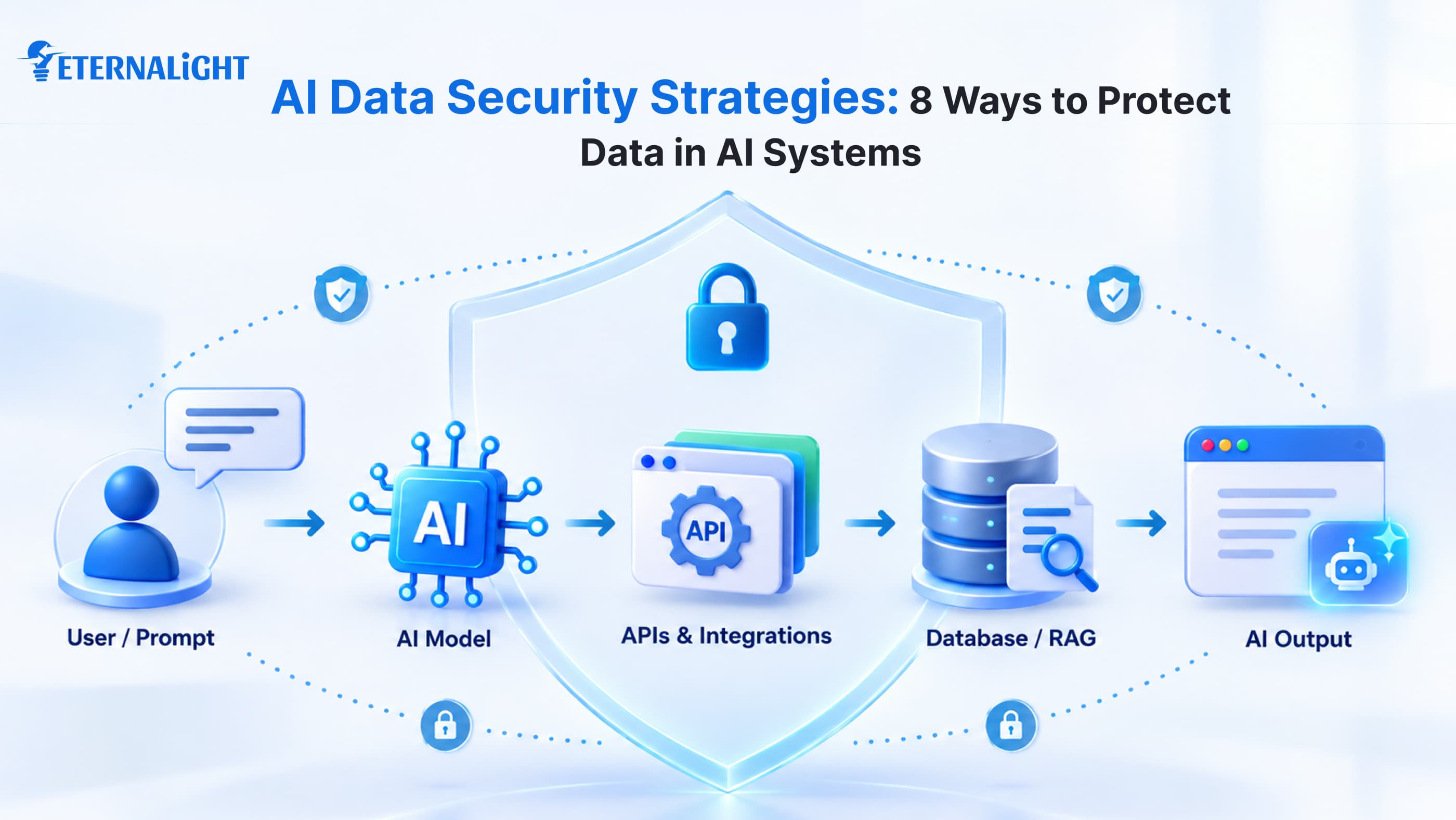
AI Data Security Strategies: 8 Ways to Protect Data in AI Systems
Explore 8 AI data security strategies to protect sensitive data across prompts, AI models, RAG systems, APIs, access controls, storage, and outputs.
 AI & ML17 Mins
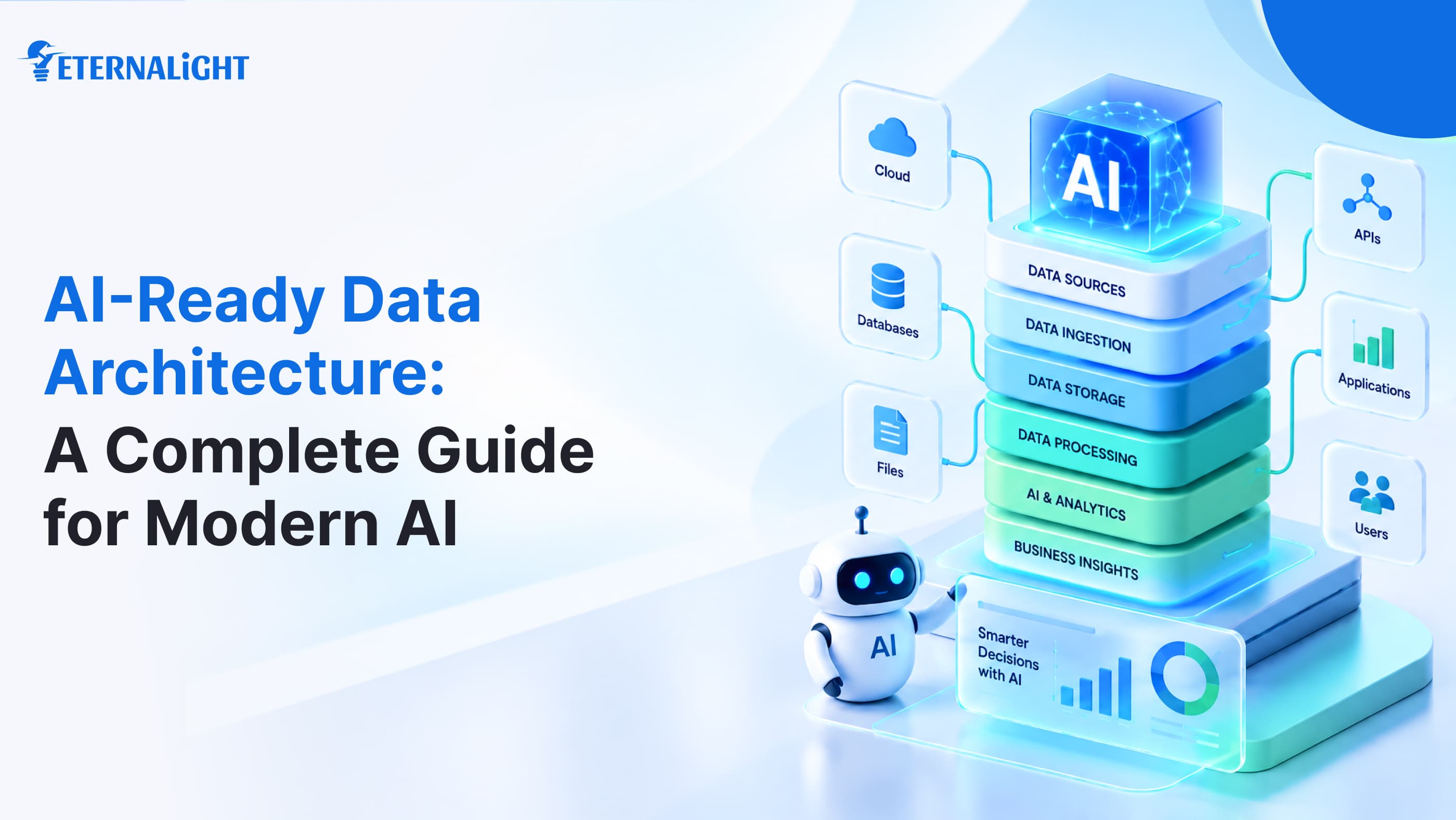
AI-Ready Data Architecture: A Complete Guide for Modern AI
Learn how AI-ready data architecture works, its key components, framework, how to build it, and how it supports generative AI, machine learning, and AI agents.
 AI & ML16 Mins
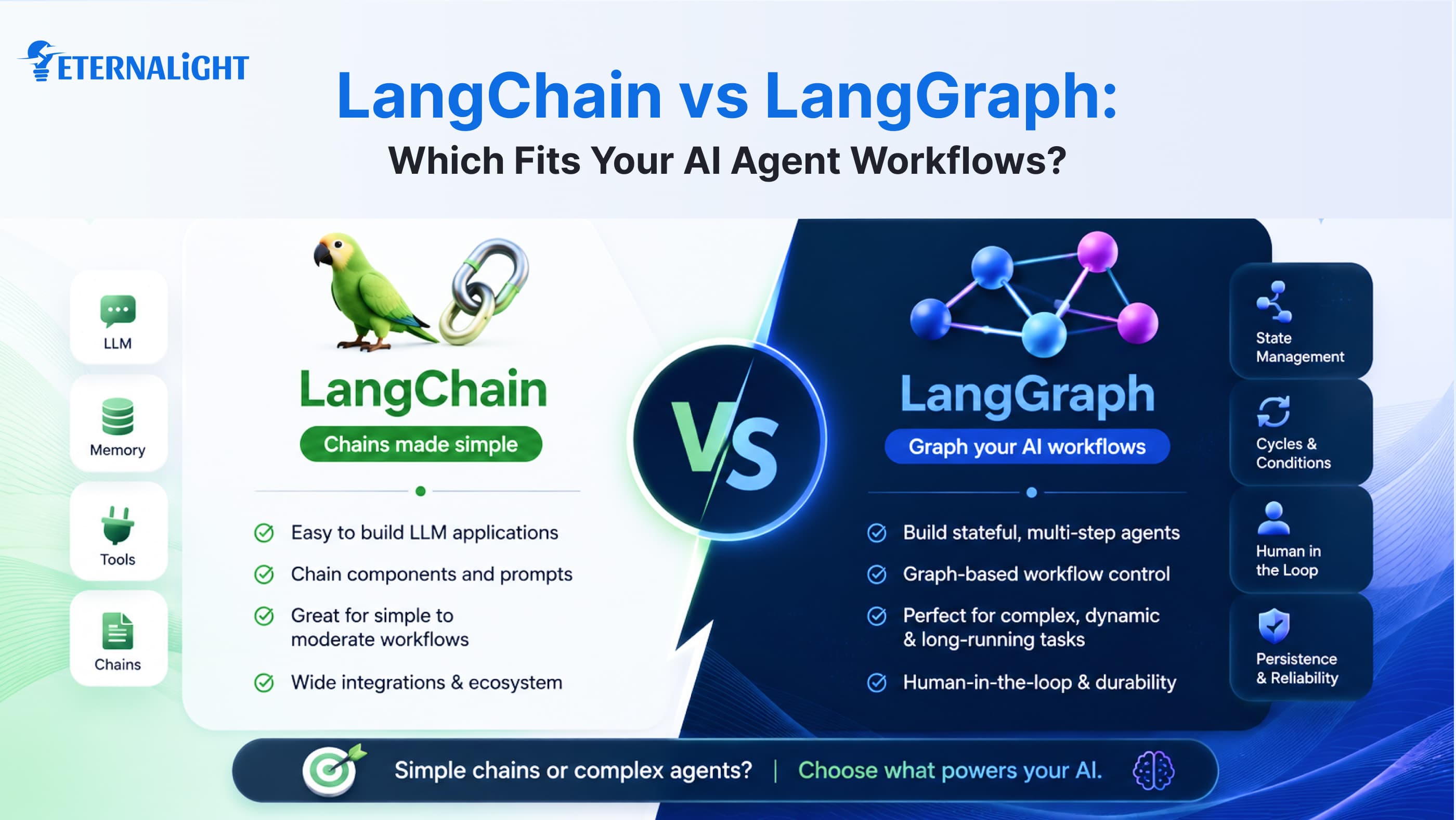
LangChain vs LangGraph: Which Fits Your AI Agent Workflows?
Compare LangChain vs LangGraph to understand their key differences, use cases, and how each framework fits modern AI agent workflows.