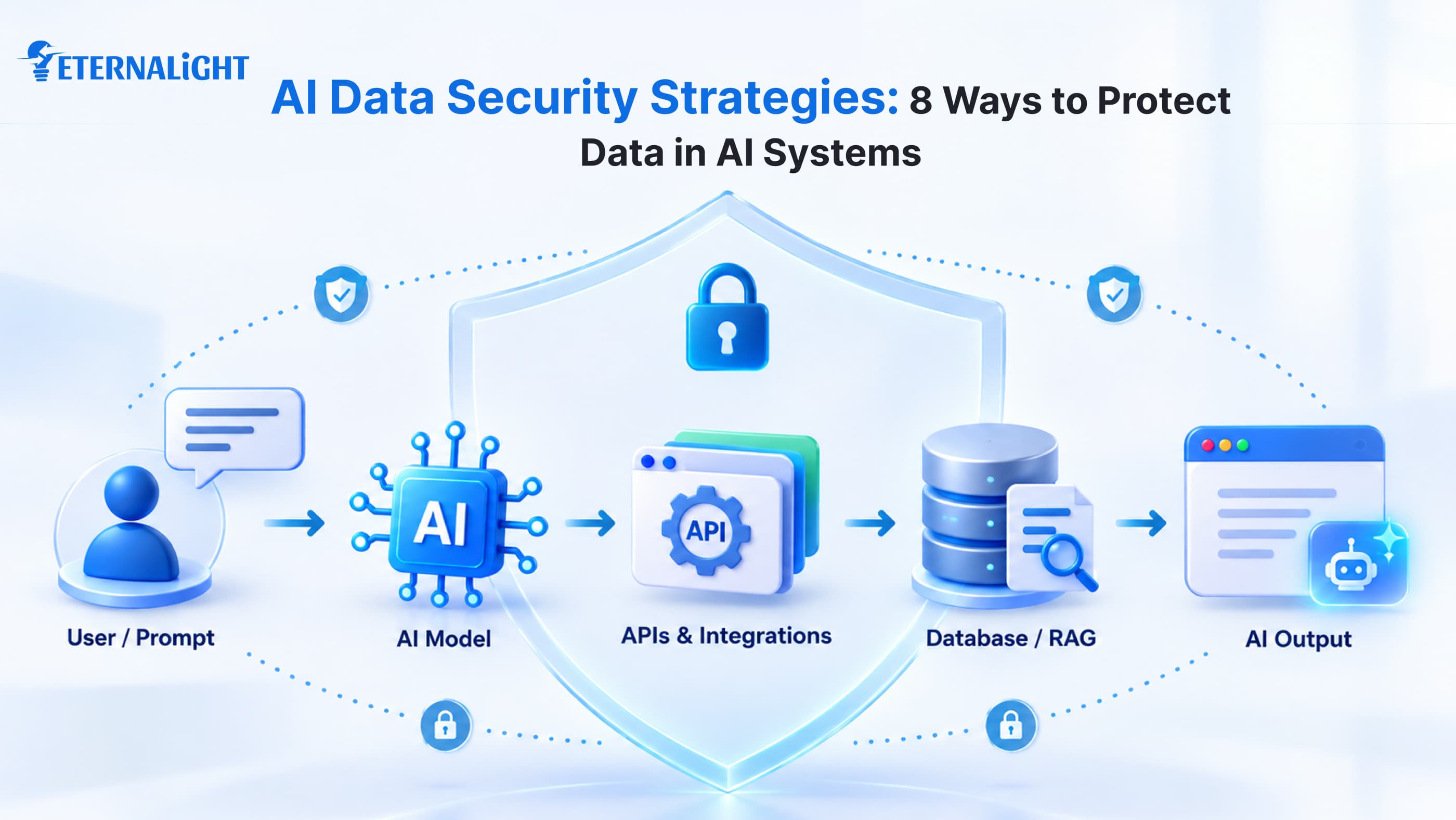
Gemini, ChatGPT, Claude, and Perplexity are all worth using to access information for any query. You ask questions as prompts, and they respond. Organizations can also connect these tools to get things done quickly. But do you understand what's happening behind the scenes?
For example, when an AI tool receives a prompt, where does that data go, and where does it access the information to deliver it in the required format?
Surely, integrations, models, databases, and other third-party tools and platforms play a role in making the end goal achievable. But if roles and access controls aren’t defined well, can these tools generate robust, reliable, and accurate responses while keeping the data secure?
Businesses have adopted AI integrations across every small and big task, from managing customers and logistics to deploying SaaS apps, with automation and efficiency pouring everywhere.
But AI is only one part of flawless execution; it needs analytics, predictive maintenance, and data pipelines to make it easier to access, transfer, retrieve, store, generate, and monitor each process and output.
If we don’t know who will oversee all these things, or if we lose control, we can’t stop the risks it can bring. That's where AI data security strategies matter: they address critical concerns about AI systems managing information flow.
What Are the Common AI Data Security Risks?
As we use prompts across different AI systems and tools, we should remember that information moves at the speed of light, and a prompt containing sensitive information can create serious issues.
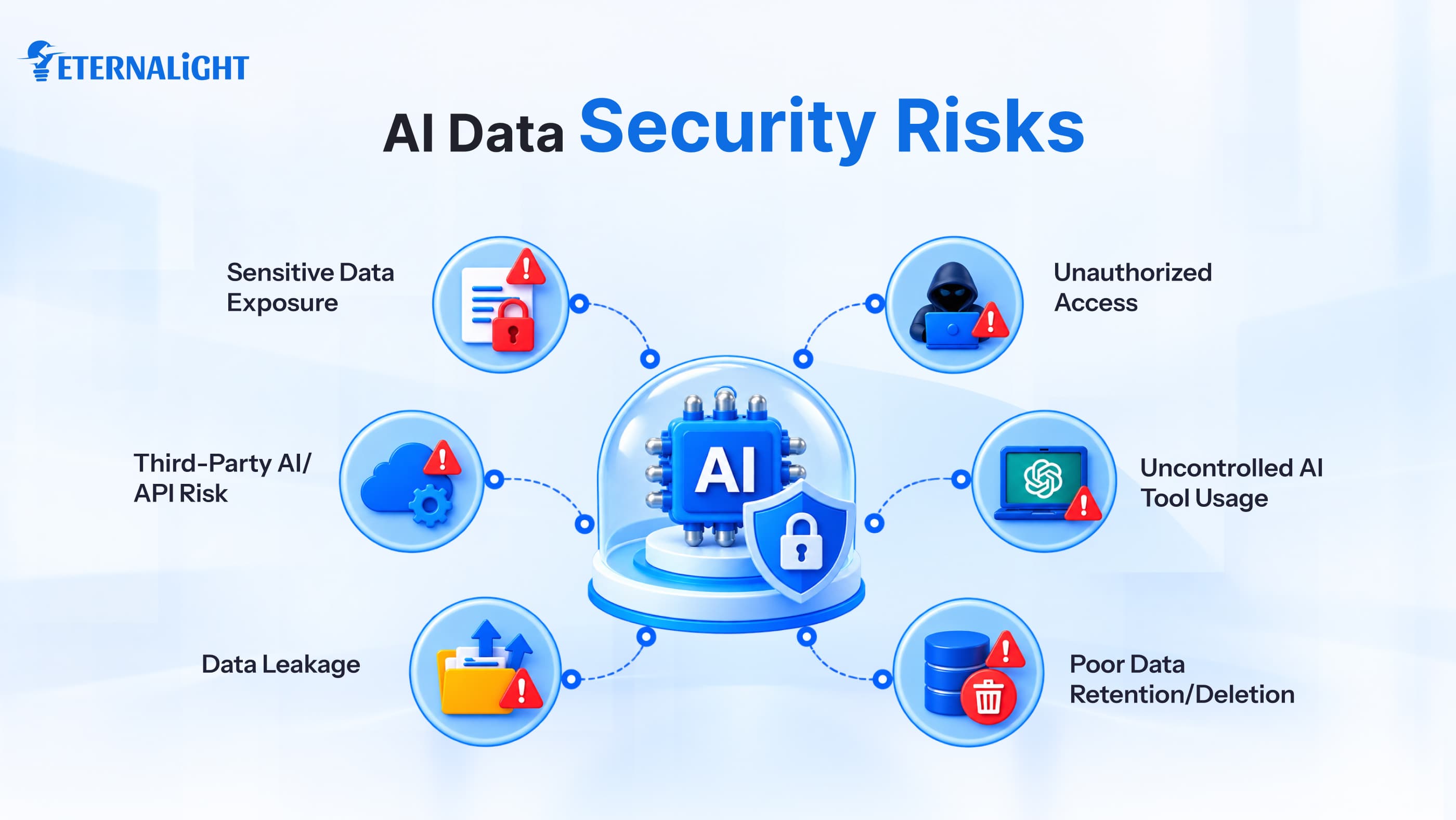
It's like a privacy breach because, to produce an output, AI doesn’t act on its own; it relies on sources, models, connected AIs, and other interactions. At that time, the following risks can occur.
Sensitive Data Exposure
Continuing from the point above, people use AI tools for different purposes. Professionals use them for strategy and business growth planning; if they share sensitive client project details, that information may be processed or retained according to the AI tool’s data-handling settings.
Students use them to prepare notes or presentations; one wrong prompt means an entirely false summary or generated source code. Until we give AI tools strict guidelines on what to do and what not to do, they may even generate sensitive output.
Unauthorized Data Access
Not all the information can be shared with everyone and every system. Guidelines and protocols must define who can access the system and how much they can use and retrieve from the knowledge base. If they comply with the rules and provide essential information, grant them access.
Third-Party AI and API Risks
Businesses work with multiple AI-driven tools and APIs that can contain harmful viruses or buggy code. If data is exposed through these paths, it can halt business operations, so providers must apply better data retention, access, and usage strategies to avoid scrutiny.
Uncontrolled AI Tool Usage
While using AI tools, we may not realize how long it has been since we gave them numerous prompts and shared so much information in different formats.
The document might contain your personal financial information, tax information, company policies, project details, and prototypes; you may not know when to revisit it or take a break. Data is more likely to be exposed to vulnerabilities.
Poor Data Retention and Deletion
AI systems don’t have human-level understanding of what is sensitive or explosive in the real world, so loose arrangements and unprotected data sources can expose confidential information through prompts, embeddings, logs, and databases.
That's why it's essential to declare where the data comes from, who it is shared with, and who can delete it.
8 AI Data Security Strategies Businesses Should Follow
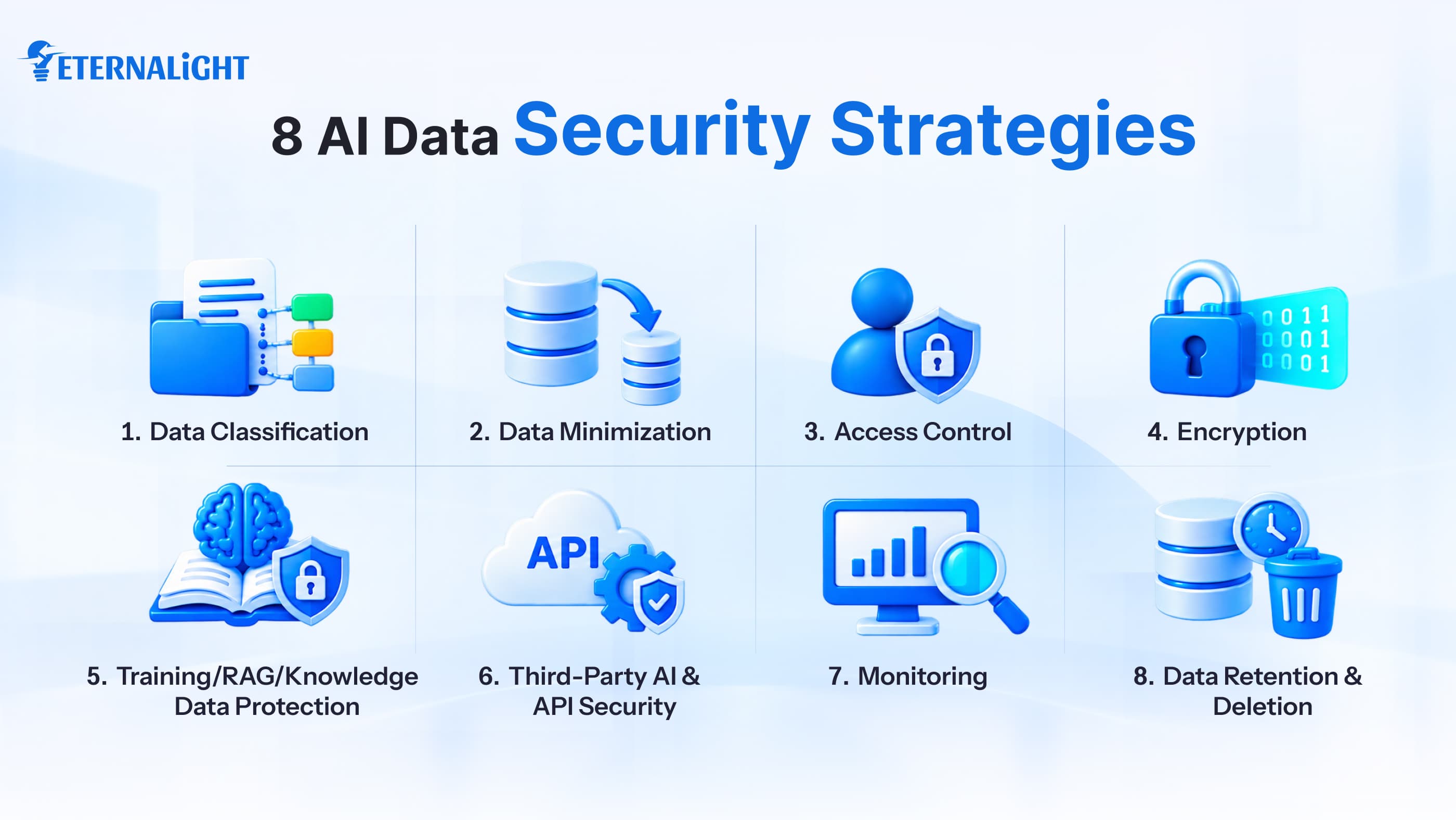
To manage data flow without concerns or unintended impact, businesses apply secure AI governance mechanisms. These cover everything from where the data comes from and what it uses to how much it can access, store, and process, keeping outcomes under control. To do that, businesses need to adopt this approach without violating privacy laws.
Strategy 1: Classify Data Before Using It With AI
AI systems can access sensitive information at any time, often without realizing what data is useful and safe to process and store versus what is restricted. AI systems aren't human; they do not automatically know which business information should be treated as confidential or restricted.
If data isn't classified properly, it's unclear what can go public, what should be confidential, and what should be hidden from the AI system so it can’t access it.
To manage this complexity, organizations shouldn't just adopt AI; they need to assess AI eligibility, isolate the necessary data attributes, understand sensitivity before training or embedding the AI system, and enforce role-based access permissions. Organizations can also add a specific tag to highlight AI value for any caching, retrieval, or removal and prepare the AI-ready data architecture for further deployments.
Strategy 2. Minimize the Data AI Can Access
We use AI systems and tools to do work faster. At first, it looks easy and fast: they can summarize, emphasize concepts based on context, execute faster, and produce output. At first, everything looks fine because traditional methods take time. Suppose a developer wants to keep or arrange something in order, or anything that needs the support of three people and multiple tickets, but an agentic AI system can do it alone with the tap of one developer.
To complete the task, we need to share credentials or other account details, but AI systems can also access some associated data. They may automatically create replicas of existing designs, records, or other fields. It might not be relevant to the task.
If you apply rules and filters, things will be manageable. When you provide a prompt, role, or context, set the level and scope of access for agents and tools instead of passing unnecessary datasets unrelated to ongoing tasks.
Strategy 3. Apply Access Controls to AI Data
Every AI tool has a retrieval layer that captures the documents and format. But if the developer does not define who can make changes and access the application, and which AI agents and users can access which data sources,
It will lead to disaster or high risk. Enable essential least privilege with proper permissions and controls. Review them every time a new feature is added, and update access accordingly.
Strategy 4. Encrypt Data Across the AI Workflow
In an organization, when preparing any document, content, or code, apply strong security methods like encryption, authentication, and authorization when sharing, storing, or transmitting it.
But when data is in use, while accessing the files, processing the prompts, or defining the context for the models. The network or database may not be secure; if any third-party tool, model, or service provider is connected, protecting data becomes even more crucial. Organizations must understand what happens behind the scenes and how the data is processed.
The best way to address this is to protect data not only at rest and in transit, but also when using cloud computing technologies; use security keys and standards like AMD SEV-SNP, Intel TDX, and NVIDIA to keep data confidential.
Strategy: 5. Protect Training, RAG, and Knowledge Data
Whether it's designing the product by writing the prompts, generating the images, or anything else. AI systems are dependent on connected tools to access documents, vector databases, data, embeddings, and RAGs to generate relevant responses. If there’s no protocol or security governance rules are applied across the sources, the AI system can excessively use protected confidential information, like code, personal contact details, and financial data, and expose it publicly.
To secure businesses and their data sources:
- Set role-based controls to access with proper authentication and authorization
- While preparing documents and sharing their links, apply passwords or permissions
- Organize data as per people’s departments' needs; it will help to access and share without any confusion and security risks
- Eliminate access to confidential documents
- Must review data sources before handling them in models for fine-tuning
- If you think that if the data location is secure, the data is automatically secure, that’s not true. Add an access permission layer whenever you are embedding or sharing data.
Strategy: 6. Secure Third-Party AI Tools and APIs
No matter how well a business grows and builds in-house products, it often needs to rely on third-party tools and APIs. Integrations can expand functionality, but because they're outsourced, they also introduce security and data-exploitation risks. Before integrating any AI agents, models, or tool data collection systems, businesses must review a few things:
- When and where does data enter transit and get stored?
- Is it used to improve or train models, or for fine-tuning?
- Who is responsible for controlling and monitoring all ongoing changes and accessibility?
- Is it open, or does it require permission if the service provider accesses data?
- Can information vanish?
- What protocols/mechanisms protect API keys/ Credentials?
- What if the service is down?
Strategy: 7. Monitor AI Data Access and Outputs
Even if you have adopted best-in-class controllers and security mechanisms at deployment management and the AI integration layer, you can’t overlook the system operating independently in the dark. Review the AI system before it goes live so it can detect unauthenticated access, monitor data flows, and identify sensitive information that may appear in prompts or other documents. In all scenarios, logs, reports, and storage must be confidential; the AI system can access and use only what aligns with the intent.
- Check who has permission to access the AI system
- From where the queries matched
- What type of information is loaded into the system
- How the data and external APIs are linked
- Scan prompts and outputs
- Sudden spike in download count and data access
- Any usual updates to system configuration, or permission access rules
Strategy: 8. Define Data Retention and Deletion Rules
AI systems have become proficient at enabling multiple people to work alone, and developers can complete projects on time using LangChain and LangGraph. They can also use Cursor, Claude, and other tools, but while these work autonomously, humans still need to take control and ensure security. This could be for anything from third-party platforms, vector stores, logs, responses, and backups.
Define data retention, access, and removal rules clearly before any AI agent integration and deployment.
Set the rules:
- Why is the data required?
- Is it in the required format?
- Does the system have enough space to store it?
- Does it need permission to edit, retrieve, or delete data from third-party providers?
- Is there a specific period set for deleting employee records or historical customer data?
- How long can prompt and response data stay in the memory logs?
The purpose is that if the information is no longer needed, it must be deleted so the system cannot use or retrieve the data.
Conclusion
Many organizations are deluded into thinking AI data security is built into models or AI-driven applications. And if we feel the need, we can enforce protocols or rules later. But in reality, it is not an afterthought; it is an essential task to address from day one of production or planning.
During planning, the model decides what data, from which sources, needs to be accessed and loaded into the system/model. It also decides which third-party or in-house tools and integrations to connect to, and how the data will be processed from prompt input to response generation.
If you neglect this part, it becomes difficult to organize and fetch data properly, with proper access rules securing third-party integrations. Tracking tools and integrations should be a regular practice, with clear retention, retrieval, and removal rules to prevent unnecessary data breaches.
Businesses should learn to embed intelligence engineering into workflows efficiently without creating potential vulnerabilities.

Ayushi Shrivastava
Senior Content Writer
Ayushi is a Content Strategist at Eternalight Infotech with 4 years of experience in transforming complex ideas into clear, engaging, and SEO optimized narratives. She specializes in crafting impactful content strategies that enhance brand visibility and drive meaningful engagement across digital platforms.
Related Blogs
 AI & ML17 Mins
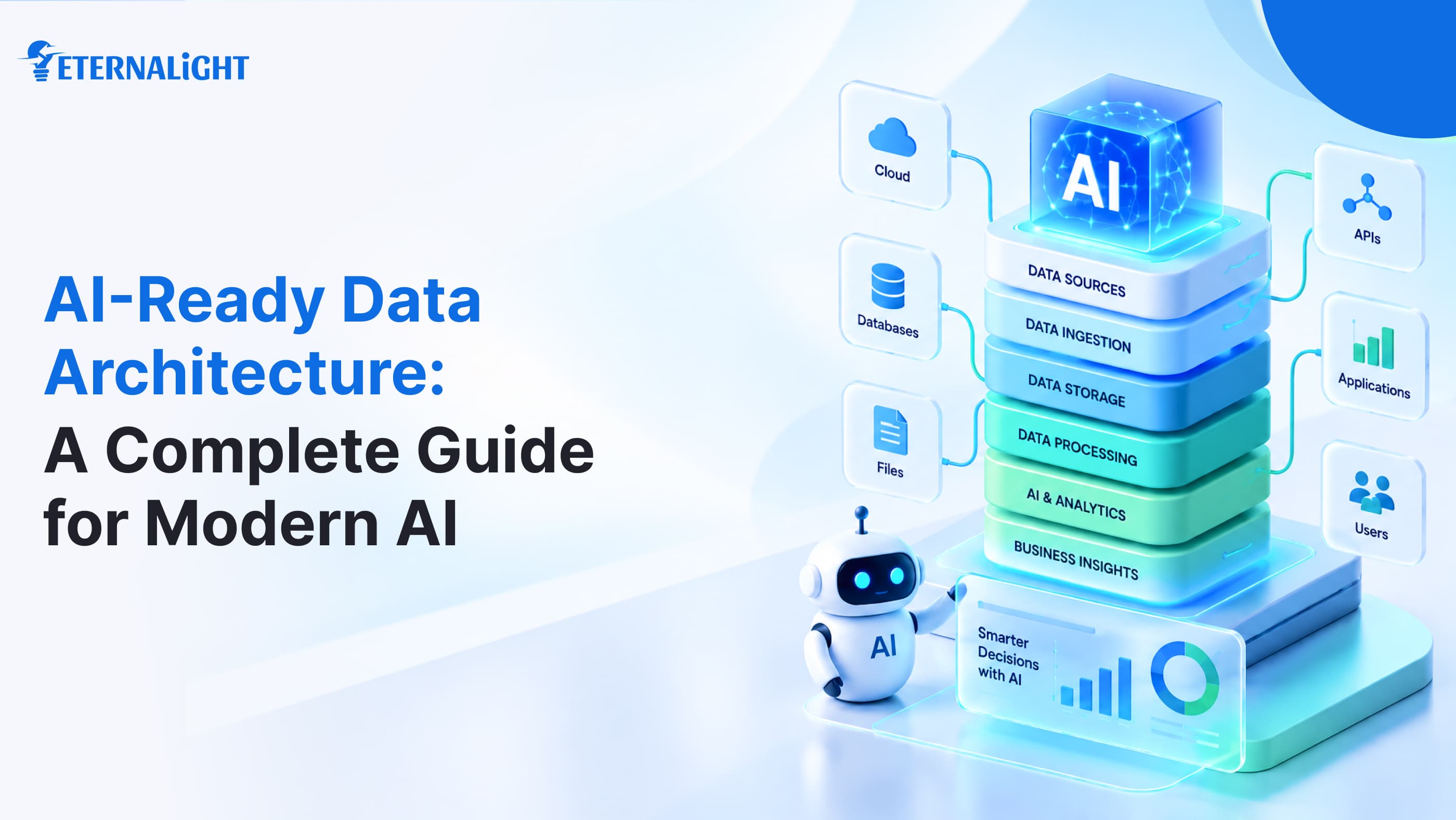
AI-Ready Data Architecture: A Complete Guide for Modern AI
Learn how AI-ready data architecture works, its key components, framework, how to build it, and how it supports generative AI, machine learning, and AI agents.
 AI & ML16 Mins
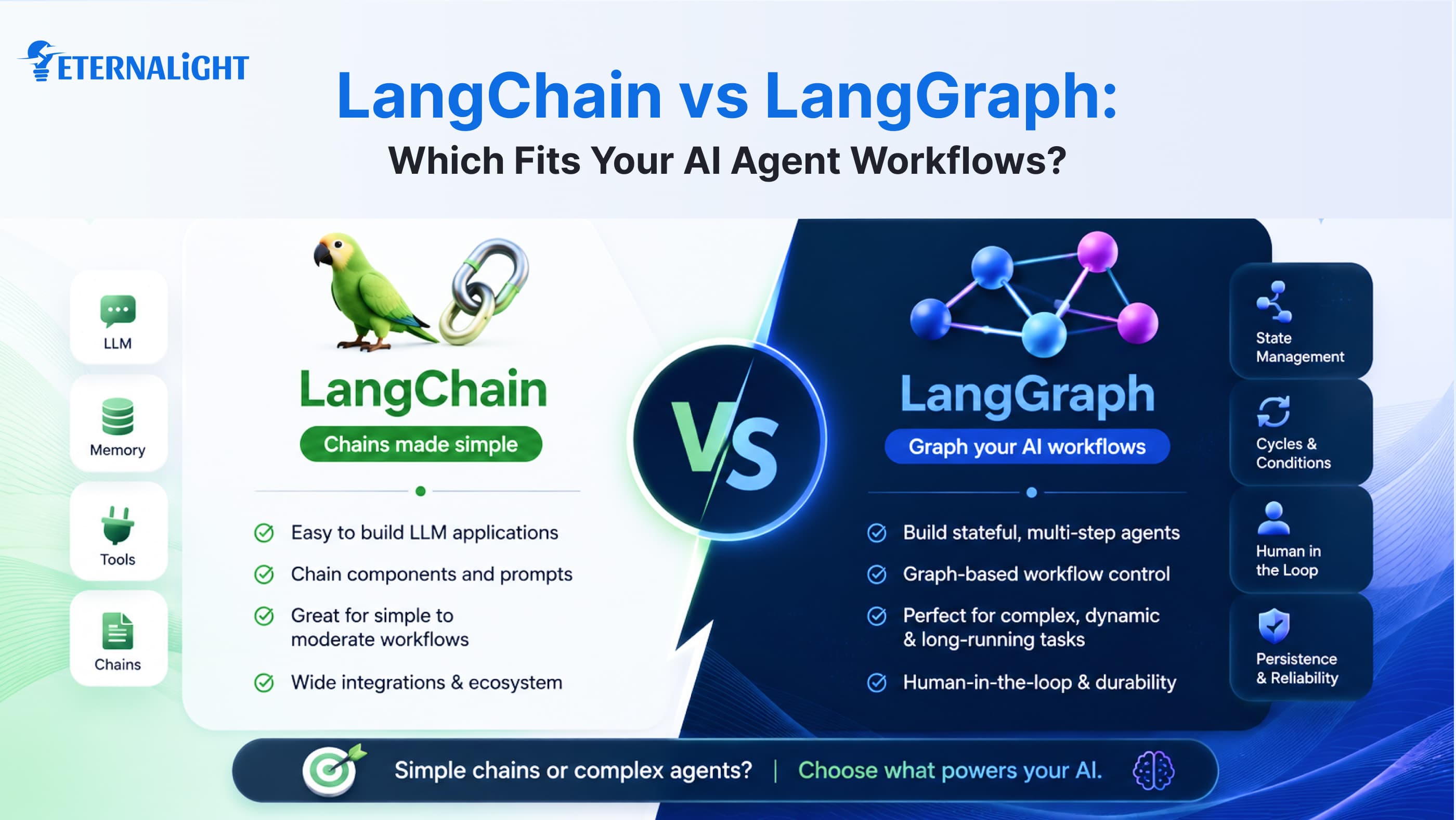
LangChain vs LangGraph: Which Fits Your AI Agent Workflows?
Compare LangChain vs LangGraph to understand their key differences, use cases, and how each framework fits modern AI agent workflows.
- AI & ML9 Mins
Comparison of n8n vs LangGraph: Which Fits Your Project
Compare n8n vs LangGraph to understand their strengths, use cases, AI agent capabilities, scalability, and governance, and choose the right fit for your project.