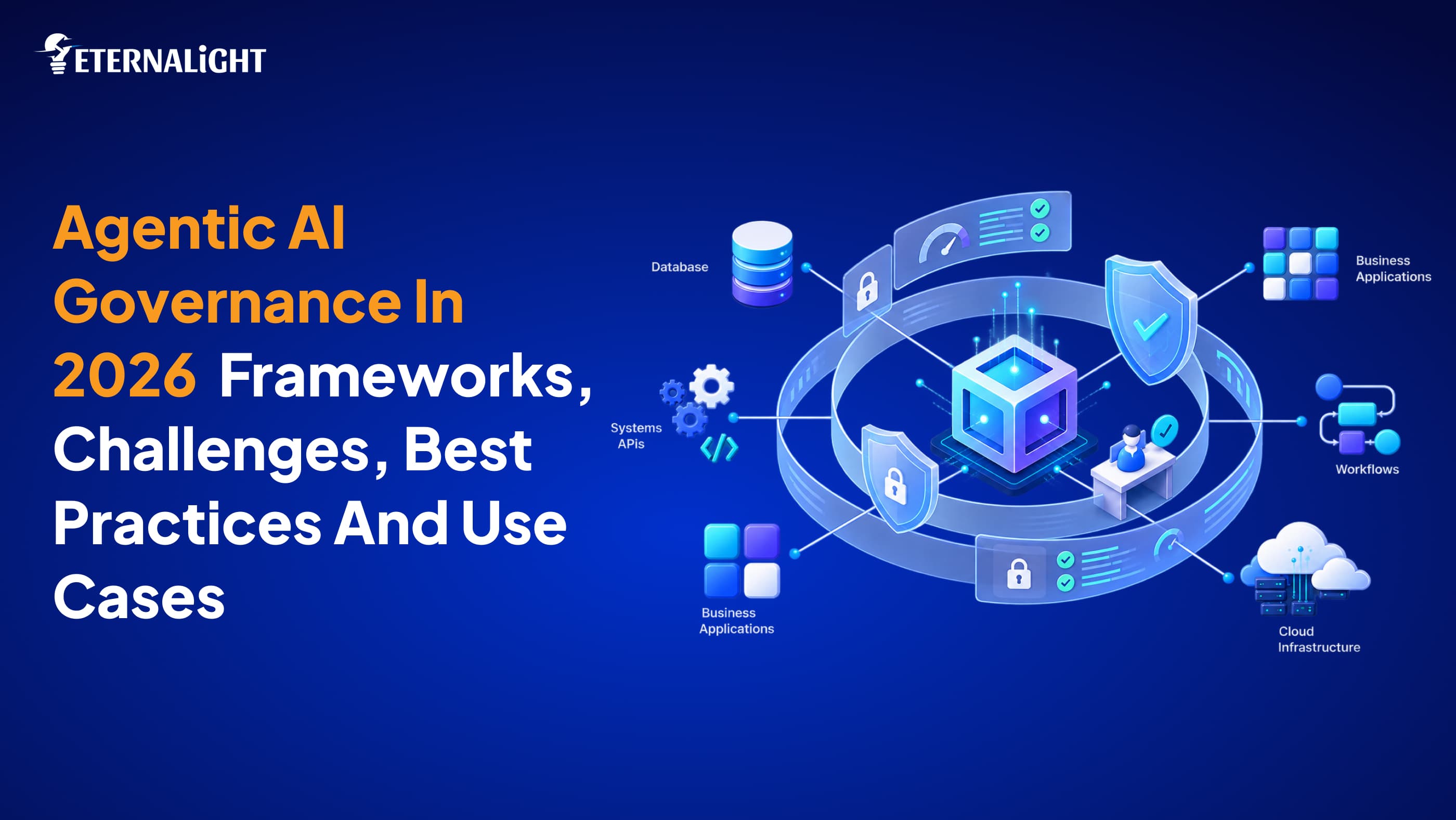
The organization has set up AI agents and assistants to do the job autonomously without taking orders or instructions from humans. They receive the initial prompts on what needs to be done, and the AI assistant makes decisions based on the information provided. The catch is that they might interpret the information differently and act accordingly. The human employee won’t realize it until the final goal is accomplished.
From research and analysis to documentation and other tasks, these AI tools can manage them efficiently. But all this work and time doesn’t make any sense if the output is generated from wrong information; it will impact future decisions as well.
AI tools that require human approval reduce the risk of errors, but when agentic AI emerged and integrated with other platforms and third-party tools, it definitely triggered tension. Organizations thought that if they set up agentic AI-focused apps in the workplace, employees could save time and effort.
Why is Agentic AI required instead of traditional AI governance?
Enterprises have a massive amount of data to analyze, process, and manage workflows that are hard to evaluate manually. Also, once policies are defined, it takes time to redefine and change them. When we need to address faults or anomalies, traditional AI systems fail to detect conflicts or, if they do, can’t take action independently, understand the situation, or monitor real-time system behavior.
Traditional AI governance requires significant human oversight to direct the system and ensure accurate outcomes.
This shift is driven by a dynamic environment in which enterprises cannot lose full control but can manage workflows with the support of agentic AI systems, avoiding the risk of non-compliance with government laws and policies in real time.
What is Agentic AI governance? How It Moves Through Enterprise?
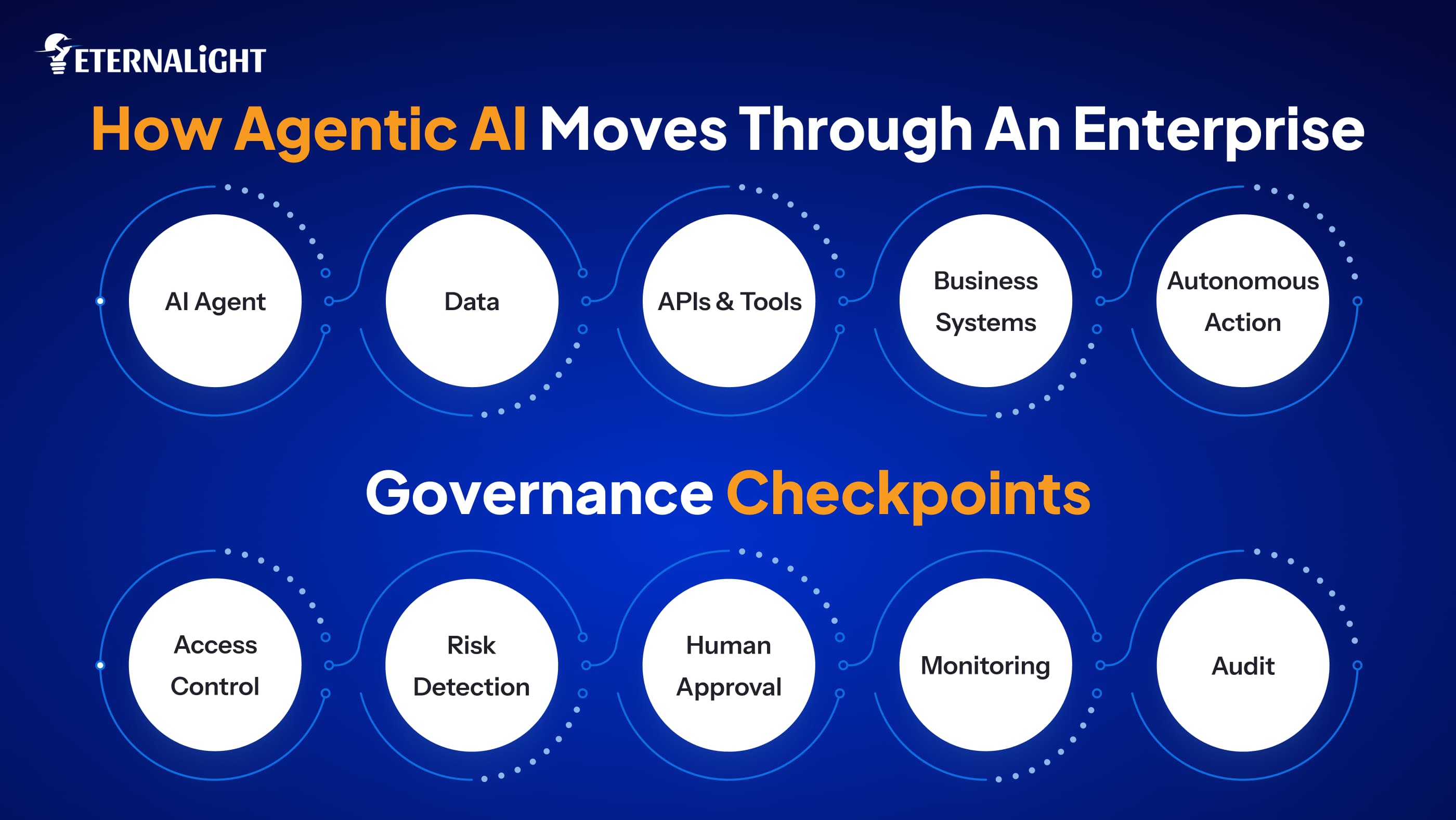
We know the government sets the rules and defines the boundaries for running a state or country. Likewise, governance is a system that takes accountability for every action and process, takes control when anything unexpected happens, and makes immediate, favorable decisions.
Agentic AIs are not human; they're machines. They make moves and perform actions, analyzing patterns and behaviors and using predefined datasets. They don't know what's wrong or what's favorable in a real-world situation.
We can't blame the system or punish it if anything goes wrong, as we do with human employees. Thus, it is mandatory to establish a systemic structure with rules and obligations that comply with federal government guidelines, norms, and standards.
Agentic AI can access and perform whatever it's directed to do, but under the governance system, it analyzes real-world risk circumstances and allocates the agent's resources accordingly.
Agentic AI tools have become an integral part of enterprises, helping them manage complex workflows autonomously. If they are not monitored or reviewed in a timely manner, they may interrupt significant business operations and complex tasks.
In the absence of ethical guidelines and policies, these agentic AI assistants can misuse information and execute or access APIs and data pipelines independently, which can lead to serious issues across the organization.
If there is no control over massive data sets, APIs, or other connected third-party tools, they may behave like intruders, influencing decisions and triggering regulatory difficulties.
In enterprises, we prioritize their outputs as machines work faster than human employees. It is mandatory to identify the risks and consequences of unauthorized access to sensitive information.
How does Agentic AI Governance come into action?
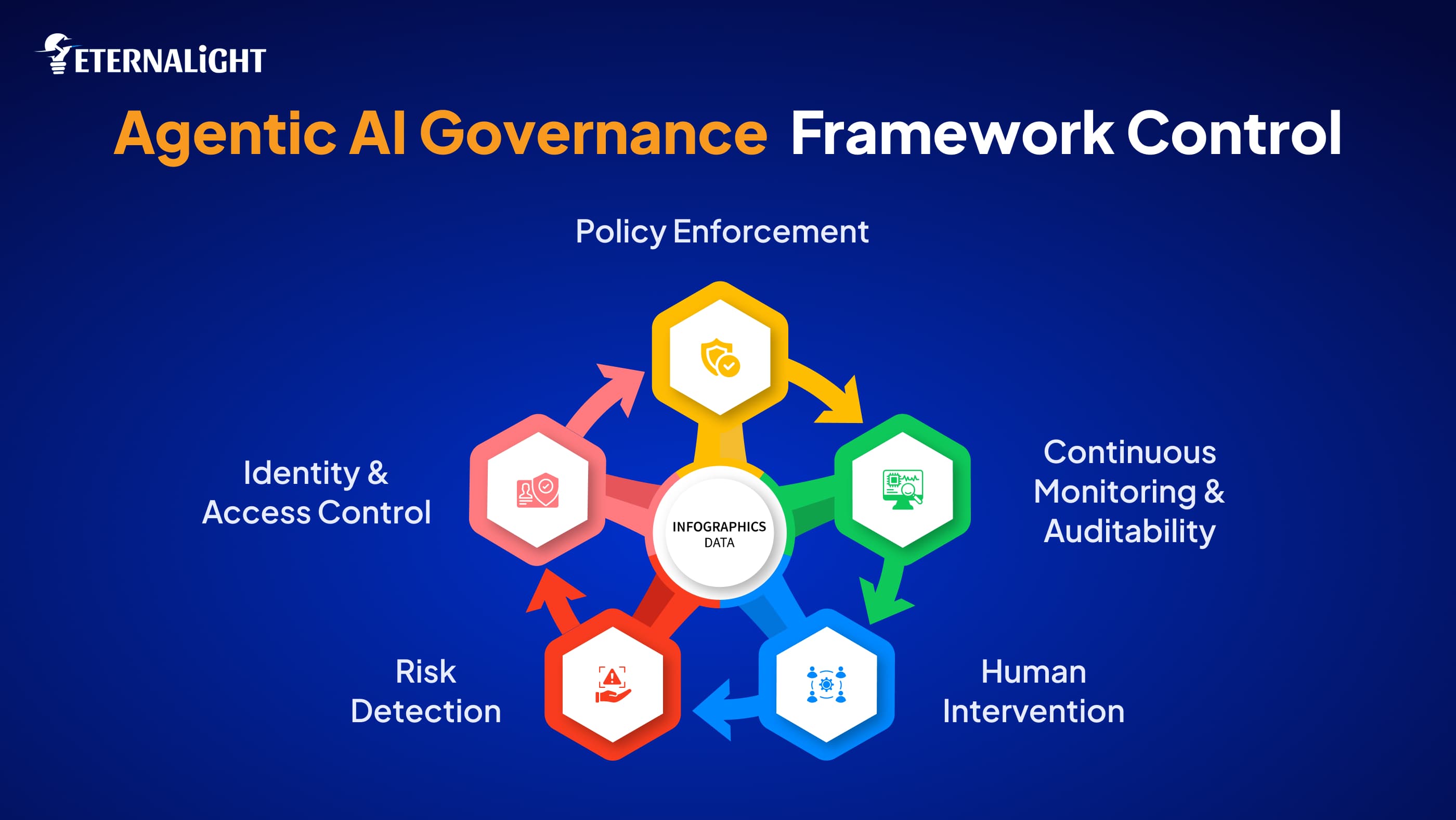
Agentic AI systems are dynamically driven by trained data and models; we are just providing the information, but a few things need to be considered.
Identity & Access Control
- What types of modalities are being accessed?
- Who has the authority to access data, and from where?
- What actions need to be performed by artificial intelligence, and what needs human intervention or specific validation?
- What are the key risk indicators that violate the policies?
- How will decisions and actions be controlled in real time?
While setting up the agentic AI governance framework, it contains the following components:
Policy Enforcement
Stating the compliance rules, ethical norms, and policies to access data securely from authorized sources
Embedding a Risk Analytics Platform
For real-time monitoring, risk anomaly detection, and understanding the situation independently, so AI agents can take further actions
Human Intervention
Taking approval validation for crucial actions, auditing the situation and upcoming risks
Uninterrupted Monitoring
Just as the system tracks human activity for every performed move, this should be applied to the AI system to discover the risk automatically without missing a single point
A 4-Step Roadmap to Establish Agentic AI Governance
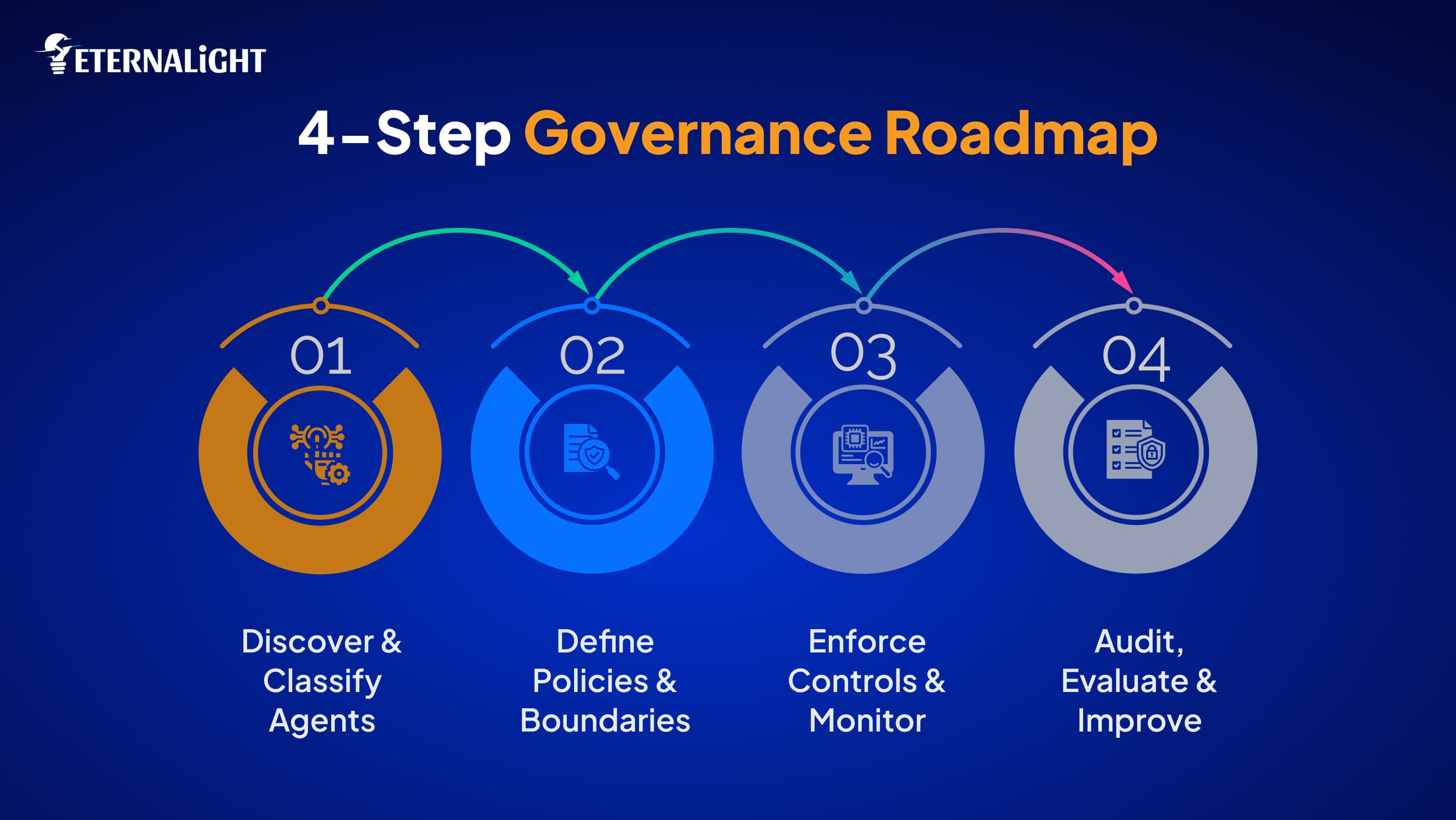
Like any app or AI agent development, you can’t establish governance in one day. It needs structured planning from the discovery phase. Generally, to implement Agentic AI governance, here's the 4-step roadmap.
Discover the Role-specific AI Agents and Segment Them
Have you confirmed the intent for each AI agent? If yes, don’t forget to identify the owner, model, integrated tools, APIs, relevant datasets, specific permissions, and autonomy difficulty level.
Then identify agents for points of failure, business impact, confidential data, and external access.
Document Policies for AI Agents
Set clear boundaries for all the defined AI agents:
- What can they access?
- How will they access the systems and workflows?
- What can they perform independently when making decisions for organizations?
- When does it need to take human validation?
- Are there any sensitive tasks, delegation API calls, or data access?
Set the boundaries for those as well.
Control Mechanisms
Apply modern access control with secure authentication and authorization for real-time risk detection and intrusion attacks. Define technical policies and checkpoints so they can trigger an alarm whenever unusual activity is spotted, or when the intent and scope of AI agents cross the limit.
Evalaution & Evolution
Agentic AI capabilities evolve as APIs, integrations, and data get revamped, so AI governance also needs to be refreshed by specifying policies and violation norms that can trigger at the right moment before ambiguity or anomalies hit and impact organizational workflows.
Why Is Agentic AI Governance Difficult to Implement at Enterprise Scale?
Building policies and norms isn't that difficult, but enforcing consistency across complex enterprise workflows is hard.
Lack of Visibility
Organizations can identify the AI agents they have built, but they often don’t understand how those agents will act in real time or whether they can control their actions.
Autonomy and Control
Organizations launch agents to make their workflow more efficient, but to avoid any risk, agents need to be controlled with appropriate validation and access control; otherwise, agents can make the delegated decision at their own lead, leading to risk
Accountability
Agentic AI is responsible for managing workflows through the collective efforts of other components via APIs, integrations, and human oversight. If the organization is not clearly defined and workflows are not audited, how will we know what action is done or in process?
Real-time Inspection Agent Behavior
For different datasets, tools, and prompts, agents' behavior can differ. Even if you evaluated the agent during development and deployment, you still can’t predict its actions. They may still throw exceptions and pose policy-violation-related risks.
Use Cases of Agentic AI Governance
Businesses and industry leaders want direct control over operations, as shown in the following use cases.
Financial Services: analyzing financial information, transaction limits, auditing activities, and giving recommendations
IT Operations: auditing infrastructure glitches and taking required actions, obtaining approval for complex workflows, maintaining records, and monitoring tool activity usage
Enterprise Workflow: collaboration with multiple agents to sync up the workflow, accessing data, processes, delegation, and sequential tasks.
Customer Service: keep in touch with customers without any interruption, resolve their queries, provide the required information, update and edit records, and manage refunds and returns.
Agentic AI Governance Best Practices to Implement in 2026
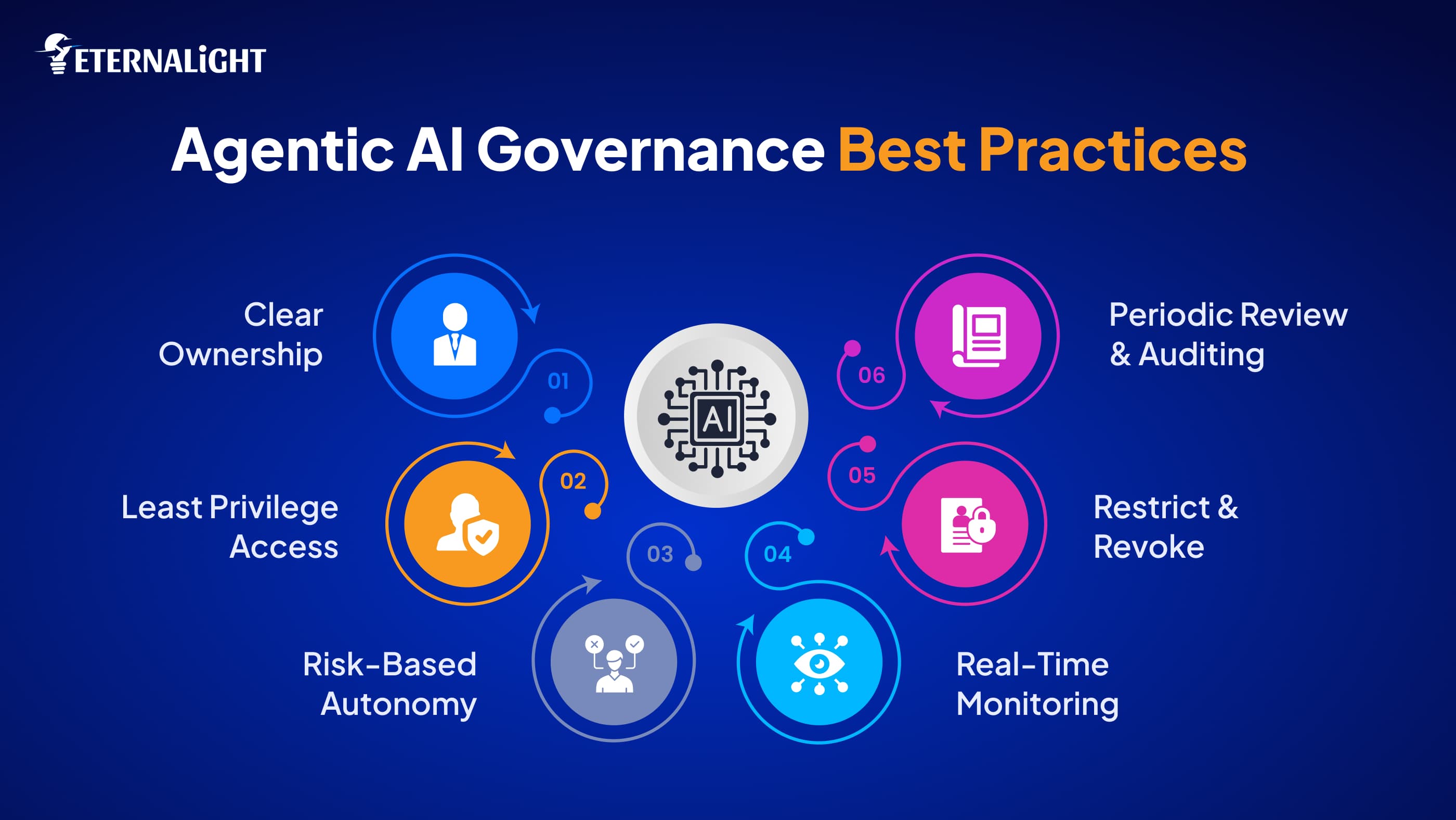
Governance is not an add-on; it's essential to scalable AI agent architecture. Before you begin deployment, prioritize it.
Define the Agent with Clear Ownership
Assign each agent a specific business task that may need to be optimized, redefined, or restructured; when workflows change, ask: who owns the changes, authorization, & authentication?
Give Specific Permission Access
No need to share all the data, tools, or permissions to use the particular systems to accomplish the tasks. After each project, monitor agent permissions and policies to prevent misconduct.
Define Level of Ownership
You may assign different types of tasks, and each may carry a different level of risk, so apply validation rules based on the task to perform actions without legal, financial, operational, or user-privacy risks or consequences.
Real-time AI agents Monitoring
Even if you evaluate the software before deployment, it doesn’t guarantee the AI agents will run uninterrupted. Anomalies and errors can occur at any time, so evaluate policy, data access, tools, and each agent's activity in real time.
When to Restrict and Revoke?
Not all real-life processes and actions should run autonomously by AI agents; governance should protect permissions and rights to stop unauthorized and unsafe behavior and processes.
Periodic Governance Reviews
Over the time tools upgraded, models capabilities increment, new data sets and information introduced and to give accurate and real time outputsgovernance also need to evolve not just one-time.
AI Agent Auditing
Evaluate the accuracy and efficiency of AI agents regularly through regular auditing for specific events and actions.
What Should Businesses Do Before Establishing Agentic AI Governance?
Users will only interact with the system if it is reliable and robust, does not steal unauthorized information, expose data in any manner, or make biased decisions; ensures it doesn’t violate the lawsuit and will not lead to major operational disruption.
- Determine all the assets, resources, and datasets
- Consolidate all the federal laws and regulations to define policies clearly
- Track how AI systems behave on each data type or prompt
- Apply authorization and authentication rules for secure data access
- Detect behaviors with specific alerts and triggers for risk discovery
- Apply rules and laws following industry standards to operate without harming user privacy and sensitive data
- Confirm the policies according to the operational workflow
- Where does it need human oversight for approval?
Conclusion
Agentic AI has transformed the way organizations work with AI-driven applications. We can’t ditch traditional Agentic AI compliance, but with agentic AI systems, we need to make websites agent-ready; founders must define governance to clarify what AI can generate, access, act on, or execute.
This doesn't mean removing autonomy; it means setting strict rules and policies to specify identity and access control for risk-prone decisions, keep humans in the loop, and take full accountability for real-time visibility.
Agentic AI governance is not an afterthought; it should be considered from the first stage when an organization decides to move ahead with agentic AI and AI agents.
Founders need to understand that agentic AI systems should not increase risk but enable initiatives with proper control, real-time monitoring, and accountability.
Implementing an AI agent in an organization is an experimental move that most startup founders are adopting in the workplace, but neglecting governance will put the systems at risk.

Ayushi Shrivastava
Senior Content Writer
Ayushi is a Content Strategist at Eternalight Infotech with 4 years of experience in transforming complex ideas into clear, engaging, and SEO optimized narratives. She specializes in crafting impactful content strategies that enhance brand visibility and drive meaningful engagement across digital platforms.
Related Blogs
- AI & ML10 Mins
AI Data Security Strategies: 8 Ways to Protect Data in AI Systems
Explore 8 AI data security strategies to protect sensitive data across prompts, AI models, RAG systems, APIs, access controls, storage, and outputs.
 AI & ML17 Mins
AI-Ready Data Architecture: A Complete Guide for Modern AI
Learn how AI-ready data architecture works, its key components, framework, how to build it, and how it supports generative AI, machine learning, and AI agents.
 AI & ML16 Mins
LangChain vs LangGraph: Which Fits Your AI Agent Workflows?
Compare LangChain vs LangGraph to understand their key differences, use cases, and how each framework fits modern AI agent workflows.