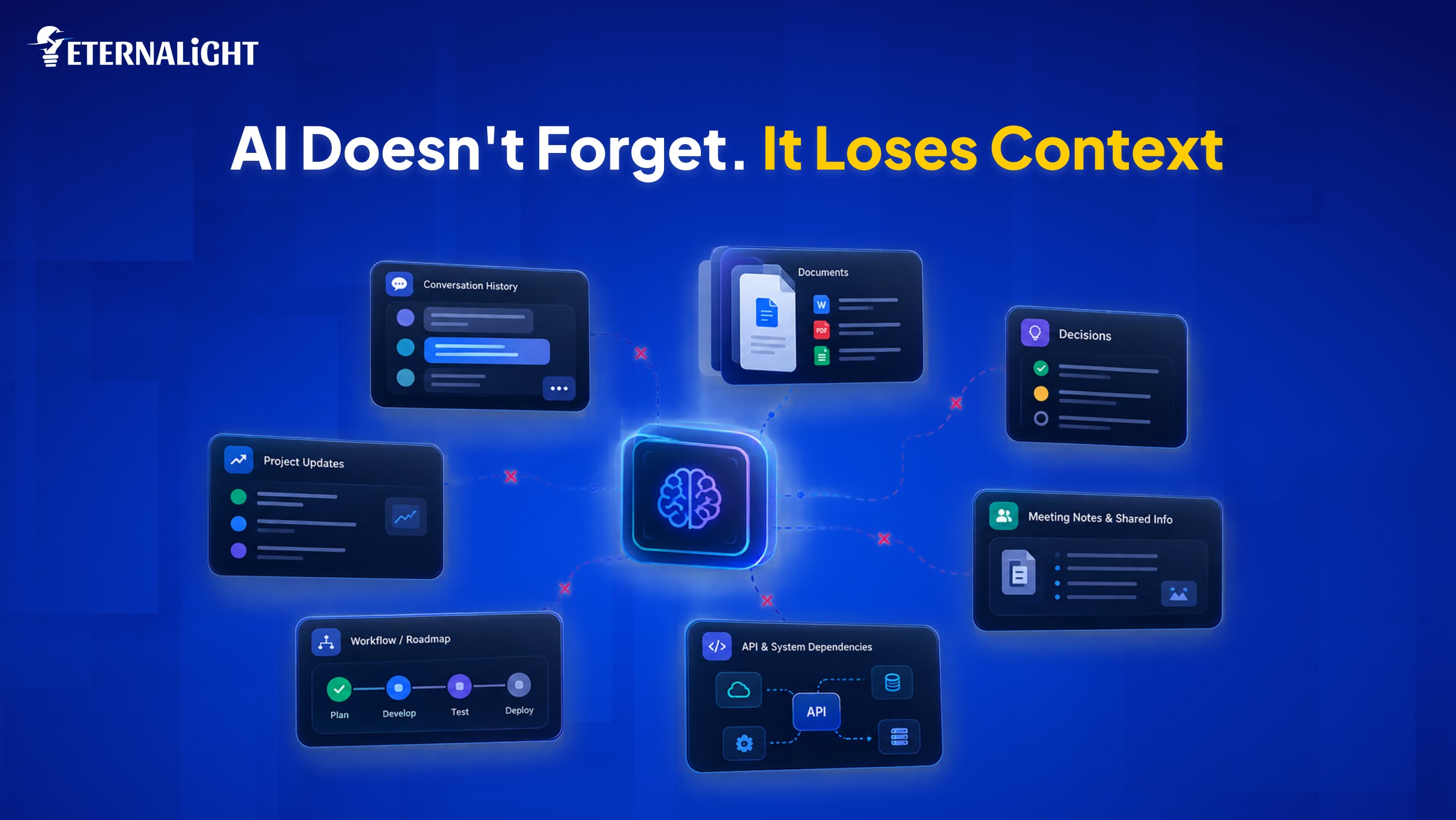
Whether it's a small task like solving an assignment, clearing our doubts, or tackling more complex issues. Today, we open ChatGPT, Claude, or Gemini, give a voice command or write a prompt, and they generate a response. The answer can be 100% correct at some instances, but it may not be relevant to your situation. These tools are well configured and trained on structured information, and they can generate relevant output, but we can’t say it will be 100% correct. That's when the context engineering vs prompt engineering debate is encountered in the boardroom.
When a Better Prompt Still Isn’t Enough?
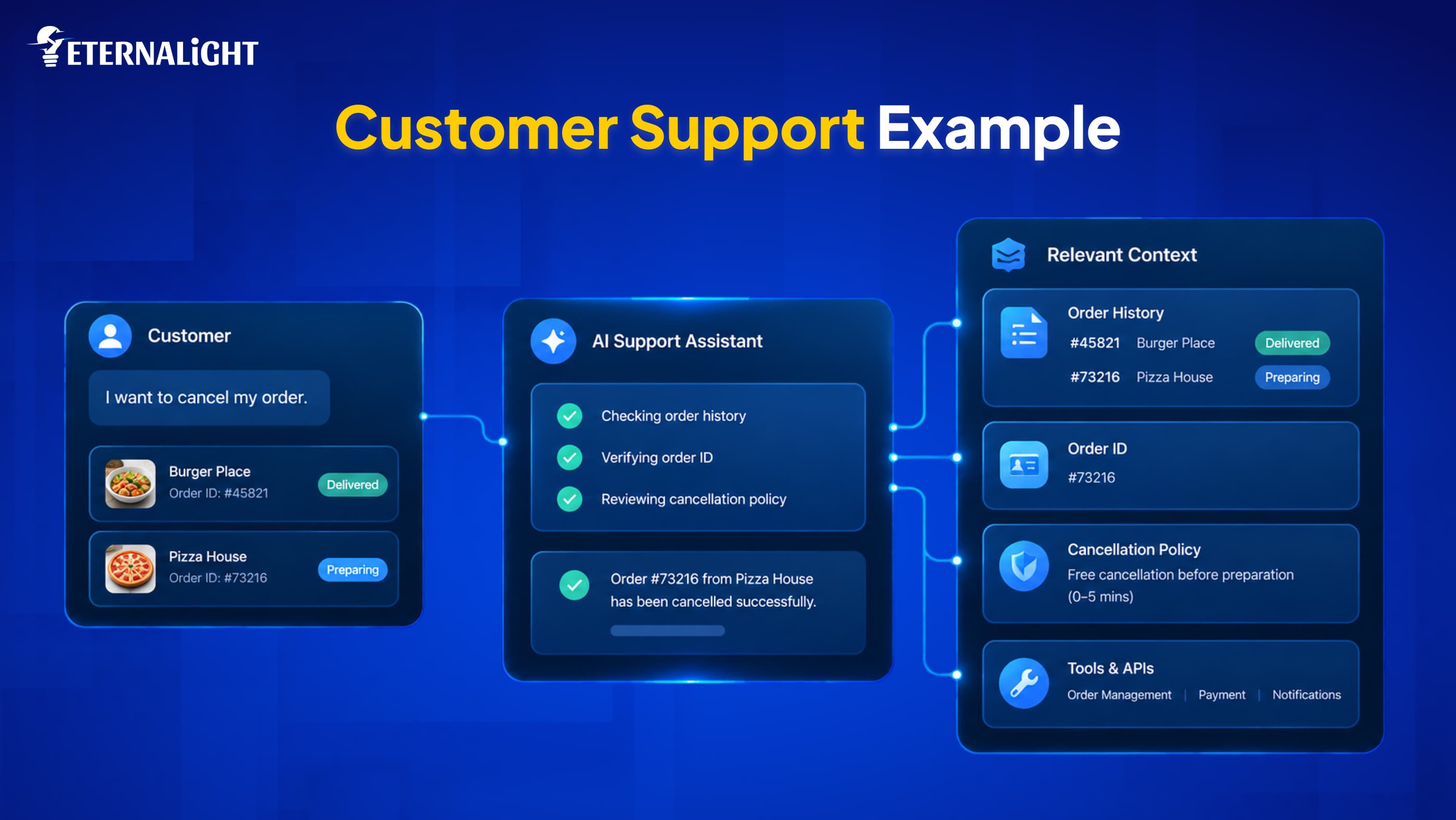
Suppose you placed two different orders at different restaurants and want to cancel one. When you go to the support chat assistant, you'll see pre-formatted, rule-based chatbots that ask a few questions instead of canceling the order directly.
First, they will ask for your order history to confirm which order you want to cancel, then ask for the order ID to identify you, share the cancellation policy, and ask why you want to cancel. They might try to convince you not to cancel the order and offer compensation. They will connect you with a support agent or another app.
Writing a prompt is one thing, but making the tools understand your task is another. If your prompt instructions can’t elaborate or justify what you need once the problem begins, you're in trouble.
Learning to write effective prompts with clear instructions takes time, but we still can’t be sure it will generate the exact information because, at some point, AI agents can't access or extract it. If you need to evaluate customer behavior, choices, and interests- what they discussed, when, and with whom- and real-time data isn’t available or an external tool or API goes down, it’s critical to manage the task. So, context engineering becomes important alongside prompt engineering.
Both are good modern approaches, but the blog helps you figure out context engineering vs. prompt engineering in the real world.
What Is Context Engineering?
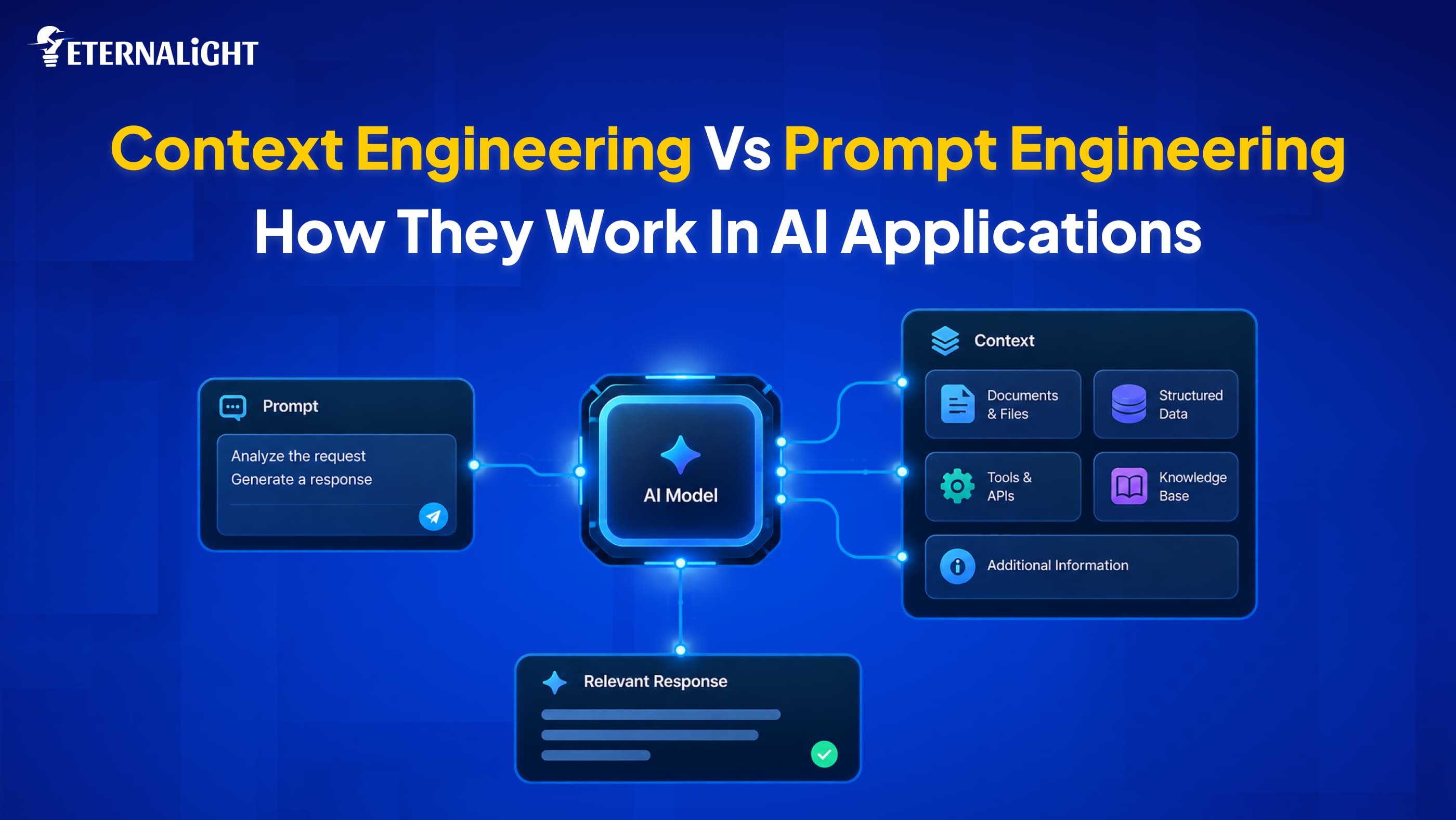
It’s an art: making the system fully efficient with the right inputs so it understands exactly what it's supposed to do. You can do this by sharing instructions in order, in your preferred language and format, and defining document types, tools, integrations, conversation examples, metadata, memory, and more.
The prompt is just information; it can be correct or not, but we can’t tell whether it's well written or whether the words are justified.
For a complex work project, if we assigned an AI agent, it may get confused or get distracted by larger context windows.
When prompting AI tools, they won’t cut or remove anything unless we instruct them; by providing context, we tell them to understand it in depth first, then generate the output. The wrong tool, wrong parameters, and repetitive lines can delay output and reduce accuracy.
“A longer context window means 20%-30% slower response”
Prompt Engineering vs Context Engineering
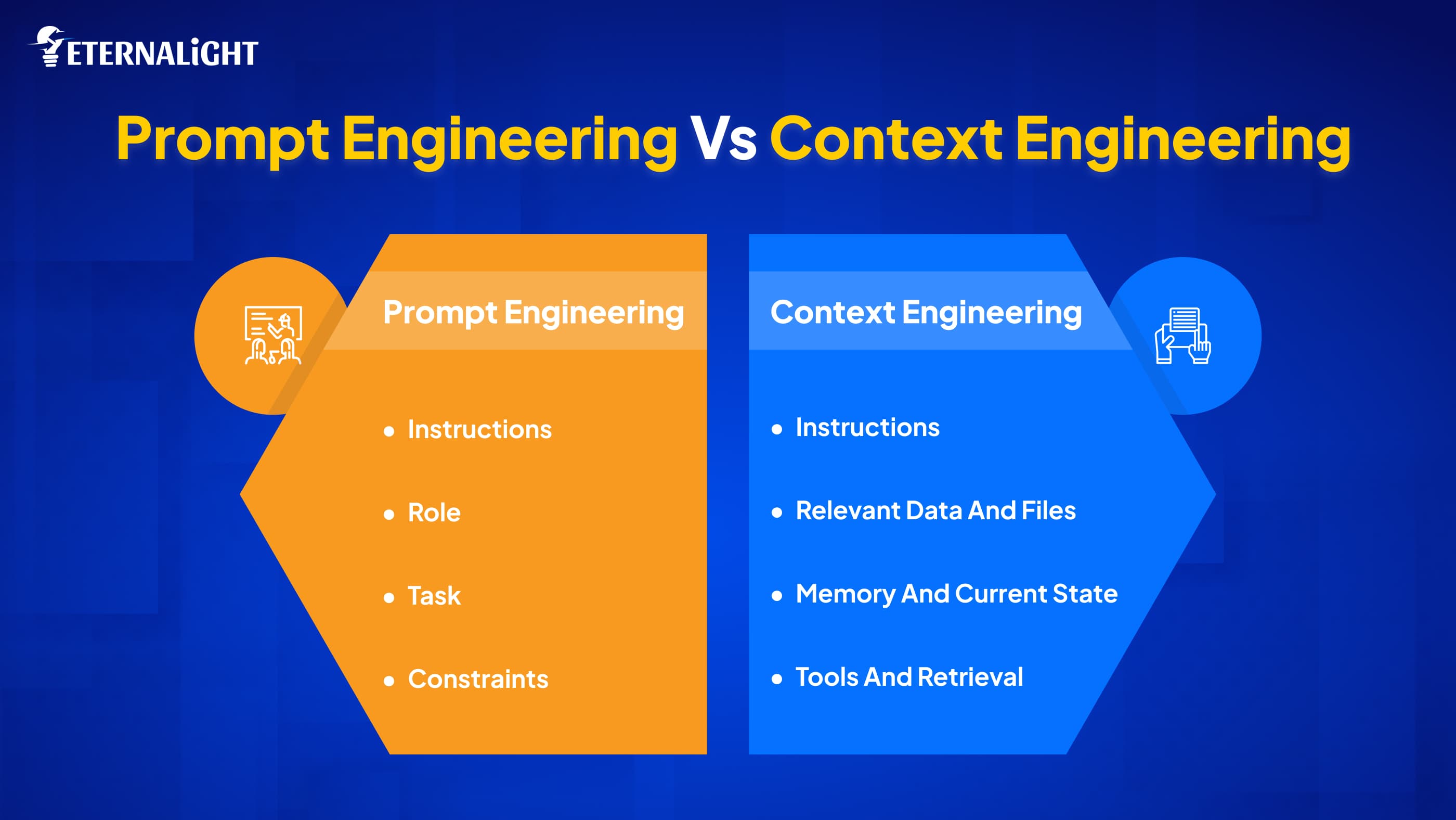
In prompt engineering, we express our concerns through phrases and instructions, but if they're not written clearly and accurately, the model can generate wrong responses.
To learn more about how to write prompts for AI agents and the best prompt engineering techniques, we have a separate blog.
It depends on the complexity level of the prompt instruction you need to optimize. There are constraints, stop points, few-shot, chain of thought, role definition, and more. We can assume that the required information is already there and the scope is limited.
Context engineering isn’t limited to a few instructions; it includes different types of inputs, docs, files, memory, state management, RAG, schemas, etc.
Here, required information isn’t enough; the system must know the situation in depth. It's not a one-time interaction; the text keeps evolving with the situation, and the scope extends to connecting multiple tools, models, and databases. Thus, AI development companies prefer a context graph.
What Goes Into an AI’s Context?
To make the AI workflow efficient, context must be clear and consistent. If we connect the wrong tools, models, and databases, the AI system will retrieve the wrong information and hallucinate. When things go wrong, it delays the workflow, increases token count and cost, and reduces accuracy.
To make every interaction worth it, AI context includes the following:
- Schemas to define which model and tool will call what and when
- Specific rules and constraints to start, resume, and react
- A place to save tokens and previous steps to keep the multi-step in sync
- File passages that retrieve from an external database
- Some input/output reference examples so the AI system understands what structured input to expect and what pattern to generate.
- Clearly define metadata that can give signals about the actual situation with proper timestamps
If you want the AI system to generate accurate information without forgetting previous context, keep the context relevant without exhausting the token limit.
Why Context Engineering Matters for AI Applications?
When building an AI application or interacting with an AI system, we apply conditions across databases and data pipelines to control what is hidden and what humans can access. Data is stored in different formats and locations; without the relevant information, the system can’t manage the workflow efficiently.
The data retrieval pipeline is useless without the right context, such as metadata. If developers program the AI system properly and comply with AI governance and compliance, it can close major gaps because the AI system often fails to respond or gives ambiguous answers due to unavailable data, incorrect statements, or outdated information.
If an AI application has a well-established context graph, it will provide clear data-quality signals and better accessibility for both humans and AI systems to rely on.
Where Context Engineering is Used?
Context engineering is valuable across all business domains, but you need to lay the foundation first with automated tools to prevent information corruption. It seems similar to prompt engineering, but it's more structural, clear and concise, and can scale for enterprise operational needs.
Modernizing the Legacy System
Migrating the legacy system to modern tech is crucial, but wherever we see it, it's code on boilerplate. By infusing the context graph into the core, the system can function well, collaborating with multi-agents for multi-step workflows and complying with external APIs, tools, and databases in a robust environment.
AI-driven Troubleshooting
If AI agents understand the context, they will know how the code is programmed and which rules and constraints apply. If the output doesn’t match the schema, the agents can automatically fix issues and refer to updated licenses and other regulations, since the platforms are resilient by design.
Tech Audit
Manually auditing the database is tough and time-consuming, so both technical and non-technical teams need help from an AI system. But if the context is unclear, the audit can go wrong and add extra burden to the team.
Reliable and Robust Data
You can’t feed raw data directly into an AI system; it must come from the right sources and in the right format to generate real-time output aligned with business operations.
How Context Engineering Works?
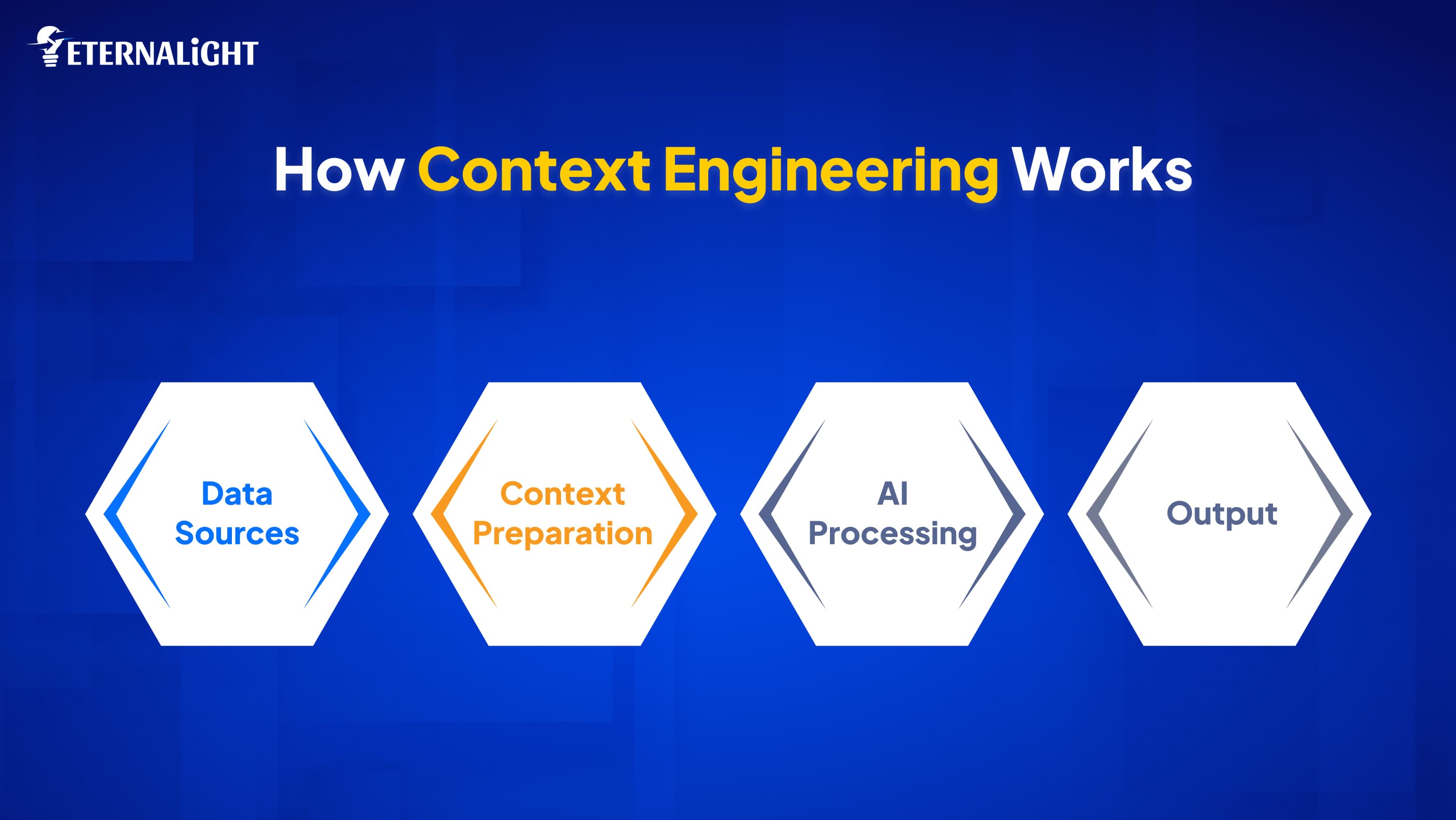
Beyond the phrases, the AI system needs backstage non-functional and functional information to run the multi-step workflow without errors and without excessive token use. For that, the AI system acts on the given touchpoint:
- First, it understands the task, the desired output, and any restrictions or rules.
- After that, they need to access all the relevant data sources, previous chat history, tools, and documents
- Data management: they minimize the information and structure it as needed; if something is irrelevant, they skip it.
- Then the models and tools that are connected will be fed data and the input
- Finally, the system processes the information, takes action, and generates the output
As the agents process each step and make progress on the task, the scenario evolves; the user gives feedback along the way, and the system responds to those real-time changes.
Conclusion
Prompt engineering and context engineering both provide relevant information to AI systems. Prompt engineering is all about justifying things through some phrases in the input so the system can generate output, whereas context engineering is all about having the relevant information in the system so it can manage complex workflows, utilizing the right tools and guided by past chats and actions; if needed, approval at some point, they can enable it using their intelligence.

Ayushi Shrivastava
Senior Content Writer
Ayushi is a Content Strategist at Eternalight Infotech with 4 years of experience in transforming complex ideas into clear, engaging, and SEO optimized narratives. She specializes in crafting impactful content strategies that enhance brand visibility and drive meaningful engagement across digital platforms.
Related Blogs
- AI & ML7 Mins
Agentic AI vs RPA: Key Differences and Which to Use When
Compare Agentic AI vs RPA, explore their key differences, real-world use cases, and learn when to use each for business process automation.
- AI & ML7 Mins
Best Prompt Engineering Techniques for AI Agent Systems
Explore prompt engineering techniques for different AI use cases, including structured prompts, zero-shot, few-shot, multimodal inputs, security, and testing.
- AI & ML10 Mins
AI Doesn't Forget. It Loses Context: How Context Graphs Can Help
Learn how context graphs help AI agents connect information, retain context, and make better decisions with AI memory tools and retrieval systems.