Building a mobile app in 2026 is exciting but also complex. Whether you’re a startup founder or a business owner, one question always comes first: how long will it take to build my app?
The truth is, there’s no fixed answer. The mobile app development timeline varies based on features, design complexity, platform choice, and how well the project is planned from the start.
Some apps are ready in a few months, while others take close to a year. What matters is not just speed, but building something that actually works, scales, and delivers value.
In this blog, we’ll break down the app development timeline in detail so you know what to expect at every stage and how to avoid delays.
Why App Development Timelines Matter in 2026
In 2026, timing can directly impact your app’s success. Launch too early with bugs, and users lose trust. Launch too late, and competitors might capture your market.
A well-defined mobile app development timeline helps you stay in control. It ensures your team knows what to build, when to build it, and how to deliver it without chaos.
It also plays a major role in budgeting. When you understand timelines, it becomes easier to estimate costs, allocate resources, and even align your launch with market trends you might have explored while reading about the latest mobile app development trends to watch in 2026.
Without a clear timeline, projects often stretch longer than expected, leading to higher costs and frustration.
Average Mobile App Development Timeline in 2026
To give you a realistic idea, here’s how the app development timeline typically looks in 2026 based on app complexity:
App Type | Timeline |
Simple App | 2 -4 months |
Medium App | 4 -8 months |
Complex App | 8 -14+ months |
Simple Apps
Simple apps usually include basic features like login, profile creation, and a few screens with limited interaction. These apps don’t require heavy backend logic, so development is relatively quick. However, even simple apps need proper planning and testing to avoid issues after launch.
Medium Complexity Apps
These apps include features like APIs, payment gateways, dashboards, and user roles. Since they involve both frontend and backend coordination, the app development time increases. Testing also becomes more important here because multiple systems are interacting.
Complex Apps
Apps such as social platforms, real-time chat systems, and AI-powered solutions fall into this category. They require advanced architecture, scalability planning, and multiple integrations. Naturally, they take the longest time to build.
If you’re specifically wondering how long it takes to design an app, the design phase alone can take anywhere from 2 to 6 weeks, depending on how detailed and customized the UI/UX needs to be.
What Does “Developing an App” Actually Include?
Many people think app development is just coding, but that’s only one part of the process. In reality, the mobile app development timeline includes several important stages that work together.
Here’s what goes into the mobile app development timeline:
- Idea validation
- Market research
- UI/UX design
- Frontend development
- Backend development
- Testing and QA
- Deployment
- Post-launch support
Each stage contributes to the total app development time. If you skip or rush any of these stages, you may end up increasing both time and cost later, something many businesses realize only after reviewing their overall app development cost in detail.
Mobile App Development Process Timeline
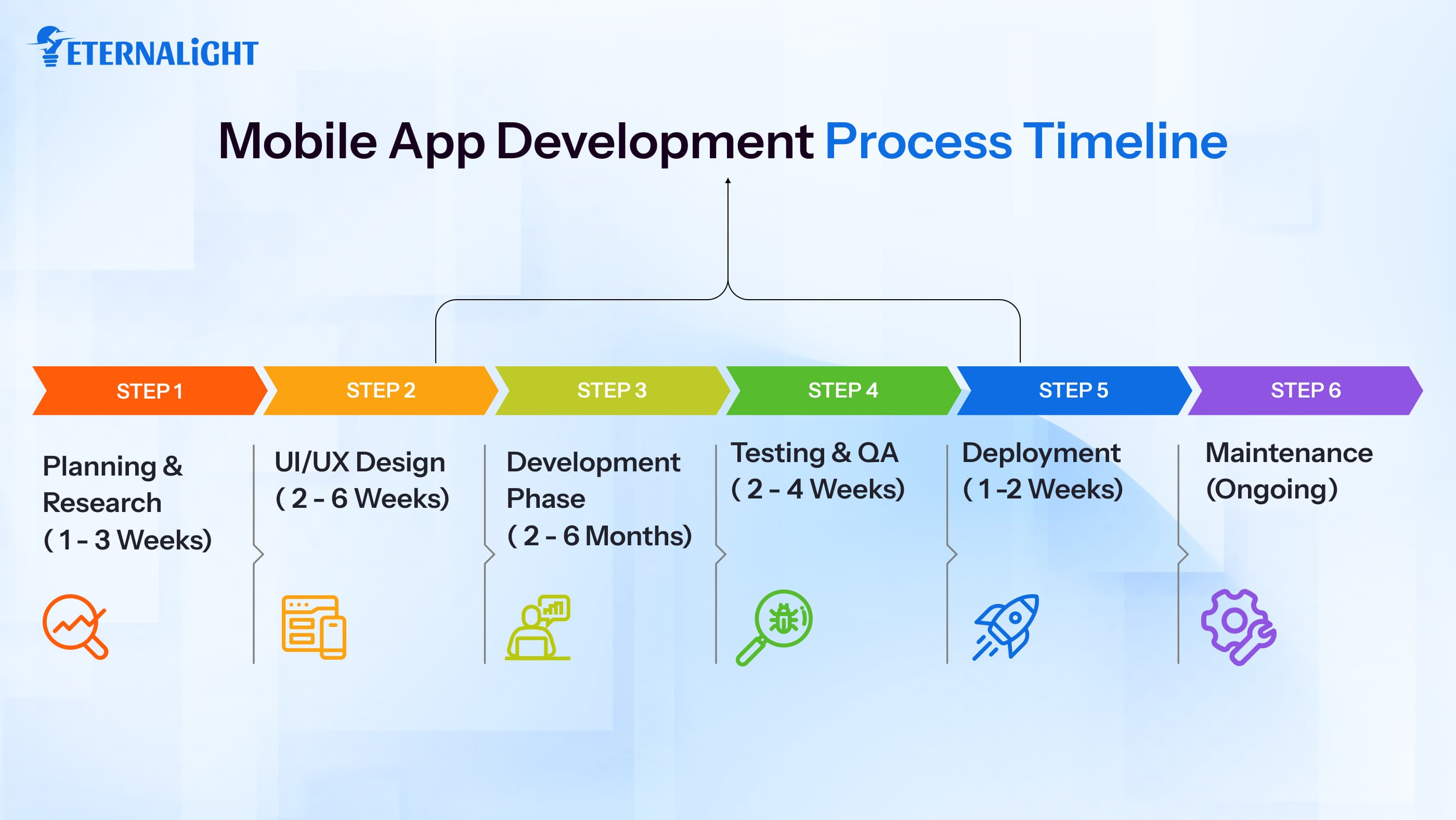
Let’s look at each stage more practically:
Planning & Research ( 1 - 3 weeks)
This is where everything begins. A clear roadmap is created, features are finalized, and priorities are set. Teams also identify technical requirements and potential challenges. Spending enough time here reduces confusion later and keeps the entire app development timeline smooth.
UI/UX Design ( 2 - 6 weeks)
Design is not just about visuals - it’s about user experience. Designers create wireframes first, then move to high-fidelity designs. Every screen, button, and interaction is carefully planned. This stage answers the core question of how users will interact with your app.
Development Phase ( 2 - 6 months)
This is the most time-consuming part. Developers work on both the frontend and backend simultaneously. The complexity features, integrations, and performance requirements directly impact how long this phase takes.
Teams that follow structured workflows and reusable components - like those explained in approaches where teams build for iOS and Android without double effort - can significantly reduce time here.
Testing & QA ( 2 - 4 weeks)
Testing ensures your app works correctly under different conditions. It includes functional testing, performance testing, and usability checks. Skipping this phase might save time initially, but it often leads to bigger delays after launch.
Deployment ( 1 -2 weeks)
Once everything is tested, the app is submitted to app stores. This involves following platform guidelines, setting up metadata, and ensuring compliance. Approval times can vary, especially for iOS.
Maintenance (Ongoing)
Even after launch, work continues. Bugs are fixed, updates are released, and new features are added based on user feedback.
App Development Timeline Based on App Type
Different types of apps come with different challenges, which directly affect the mobile app development timeline.
E-commerce Apps
These apps require product listings, payment systems, order tracking, and user accounts. Since multiple components need to work together smoothly, development usually takes several months.
Social Media Apps
These are among the most complex apps. Features like real-time messaging, notifications, and content sharing require robust backend systems and thorough scalability planning, which significantly increases the timeline.
On-Demand Apps
Apps like food delivery or ride booking involve real-time tracking, location services, and multiple user roles. These features make development more time-intensive.
Enterprise Apps
These apps are built for internal business use and often require integration with existing systems. The timeline depends heavily on how complex those integrations are.
Platform Comparison: iOS vs Android vs Cross-Platform
Choosing the right platform can either speed up or slow down your app development time.
iOS Development
Since Apple devices are limited in number, testing is simpler. This often results in faster development and fewer compatibility issues.
Android Development
Android runs on a wide range of devices, which means more testing and optimization. This can slightly increase the timeline.
Cross-Platform Development
This approach allows developers to write one codebase for both platforms. It reduces duplication of effort and speeds up development, especially when handled by an experienced team offering reliable mobile app development services.
Key Factors That Affect App Development Time
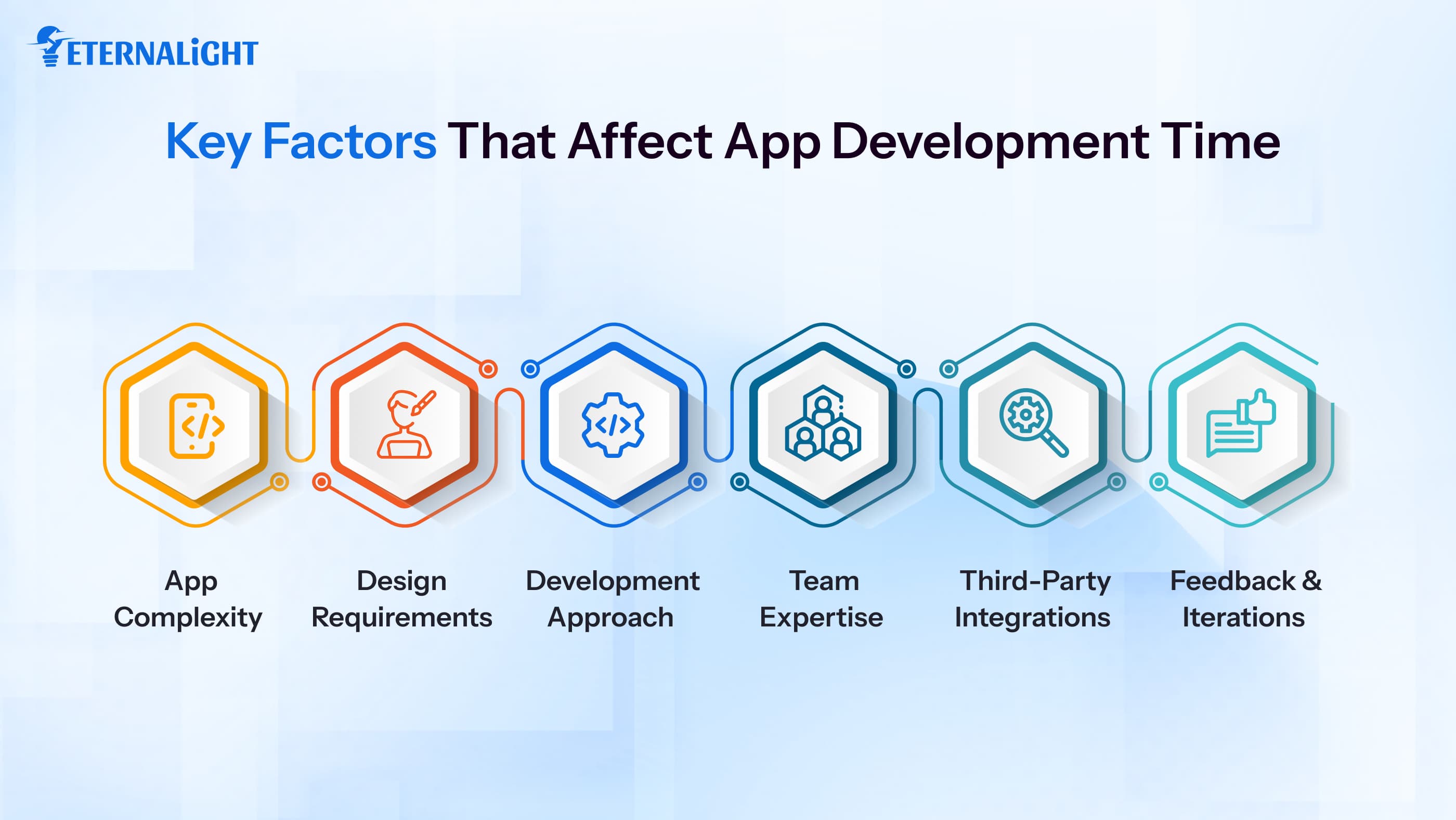
Several factors influence how long your app will take.
App Complexity
The complexity of your app is one of the biggest factors that affect the mobile app development timeline. A simple app with basic features can be built quickly, but as you add advanced functionalities like real-time updates, payments, or AI, the development time increases.
More features mean more work in development, integration, and testing. Even small additions can impact the timeline because everything needs to work smoothly together.
Design Requirements
If your app uses a simple and standard design, the design phase can be completed quickly. But if you want a custom UI with animations, transitions, and unique branding, it will take more time.
Design is not just about appearance - it defines how users interact with the app. Rushing this stage often leads to changes later, which can delay the overall app development time.
Development Approach
The choice between native and cross-platform development also impacts the timeline. Native apps require separate development for iOS and Android, which takes more time.
Cross-platform development allows a single codebase to work on both platforms, which can speed up the process. This approach is often preferred when faster delivery is a priority.
Team Expertise
An experienced team can significantly reduce development time. They understand the process well, avoid common mistakes, and handle challenges more efficiently.
On the other hand, an inexperienced team may take longer to solve problems or may need to redo work, which increases delays. That’s why choosing the right mobile app development company is important.
Third-Party Integrations
Most apps today depend on third-party services like payment gateways, APIs, or analytics tools. These integrations take additional time because they need proper setup and testing.
Sometimes delays happen due to issues from the third-party side. The more integrations your app has, the more it can impact the overall app development timeline.
Feedback & Iterations
Changes during development are common, but frequent revisions can slow down the process. Every update requires developers to modify code and test it again.
Having clear requirements from the beginning helps reduce unnecessary changes. This keeps the project on track and avoids delivery delays.
Common Mistakes That Delay App Development
Unclear Requirements
Starting a project without clear requirements is one of the biggest reasons for delays. When the team doesn’t have a clear understanding of what needs to be built, changes keep coming during development.
This leads to confusion and repeated work. The same features may need to be rebuilt multiple times, which directly increases the overall app development timeline.
Skipping MVP Approach
Many businesses try to build a full-featured app from the beginning. Adding everything at once makes the development process more complex and time-consuming.
A better approach is to start with an MVP development company. It helps you launch faster, gather feedback, and then improve the app step by step.
Poor Communication
Lack of clear communication between team members can slow down the entire project. Designers, developers, and stakeholders may have different understandings of the same feature.
This results in errors and rework. Regular updates and clear discussions help keep everyone aligned and avoid unnecessary delays.
Ignoring Testing
Skipping proper testing might seem like a time-saving step, but it usually creates bigger problems later. Bugs that are found at the end take more time to fix.
Testing is done at every stage, issues are identified early, and resolved quickly. This keeps the mobile app development timeline on track.
Choosing the Wrong Partner
Selecting the wrong development team can lead to serious delays. An inexperienced team may struggle with planning, execution, and handling complex features.
That’s why choosing the right mobile app development company is important. A skilled team ensures smoother development and helps avoid unnecessary delays.
Conclusion
The mobile app development timeline in 2026 depends on multiple moving parts. While a simple app might take a few months, a complex product can take over a year.
Instead of focusing only on speed, it’s better to focus on building the right product with the right approach. A clear plan, the right team, and realistic expectations can make a huge difference.
When timelines are understood properly, you not only avoid delays but also build a product that is ready for long-term success.

Kusum Sethiya
Software Engineer
Kusum Sethiya is a Software Engineer at Eternalight Infotech, focused on building clean and intuitive. She enjoys turning ideas into reliable applications using modern technologies like Javascript, React, Node.js , and MongoDB.
Frequently Asked Questions
Most apps take between 2 to 12 months depending on features, complexity, and the development approach used.
App design usually takes 2 to 6 weeks, including wireframes, UI design, and user experience planning.
App complexity, design requirements, integrations, and team expertise are the biggest factors.
Yes, using the MVP strategy and cross-platform development can significantly reduce development time.
Yes, an experienced company helps ensure faster delivery, better quality, and fewer delays.
Related Blogs
- Software Development11 Mins
Website Security Checklist: What to Check Before It's Too Late
Worried about website security? Use this practical website security checklist to spot common risks and protect your website, data, and users.
- Software Development7 Mins
From Off Track to Success: Custom Software Development Challenges to Fix Early
Custom software projects don’t always go as planned. Learn which challenges to catch early before they become costly problems for your budget, scope, and product.
- Software Development8 Mins
Product-Market Fit vs Revenue: What Should Indian Startups Chase
Product-market fit vs revenue: What should Indian startups focus on first? Explore the right metrics, customer signals, and growth priorities at each stage.