Frontend development is evolving faster than ever. What worked perfectly two years ago might already feel outdated today. With new tools, better performance expectations, and growing user demands, choosing the right frontend frameworks has become one of the most critical decisions in web development.
In 2026, businesses are not just looking for visually appealing websites - they want speed, scalability, and seamless user experiences. Whether you’re building a SaaS platform, an eCommerce store, or a content-driven site, your choice of framework directly impacts performance, development time, and long-term maintenance.
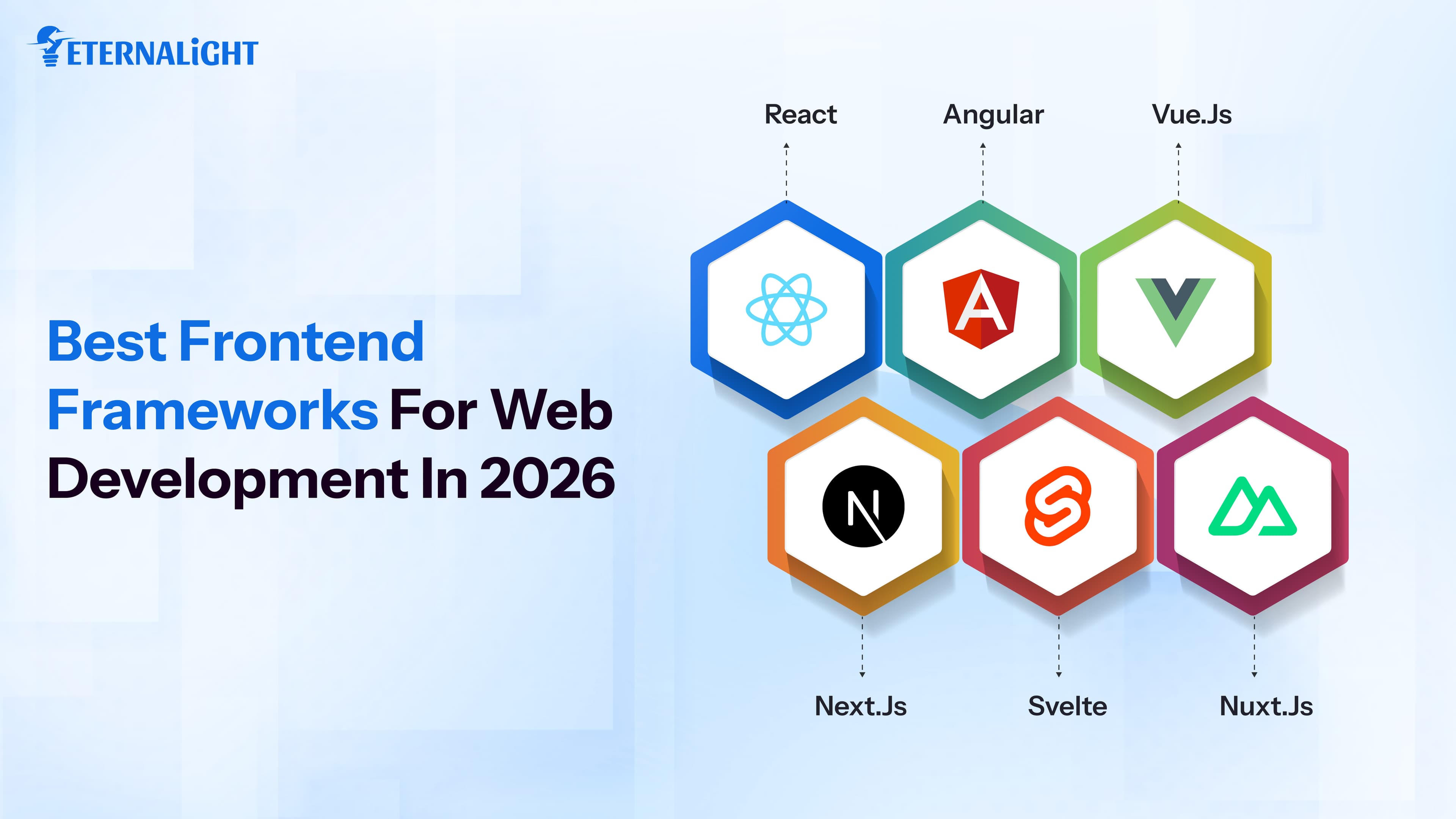
This blog explores the best frontend frameworks for web development in 2026, how they compare, and how you can choose the right one for your project.
What is a Frontend Framework?
A frontend framework is a pre-built collection of tools, libraries, and best practices that help developers build user interfaces efficiently. Instead of writing everything from scratch, developers use these frameworks to speed up development and maintain consistency across projects.
Think of it as a structured foundation for building web interfaces. It provides reusable components, ready-to-use UI elements, and a standardized way to handle interactions.
Frontend frameworks simplify:
- UI development
- State management
- Routing and navigation
- Code organization
Popular examples include React, Angular, and Vue. Each comes with its own philosophy, strengths, and use cases.
If you’re still comparing two major players, you can explore a detailed comparison in our guide on ReactJS vs VueJS.
Top Frontend Frameworks in 2026
Let’s take a closer look at the most relevant frontend frameworks shaping web development in 2026.
React
React remains one of the most dominant choices in frontend frameworks even in 2026. Developed by Meta, it has evolved into a powerful ecosystem that supports everything from small UI components to large-scale enterprise applications.
What makes React stand out is its component-based architecture. Developers can break down complex user interfaces into smaller, reusable components, making the code more manageable and scalable over time.
Unlike traditional frameworks, React gives developers flexibility. You can choose your own tools for routing, state management, and API handling, which makes it highly adaptable for different project needs.
Why React continues to lead -
- Reusable component-based architecture
- Strong ecosystem with vast third-party libraries
- Efficient rendering using virtual OM
- High scalability for growing applications
React is widely used for building dynamic applications like dashboards, SaaS platforms, and interactive web apps. Businesses often prefer working with a ReactJS development company for scalable solutions.
To improve performance in real-world projects, it’s essential to focus on React performance optimization techniques.
Angular
Angular is a full-fledged frontend framework maintained by Google, designed for building large-scale, enterprise-level applications. Unlike React, Angular provides a complete solution out of the box, including routing, state management, form handling, and HTTP services.
It follows a structured approach using TypeScript, which helps maintain consistency and scalability in complex projects. This makes Angular a preferred choice for applications that require long-term maintenance and strict architecture.
What makes Angular powerful -
- Complete framework with built-in features
- Strong typing with TypeScript
- Structured and maintainable codebase
- Ideal for large and complex applications
Angular is best suited for enterprise solutions like banking systems, CRM platforms, and large business applications. Organizations looking for reliability and long-term scalability often partner with an Angular development company to build robust solutions.
Vue.js
Vue.js has steadily grown into one of the most developer-friendly frontend frameworks. It strikes a perfect balance between simplicity and performance, making it an excellent choice for both beginners and experienced developers.
One of Vue’s biggest strengths is its ease of learning. Developers can quickly get started without dealing with complex configurations, while still having access to powerful features like reactive data binding and component-based architecture.
Why Vue is a strong choice in 2026 -
- Simple and easy-to-understand syntax
- Lightweight and fast performance
- Reactive data binding system
- Flexible integration with existing projects
Vue is particularly popular among startups and small to medium-sized businesses that need fast development without compromising on performance. Many companies choose to work with a VueJS development company to build cost-effective and scalable applications.
Next.js
Next.js has become one of the most important frameworks in modern web development. Built on top of React, it enhances the capabilities of React by adding features like server-side rendering (SSR), static site management (SSG), and optimized performance.
In 2026, performance and SEO are critical for any web application, and Next.js addresses both effectively. It allows developers to build fast-loading applications that are also search engine-friendly.
Key Strengths of Next.js -
- Built-in server-side rendering and static management
- Improved SEO performance
- Faster page load times
- Simplified routing and file-based structure
Next.js is widely used for eCommerce platforms, SaaS applications, and content-driven websites where performance and visibility matter the most. Businesses aiming for high-performance web solutions often collaborate with a NextJS development company to maximize results.
Svelte
Svelte is not just another frontend framework - it takes a completely different approach to building user interfaces. Instead of doing most of the work in a browser like React or Angular, Svelte shifts that work to compile time.
As a result, applications built with Svelte are incredibly fast, lightweight, and efficient. There is no virtual DOM, no unnecessary re-rendering, and a significantly smaller bundle size compared to traditional frameworks.
What makes Svelte stand out in 2026 -
- No virtual DOM, leading to faster performance
- Smaller bundle sizes for better loading speed
- Less boilerplate code, making development cleaner
- Built-in reactivity without complex state management
Svelte is especially useful for projects where performance is critical, such as dashboards, interactive tools, or lightweight web apps.
However, one thing to consider is its relatively smaller ecosystem compared to React or Angular. While it is growing rapidly, finding experienced developers or large-scale support may still be slightly challenging.
Nuxt.js
Nuxt.js is a powerful framework built on top of Vue.js, designed to simplify the development of modern web applications. It brings structure, performance, and SEO capabilities to Vue-based projects, making it a strong contender in 2026.
One of the biggest advantages of Nuxt.js is how easily it handles server-side rendering (SSR) and static site generation (SSG). These features are essential for improving page load speed and search engine visibility - two critical factors for any modern website.
Why Nuxt.js is gaining popularity -
- Simplified SSR and SSG setup
- Better SEO performance out of the box
- Clean and organized project structure
- Automatic routing and configuration
- Strong integration with the Vue ecosystem
Nuxt.js is particularly well-suited for content-heavy websites, eCommerce platforms, and applications where SEO plays a major role. It allows developers to focus more on building features rather than worrying about configuration and performance optimization.
For businesses that already use Vue, Nuxt.js provides a natural upgrade path to build faster and more scalable applications without adding unnecessary complexity.
How to Choose the Best Front-End Framework?

Choosing the right frontend framework is not about picking the most popular one. It depends on your project requirements, team expertise, and long-term goals.
Frontend performance also depends on the deployment infrastructure used to host and deliver applications globally.
Here are the key factors you should consider :
Project Complexity
For simple websites or MVPs, lightweight frameworks like Vue or Svelte help you build quickly with less complexity.
For large-scale applications with multiple features, React or Angular provides better structure, maintainability, and long-term scalability.
Performance Requirements
If your application demands fast loading and a smooth user experience, performance should be a top priority.
Frameworks like Next.js and Nuxt.js offer server-side rendering and static generation, which significantly improve speed and efficiency.
Developer Experience
Choosing a framework that is easy to learn and well-documented can reduce development time and errors.
A better developer experience leads to faster delivery and more efficient collaboration within the team.
Community Support
A strong community ensures access to tutorials, plugins, and quick solutions to common issues.
Popular frameworks like React and Angular have extensive ecosystems that make development more reliable and flexible.
Scalability
If you plan to expand your application in the future, scalability becomes an important factor.
Frameworks like React and Angular are designed to handle growing applications without compromising performance.
SEO Needs
For websites that rely on search engine traffic, SEO capabilities should not be ignored.
Frameworks like Next.js and Nuxt.js support server-side rendering, which helps improve search engine visibility and ranking.
Cost of Frontend Development Using Different Frameworks
Below is a general comparison of development costs based on different frontend frameworks. Actual cost may vary depending on project complexity, features, and developer expertise.
Framework | Development Cost | Best For | Key Cost Factors |
|---|---|---|---|
React | Moderate to High | Scalable web apps, dynamic UI | Third-party libraries, developer expertise, customization |
Angular | HIgh | Enterprise-level applications | Complex architecture, experienced developers required |
Vue.js | Low to Moderate | Startups, small to medium projects | Faster development time, smaller team needed |
Next.js | Moderate to High | SEO-focused, high-performance apps | SSR setup, advanced features, and hosting |
Nuxt.js | Moderate | Vue-based SEO apps | SSR configuration, performance optimization |
Svelte | Low to Moderate | Lightweight apps, fast development | Limited developer availability, smaller ecosystem |
Why Choose Eternalight for Frontend Development?

Choosing the right frontend framework is important, but selecting the right development partner is equally crucial. Eternaligh Infotech focuses on building high-performance and user-friendly web applications that align with your business goals.
With experience across modern frontend frameworks, the team delivers scalable and efficient solutions for both startups and enterprises. Every project is handled with a clear strategy and attention to detail.
What makes Eternalight Infotech a reliable choice -
Expertise in Modern Frameworks
The team works extensively with technologies like React, Angular, Vue, and Next.js, ensuring the right framework is chosen based on your project requirements.
Performance-Driven Development
Every application is built with a strong focus on speed, responsiveness, and a smooth user experience across devices.
Custom Solutions for Every Business
Instead of one-size-fits-all solutions, the development approach is tailored to match your specific business needs and goals.
Scalable and Future-Ready Applications
The code structure and architecture are designed to support long-term growth and easy scalability.
Transparent Process and Communication
From planning to deployment, clear communication and regular updates ensure smooth collaboration throughout the project.
Conclusion
The world of frontend frameworks in 2026 is more diverse and powerful than ever. From React’s flexibility to Angular’s structure and Vue’s simplicity, each framework has its own strengths.
There is no one-size-fits-all solution. The best choice depends on your project goals, budget, and technical requirements.
If you’re building a modern web application, focus on performance, scalability, and developer experience. With the right framework and development partner, you can create applications that not only look great but also perform exceptionally well.

Kusum Sethiya
Software Engineer
Kusum Sethiya is a Software Engineer at Eternalight Infotech, focused on building clean and intuitive. She enjoys turning ideas into reliable applications using modern technologies like Javascript, React, Node.js , and MongoDB.
Frequently Asked Questions
There is no single best framework in 2026. React, Angular, and Vue lead the market, while Next.js and Svelte are gaining popularity based on performance, scalability, and project needs.
Yes, React remains highly relevant due to its flexibility, strong community, and vast ecosystem. It is widely used for building scalable and high-performance web applications across industries.
Vue.js is considered one of the easiest frameworks to learn. Its simple syntax, clear documentation, and flexibility make it ideal for beginners and small to medium-sized projects.
Frameworks like Next.js and Nuxt.js are best for SEO because they support server-side rendering. This improves page load speed and helps search engines index content more effectively.
You should consider project complexity, performance needs, scalability, SEO requirements, and your team’s expertise. Choosing the right framework ensures better development speed and long-term success.
Related Blogs
- Software Development11 Mins
Website Security Checklist: What to Check Before It's Too Late
Worried about website security? Use this practical website security checklist to spot common risks and protect your website, data, and users.
- Software Development7 Mins
From Off Track to Success: Custom Software Development Challenges to Fix Early
Custom software projects don’t always go as planned. Learn which challenges to catch early before they become costly problems for your budget, scope, and product.
- Software Development8 Mins
Product-Market Fit vs Revenue: What Should Indian Startups Chase
Product-market fit vs revenue: What should Indian startups focus on first? Explore the right metrics, customer signals, and growth priorities at each stage.