Businesses prefer to build apps with cloud-native architecture that can scale as needed and access data and other services efficiently to drive the business. They can extend system functionality without taking on the burden of physical storage, infrastructure, resources, or manual workflows.
But we all know the cloud has limits; if you want to use more, you have to pay. Some workflows and operations can be managed with cloud-native tools, but businesses don't always get major benefits. Some may faces the complication.
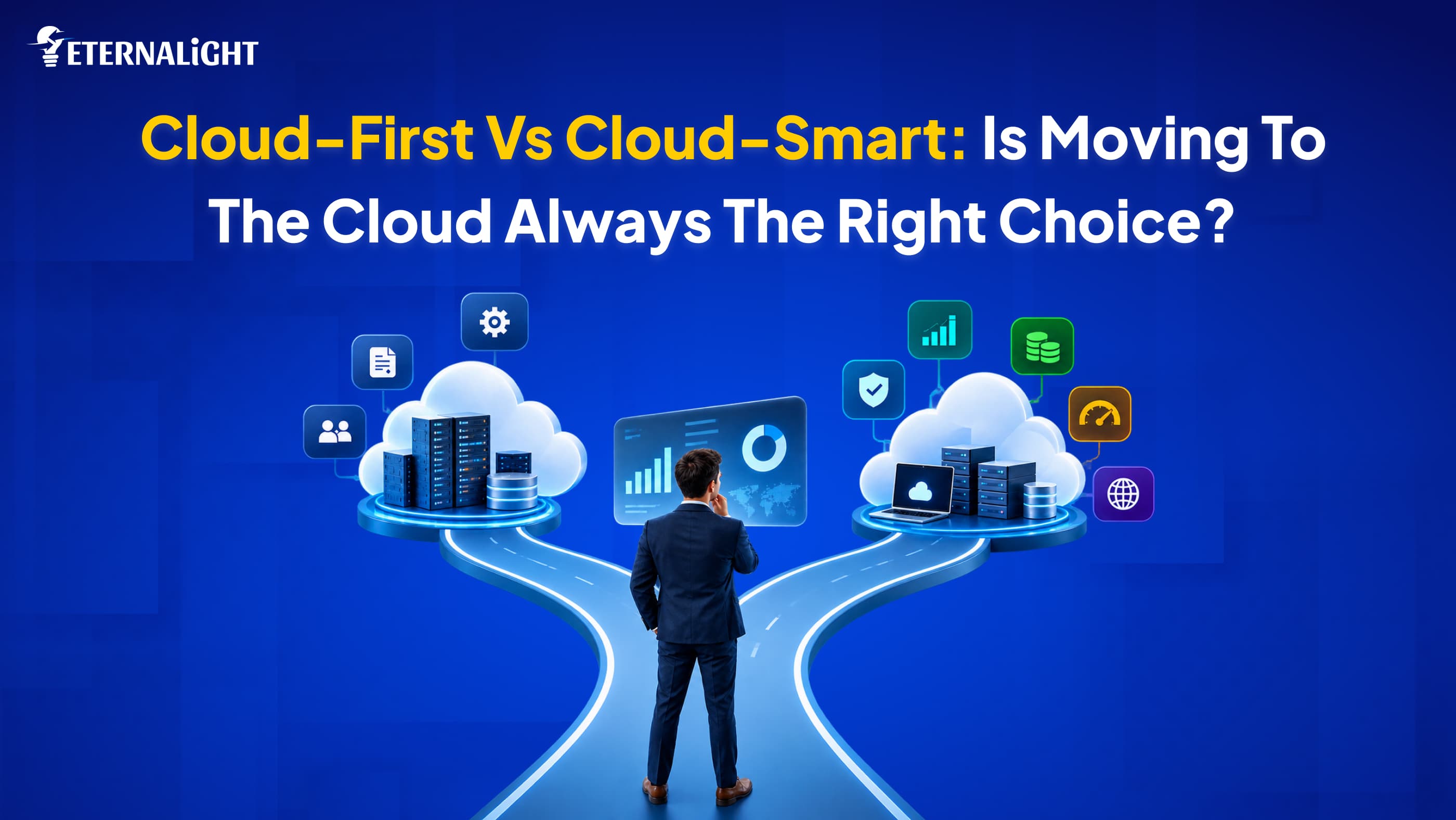
The cloud isn't essential, but you need a forward-thinking mindset to use it smartly and strategically. Being cloud-smart means understanding which workloads can move to the cloud and how much budget we can spend to get optimal performance and output aligned with business needs.
We can’t fully depend on the cloud because an outage can happen at any moment, so before moving workloads to the cloud, businesses need to decide whether a cloud-first or cloud-smart approach makes more sense.
What Do You Mean by a Cloud-first Approach?
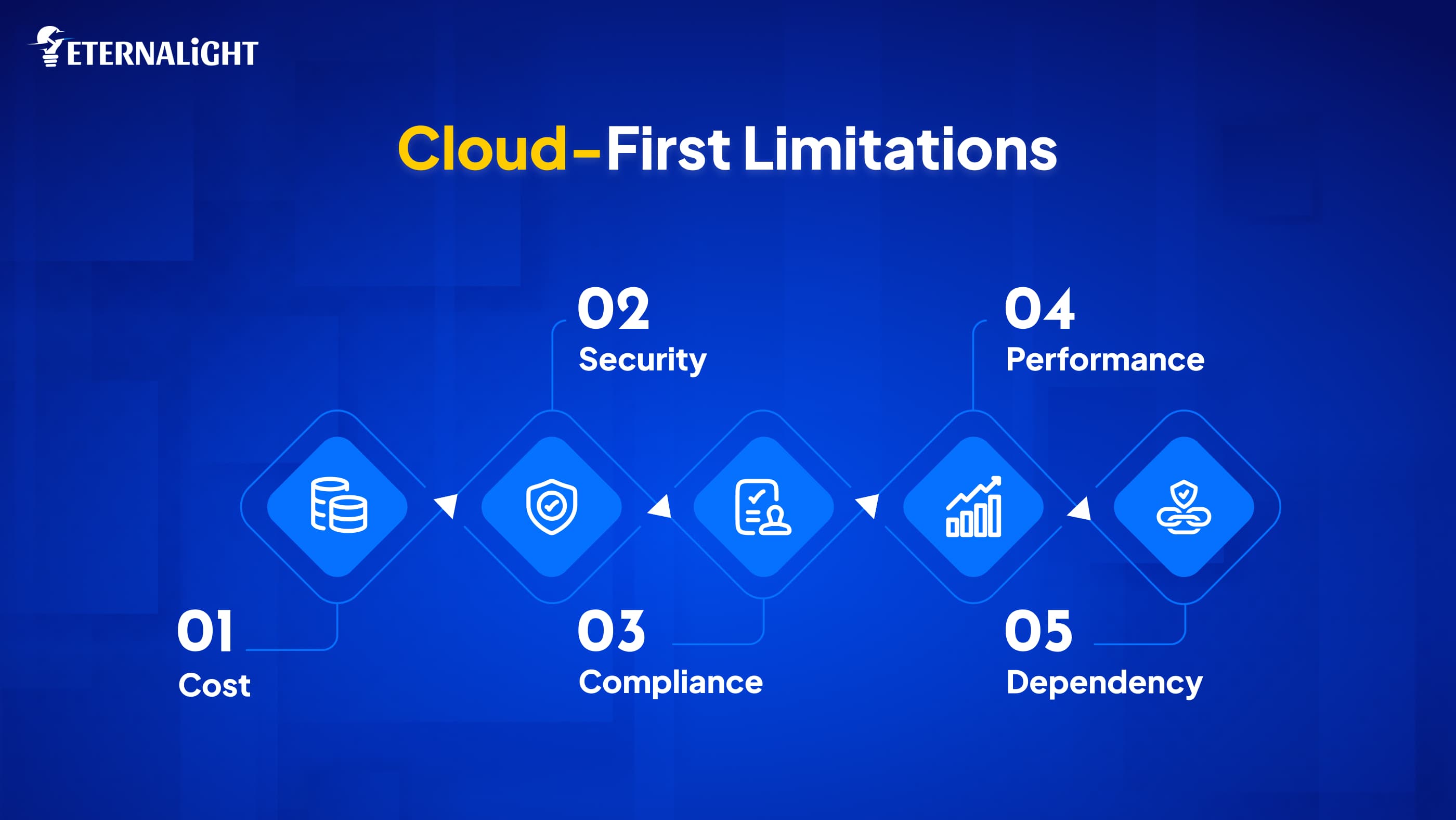
When a company wants to launch a new project or app, they often start with the cloud because it offers everything from hosting and storage to communication services. Depending on the organization's needs, cloud services can scale up or down. The following reasons encourage businesses to adopt a cloud-first strategy.
Financial Benefits
Finance works as the driving force for business operations, and if businesses spend 50% of their budget on hardware and infrastructure, what will they keep in reserve for purchasing other instruments
Flexible Adoption
When businesses want to swap legacy systems to drive modernization, a cloud-first approach can look comfortable at first glance. It backs their business plan
Hiring and Work Model
Since COVID, most companies have started working remotely; cloud-native apps and services have supported this shift and enabled employees to collaborate, access business data, and complete tasks on time, anytime, from anywhere.
Reduce Redundancy and Errors
Physical files can be misplaced, lost, or damaged over time. Also, if it's in a records room, we need to spend time and effort protecting it, but a cloud-first approach reduces errors and speeds up the process.
But a cloud-first approach doesn’t fit for all; it can fail at any time. What if the backup isn’t saved and there's no secondary architecture design? What if the cloud service provider increases the cost?
Risks also arise if security and compliance change and you can’t handle the workload afterward.
Migrating data from one cloud to another might be possible, and most organizations do it, but it doesn’t create a major transformation; it just becomes a data center. Here’s where the cloud-smart strategy takes center stage.
What Do You Mean by a Cloud-smart Approach?
Cloud technology is still present; it hasn't completely vanished. The difference is that business executives now think and frame decisions around the project's intent and scope.
They don’t simply jump into the cloud; they brainstorm whether it is worth it for the organization in the future.
They check if the workload is manageable without depending on the cloud and if it will make any difference in compliance, latency, performance, etc
Every penny spent on resources or tools makes a huge difference in the budget, so the organization needs to take accountability for what they’re spending and how much.
When designing any architecture, security comes first, even in a distributed environment; access, identity, and compliance controls must be managed and protected.
Cloud service providers offer different cloud models to meet organizational needs and manage operations efficiently. They can embrace the cloud benefits from any model hybrid or multi whatever yields the best outputs
A cloud-smart approach isn’t against the cloud; it's a parallel move focused on feasibility, without forcing the organization to consume what it doesn't need. Whatever skills or services you choose will impact cost, time, and effort.
Cloud First vs Cloud Smart: The Questions to Ask Before Moving to the Cloud
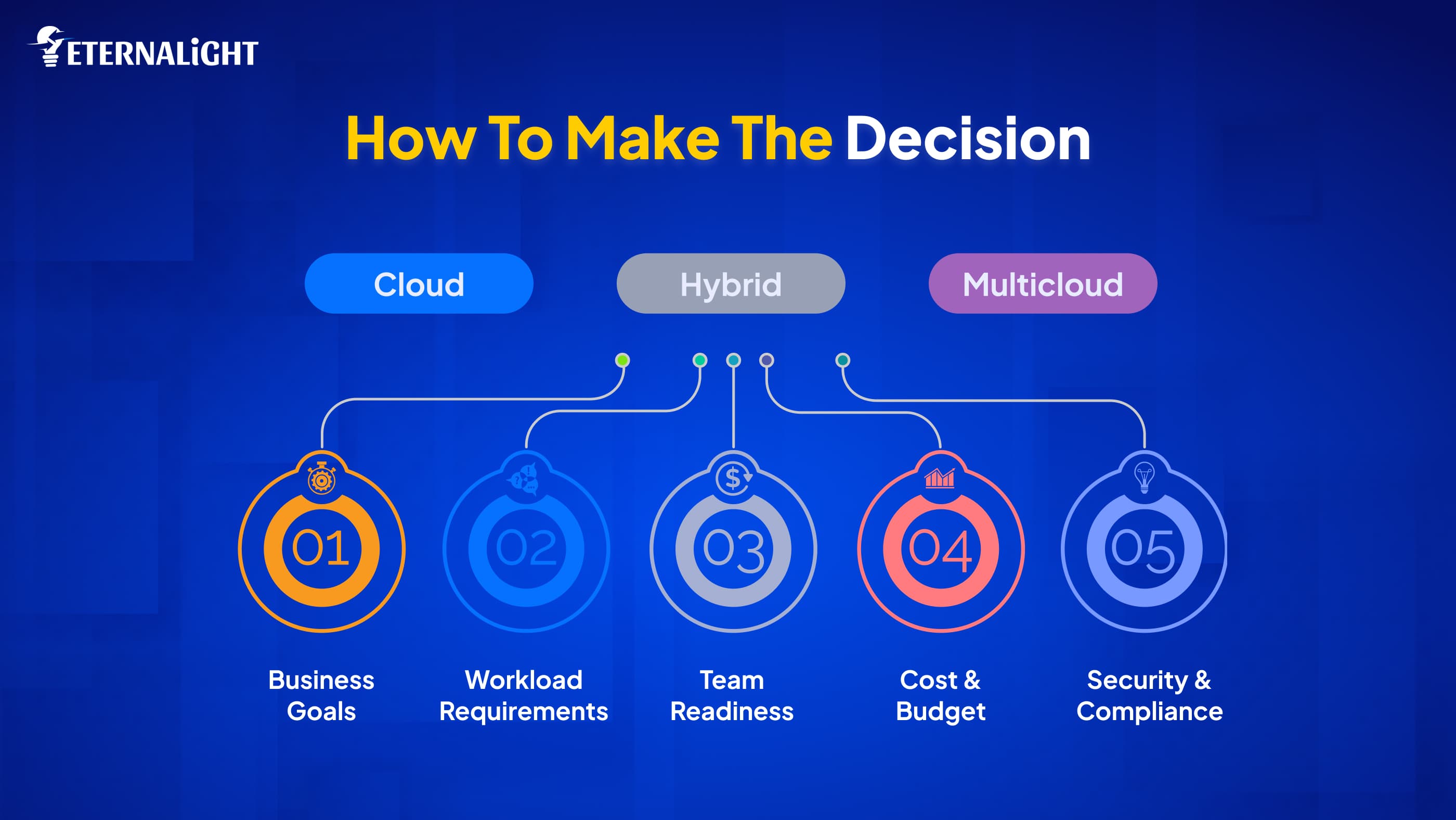
Whenever these two terms surface in the market, they spark confusion and curiosity and affect our decisions. Instead of bending towards one, clarify what you want, what your intent is, and your business needs, or you can go through the assessment test:
Is your team cloud literate?
Before moving to a cloud-first, cloud-smart strategy, you must evaluate whether all employees and team members are familiar with cloud apps and services.
Do they have basic knowledge?
Do they still depend on traditional tools?
If so, you first need to set up training sessions until they’re aware and ready for the cultural shift; you can’t proceed further.
Ask them to complete the relevant certification and training so they can accomplish the goals efficiently.
What approach meets your business goals?
Misalignment and mismanagement lead to mistakes. You will agree with this. Sometimes, when competitors are performing better, and we see they’re focused on specific services and trends, we blindly follow them without assessing our business goals and core services.
How will we know which capabilities and which cloud model will benefit us?
As a result, we waste budget and resources.
Do you have a lot of sensitive and confidential information to safeguard?
Businesses in the BFSI sector have a lot of sensitive data that can’t be exposed across public networks, or it will destroy them.
They must strengthen AI data security strategies because hackers have become more intelligent, making it harder to hide proprietary and user data.
If businesses prefer a cloud-smart approach and choose hybrid or multicloud with stronger compliance measures, the situation becomes manageable.
Do you have a fractional CTO and CFO, or another financial expert, to make the right decision?
We are discussing why you should go for a cloud-first vs. cloud-smart strategy, and who the best person is to make the call on this better than a CTO or CFO who closely understands and is aware of the business goals and objectives- so they can lay out the best plan addressing the potential concerns.
Like the pandemic, regular outages, and cyberattacks, overspending on unnecessary resources can sink the business. These high-level professionals can address issues strategically by understanding market dynamics and real-world situations.
What would you do when you no longer want the cloud?
Inflation is dynamic; thus, prices can change at any time. Be aware that whenever policies or plans change, review whether you still prefer the cloud's services or should stop.
Whatever you choose, it should work well financially and from a security perspective, grounded in local and global business realities.
Final Words
The world is shifting from cloud-native to cloud-smart to reduce business complexity and better align with technological evolution. They’re not saying to forget it, but to choose resources and services that comply with governance standards and support sustainable growth through mindful decisions.
Instead of launching and setting up faster, the question is: why do it? Whatever decisions they make, will they be worth it in the future?
Businesses prefer modernization and migration, but with a mature mindset. Adopting cloud-native architecture isn’t the end of all problems; it's a booster for project success, but it’s a capability, and if it’s not done well with the right strategy, it can cost more.

Ayushi Shrivastava
Senior Content Writer
Ayushi is a Content Strategist at Eternalight Infotech with 4 years of experience in transforming complex ideas into clear, engaging, and SEO optimized narratives. She specializes in crafting impactful content strategies that enhance brand visibility and drive meaningful engagement across digital platforms.
Related Blogs
- Cloud & DevOps9 Mins
Cloud Cost Optimization Strategies: How to Reduce Cloud Spend Without Hurting Performance
Learn practical cloud cost optimization strategies to reduce unnecessary cloud spending, improve resource usage, and maintain performance and scalability.
- Cloud & DevOps9 Mins
Why SaaS Data Protection Matters: 8 Risks Businesses Should Not Ignore
SaaS apps may not protect your business data as well as you think. Discover 8 risks and what businesses can do to protect and recover critical SaaS data.
- AI & ML10 Mins
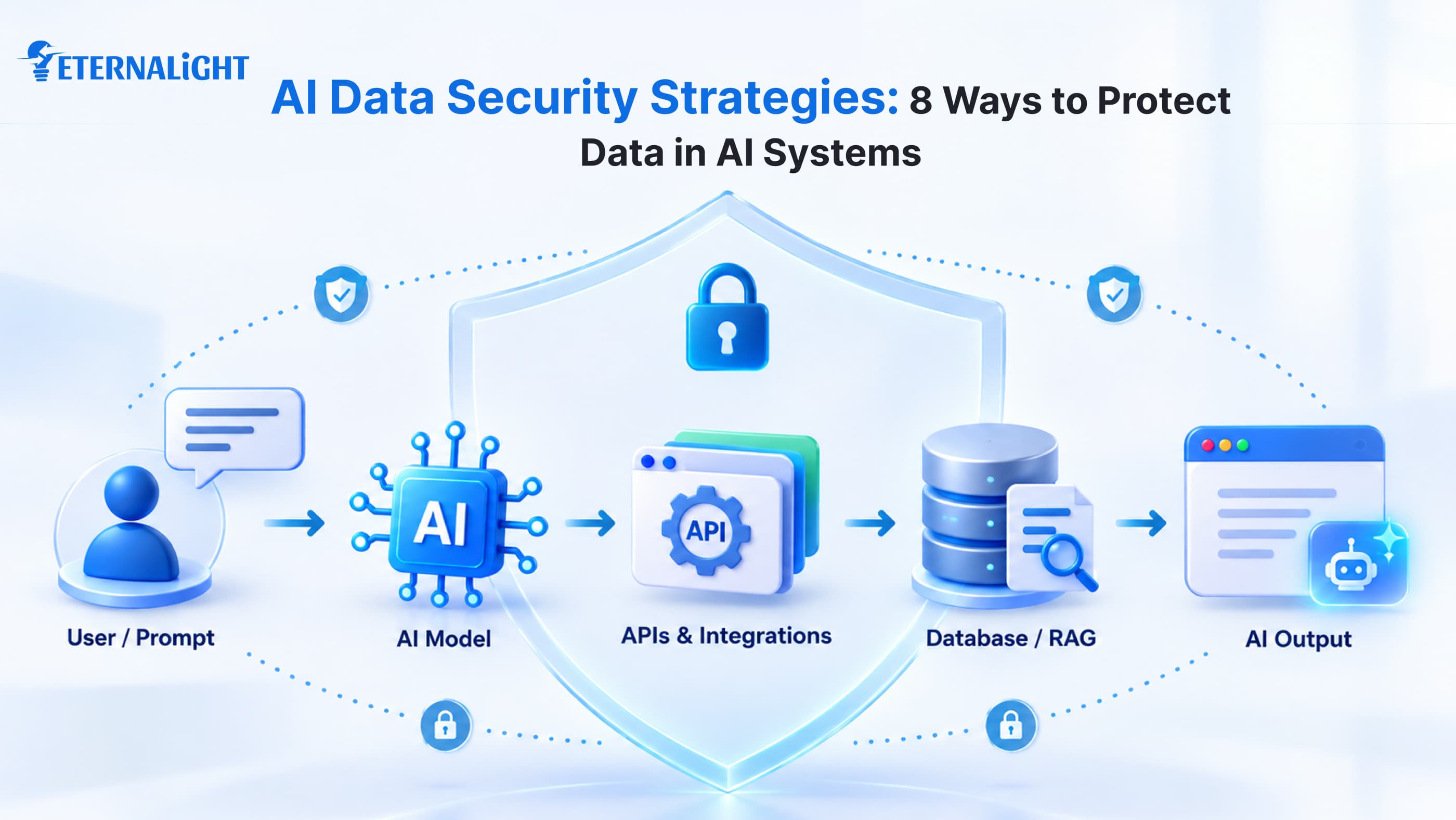
AI Data Security Strategies: 8 Ways to Protect Data in AI Systems
Explore 8 AI data security strategies to protect sensitive data across prompts, AI models, RAG systems, APIs, access controls, storage, and outputs.