Software Development
11
Mins
Software Product Development Lifecycle Explained for Non-Technical Founders
A complete guide for non-technical founders on every phase of the software product development lifecycle
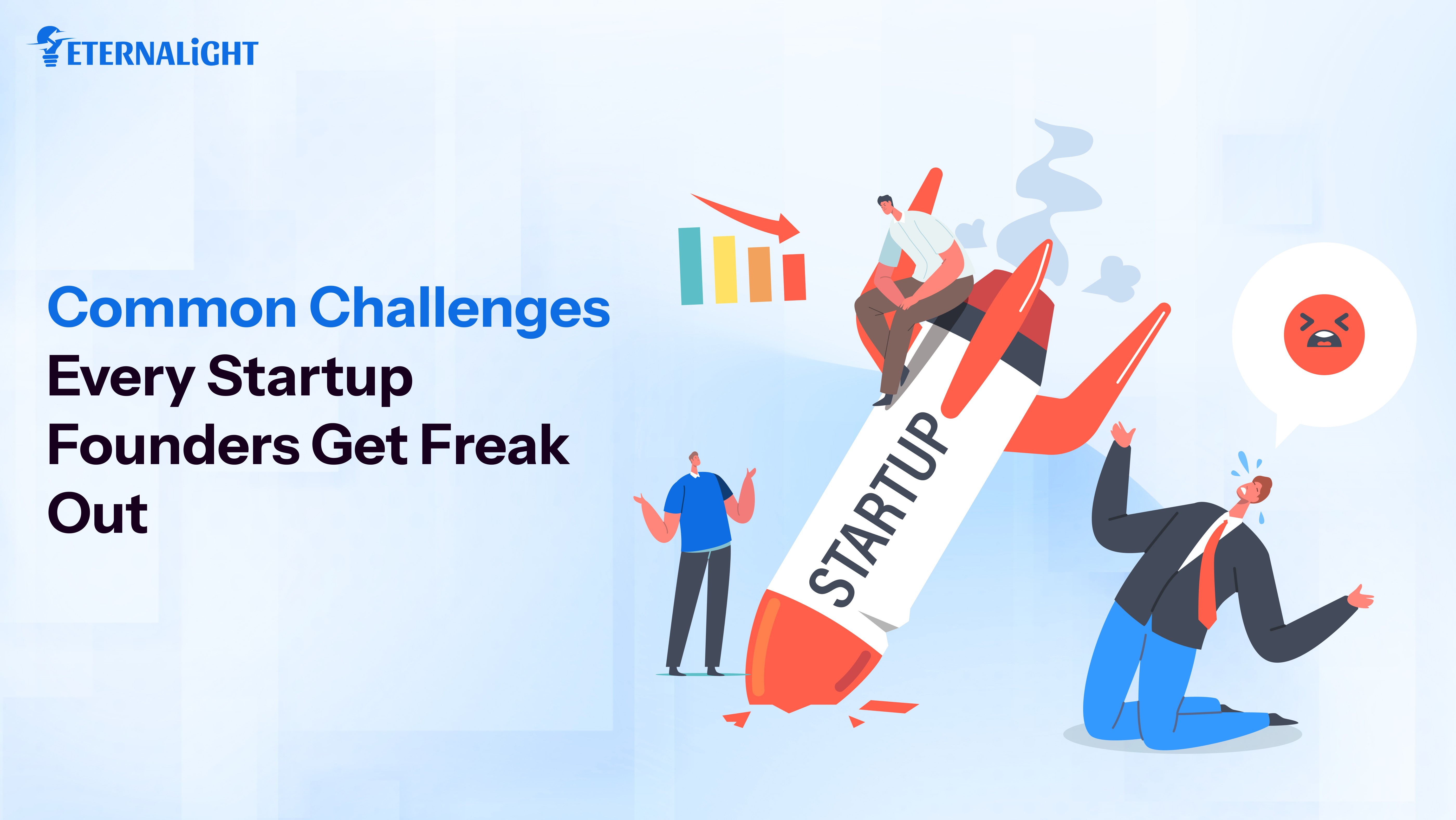
Operating a startup isn’t a walk in the park. If you are the startup founder, you may have realised that yourself. It's hectic, filled with ups and downs. Each small win and failure teaches you important learning.
Often, they face a few challenges that block their success, but the ambitious ones navigate them with persistence and confidence. We know the dynamic market ecosystem, the buzz, the trends, user expectations, and the constant tough battles with competitors.
That can only be aligned well with the founder’s presence of mind and decision-making power, taking the right call or initiative on time.
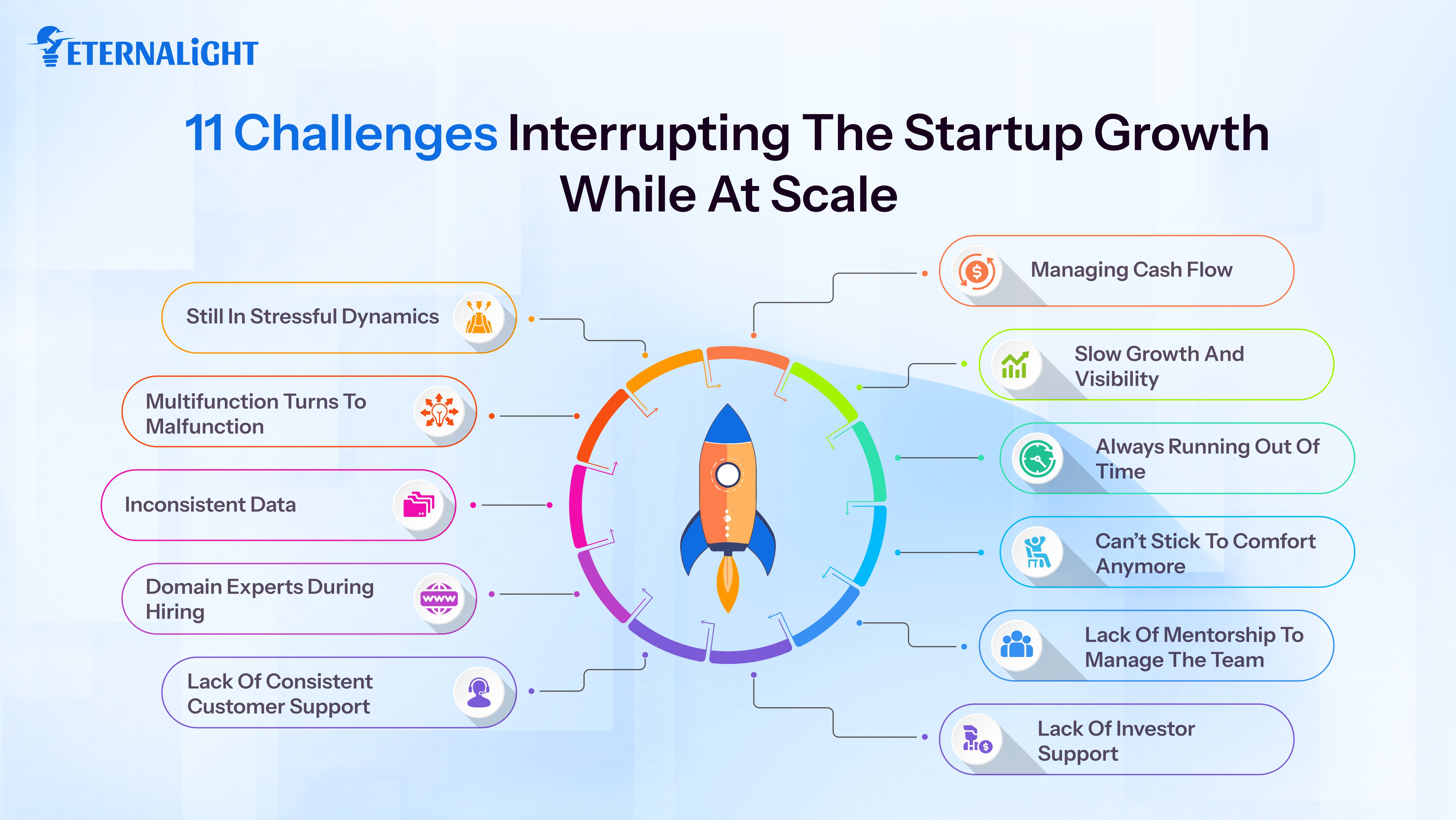
However, as soon as they consider scaling further, the startup's challenges pile up. Here, in this blog, we have listed numerous challenges a startup founder faces at scale in their journey.
Many founders think adopting trends, modern tools, and hiring thousands of people to their team will make them big and support scaling the business. They forget that success comes from continuous effort, skilled people, and strategic, structured workflows.
Many startups fall and fade faster because they have not planned well. They promised, but a lack of persistence, precision, professionalism, and information, along with inconsistency, are the hurdles. Are you making the same mistake?
Check these common challenges that startups face when they scale.
No matter how many years of experience you have and how many complicated situations you have gone through, there’s always something unexpected that you never thought would happen.
Maintaining balance in a paradoxical situation is quite challenging. As trends and market dynamics continue to evolve, the competition never takes a back seat.
Even if you lose and a setback occurs, the founders still need to fight back with full conviction, gather the facts and necessary information, and understand how to respond in different situations without being offensive or panicked.
Businesses have cross-functional department teams to manage different tasks and responsibilities. Includes sales & marketing, finance, technical department, non-technical customer support, or more.
To secure high incentives, teams do more, but manual tasks and processes overwhelm them, affecting their productivity and efficiency. Many times, they get stuck in a problem for which they subscribe to automation tools to get their work on time, but if the tools are not verified or trusted, it can expose sensitive organisation data.
Instead of resolving the problem, the problem gets bigger. To avoid the risks of technical debt and security vulnerabilities, the organization should provide tools that meet its needs and train employees to use them.
When a startup is in its infancy, it's manageable to deal with clients and manage data. However, when it plans to scale to reach global customers, the data will also stack up.
If we still rely on physical storage, it will be hard to analyze or extract information on demand. If data is stored across documents and on different mobile or desktop devices, the memory becomes inconsistent.
To streamline operations and processes without hampering them, it is necessary to set up storage tools to eliminate frustration, data errors, and manual inspection.
If the data is scattered, it's harder to prepare reports that support well-informed decision-making and to gain a 360-degree view to discover new opportunities.
A startup owner will agree that they have a limited budget and that an experienced professional with a decent skill set will ask for a lump-sum package. Hiring takes time, and to evaluate professionals across multiple levels, the organization must have experienced people to evaluate new hires.
If the founder tries to manage this hiring part, they’ll soon get frustrated. Founders have many other operational responsibilities; if they’re stuck on such a task, it's a waste of time and effort.
Now, to save on hiring costs and secure top talent, the founder can outsource or hire fractional HR services or fractional CTOs.
Many startups lack unified and interactive CRM tools to manage customer interactions. Manual or in-person interaction takes time and effort, delaying the process; thus, many customers end up waiting in line.
If the customer doesn’t have any interactive option to query or drop requests, it will establish a negative image of the organization.
Customers feel abandoned and frustrated due to uncertainty and poor onboarding experiences. Even if things happen unintentionally, it seeds the misunderstanding due to poor experience.
To drive anything, small or large, level, finance can interrupt the process. To function in anything from sales and hiring to buying resources and tools, even for the space to operate the services, founders need cash.
Even if they have investor support or a fundraiser group, you still need to be mindful. The situation can turn at any moment, leading to instability, sometimes due to natural factors and sometimes due to legal issues.
If it's managed poorly, founders will soon run out of cash, struggling in the middle due to a fall.
Word of mouth works fine in local areas, but while aiming to sell, you need to focus on marketing planning and strategy. Brainstorming to increase sales is hard to escalate offline. In the modern world, competition is tough; they can easily forget things if something new comes along.
Whether you are in your own city or aiming to launch other branches of your venture in different locations it must have a digital identity, and for that, you should have social media accounts and a website where you can update your audience regarding ongoing and upcoming launches.
Startup founders spiraling thoughts about expanding their business; they have uncountable dreams and visions in their mind. Having aspirations isn’t bad, but if you’re endlessly thinking, that’s not productive at all. It distracts you from your real pals who need to be accomplished. At the end of the day, you’ll think we have wasted a day.
Suppose you have a meeting the next day, and you’re just thinking about the worst-case scenarios-"ifs" and "buts"-that will only lead to negativity, ruining the valuable time you invest in planning and strategizing in a structured format.
Too much though steals the peace of mind. Without proper sleep, you won’t feel energetic. Cut the distractions and focus on the essential thing what matters.
Scaling the startup comes with a headache because growth isn’t stable; you need to work every second of the day, even when you're out of your comfort zone. To drive phenomenal growth, you need to evolve with the market and have a structured plan for everything from finance and resources to time, navigating challenges effortlessly.
Some founders use low-code platforms to scale, but that's nice only if it fits the scenario. Know more about low code risk when startup scale.
A good founder isn’t the one who earns money or who everyone praises. He values people, fosters camaraderie, and mentors subordinates to tackle challenges. Work is the utmost priority, but employees' work life balance matters too.
When founders give value and care with transparency, the team performs better. You can’t pursue your dream and vision alone; you definitely need the support of skilled people to share your startup's scaling journey.
If you have established your dream as a startup but can’t get real investors to trust in your business. Maybe someone hasn't found value in it, or fears uncertainty; maybe you’re new and have no experience dealing with challenges.
Sometimes, founders are unprepared and have not conducted sufficient market analysis to assess the risk. No matter how many digital signals you've added or how many resources you have, if your vision isn’t clear or you don’t know how to battle with competitors, investors take a step back.
Don’t be selfish; be self-aware and address real-world scenarios with enthusiasm. Do enough research, considering all the if’s and but’s, and pitch investors with a positive attitude, frequently checking your KPIs and CRM to drive sustainable growth.
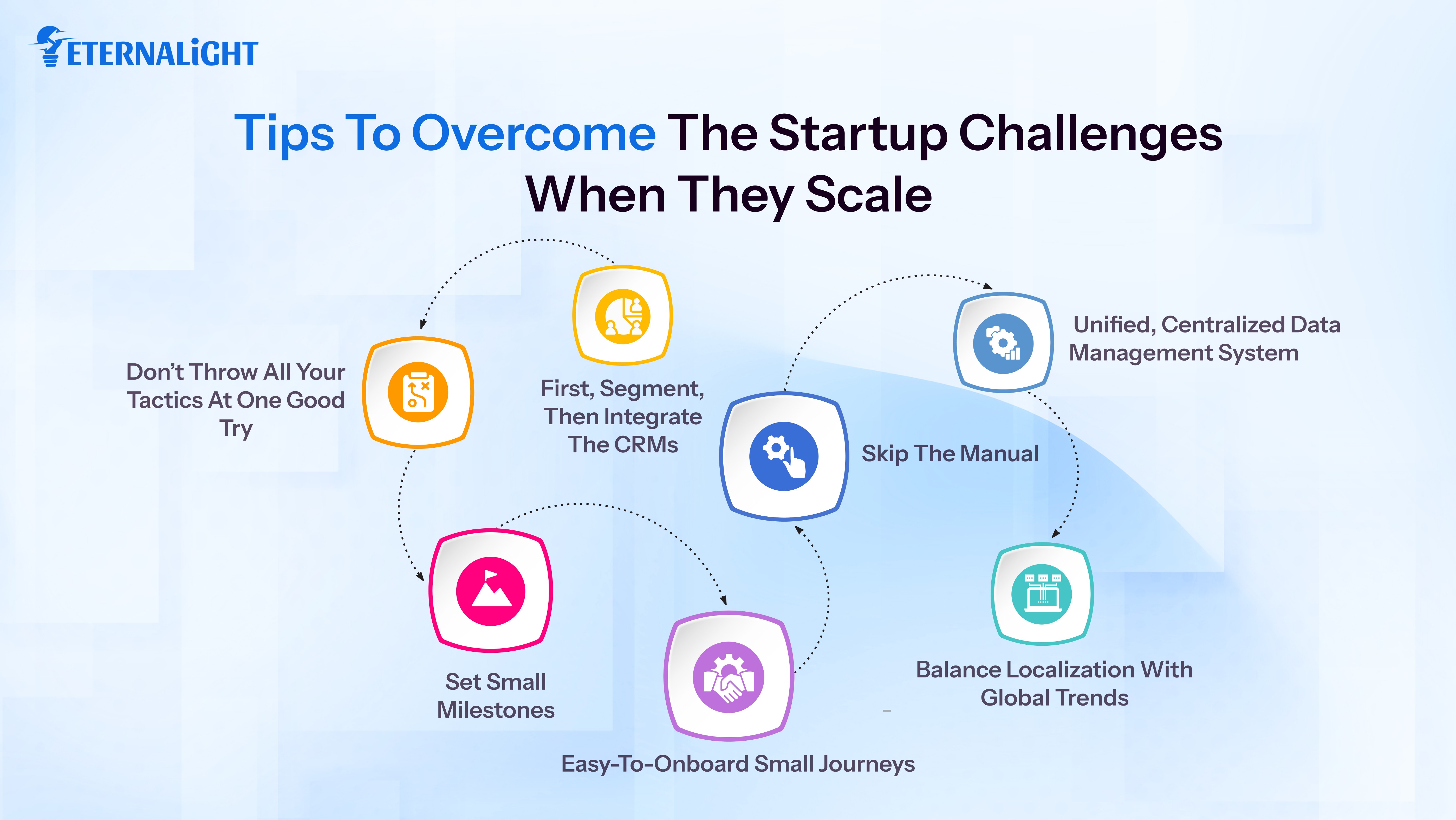
As India is emerging rapidly as a startup and unicorn hub, competitors are encroaching on every business. It becomes quite challenging to scale and sustain. To avoid the fall, startup founders should go slow but steady.
One milestone at a time with skilled team members performing day to day tasks and operations efficiently. Always prioritise the customer and their needs, along with ongoing trends, while continuously optimising processes to avoid hassle.
Don’t throw all your tactics at one good try, validate, and move further.
First, segment, then integrate the CRMs to deliver a personalized customer experience.
Set small milestones: start with the simple alteration, then deal with the hazardous. Sometimes small changes make a big difference.
A long, multi-step validation process frustrates customers; map them to easy-to-onboard small journeys.
Skip the manual and switch to automation to interact with customers with a pinch of personalization.
Develop a unified, centralized data management system to support informed decision-making.
Balance localization with global trends, understanding customer behaviour, interests, and timezone differences for sustainable success.
Kick out the cloud of uncertainty and plan well, implementing the right set of tools, resumes, and mindful investor support and mentorship. Structure a thorough plan that predicts all the best- and worst-case scenarios. You can even win with small teams, but bad planning, unstructured and unstreamlined processes, and aimless heading will only take you into a void that can’t be mended soon.
To achieve a structured, sustainable approach, take ownership, provide mentorship with an optimistic mindset, and you’ll navigate the risks.
Scaling a startup isn't like flying a plane. To do anything, we need to learn the skills until we fall or fail. We can’t learn; even if you have failed, you can still scale and shine. Be clear about why, what, and how, and everything will be manageable.
If you will only strategize or think about the solution when everything crashes, that’s not how the large business owners work. Be proactive and spontaneous towards the goal, overcoming the hurdles that come with your startup's scalability.
If you want to drive growth with a global presence, hire Eternalight Infotech for mobile app development services to build a responsive app and yield opportunities.

Ayushi Shrivastava
(Author)
Senior Content Writer
Contact us
Send us a message, and we'll promptly discuss your project with you.