Software Development
11
Mins
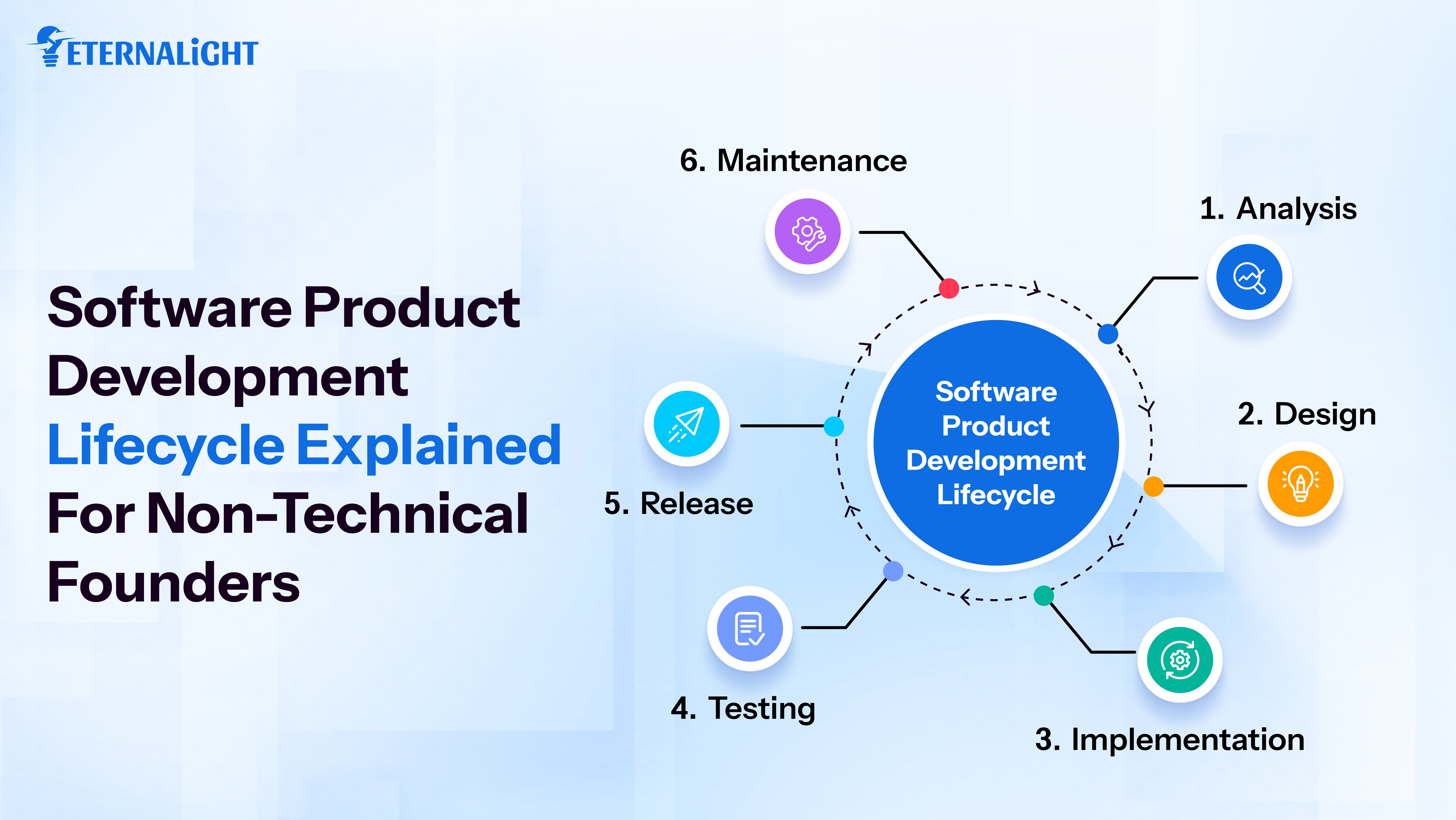
Software Product Development Lifecycle Explained for Non-Technical Founders
A complete guide for non-technical founders on every phase of the software product development lifecycle
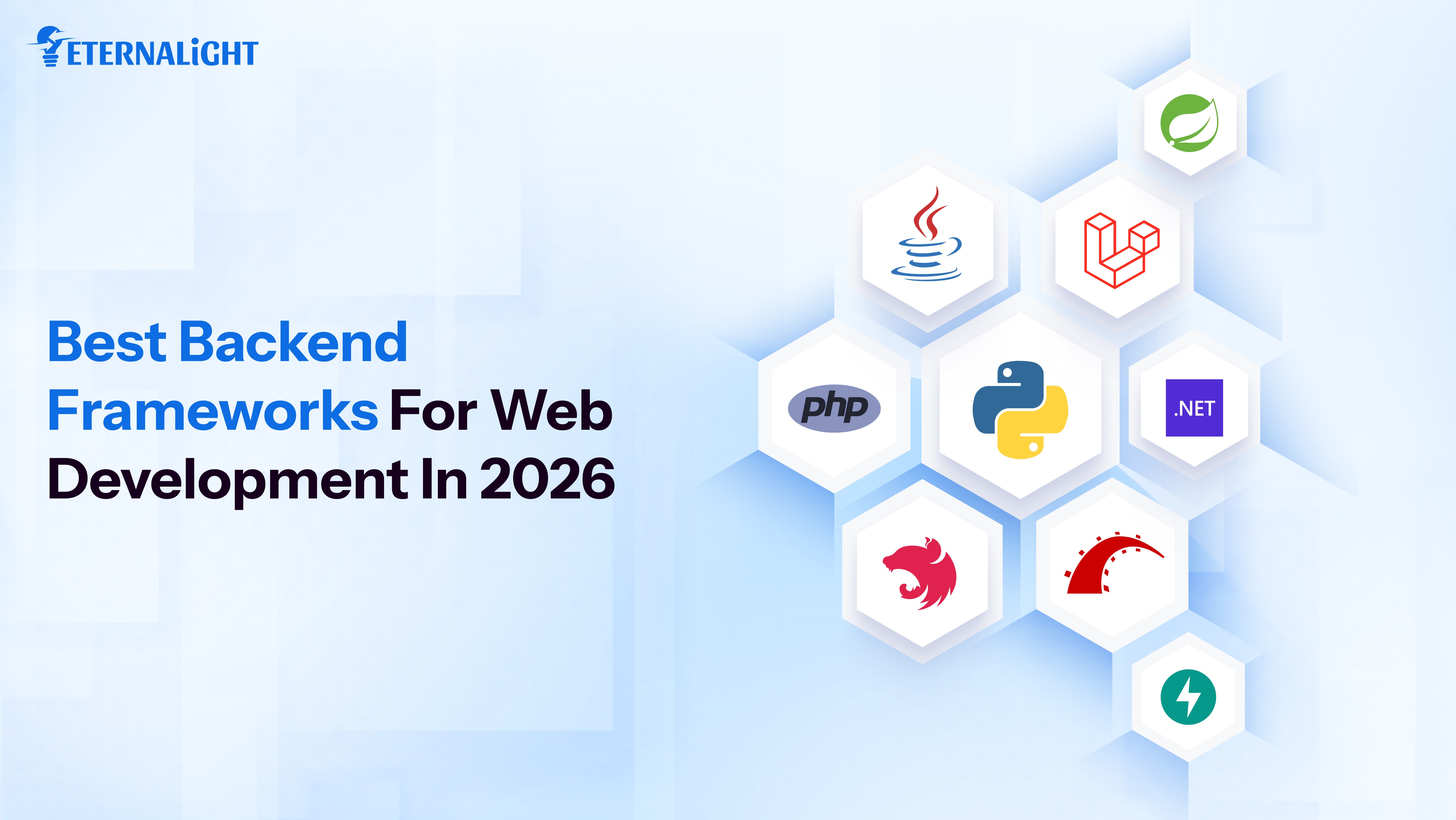
The world of web development is evolving faster than ever. As user expectations rise and applications become more complex, choosing the right backend technology is no longer just a technical decision - it’s a strategic one. Businesses today need systems that are fast, scalable, secure, and capable of handling real-time interactions without breaking down.
This is where backend frameworks play a crucial role. From managing databases to handling APIs and server-side logic, backend frameworks are the backbone of modern web applications.
In 2026, developers are leaning toward frameworks that offer speed, flexibility, and developer-friendly ecosystems. Whether you’re building a startup product, enterprise software, or a scalable SaaS platform, selecting the right backend framework can define your success.
In this blog, we’ll explore the best backend frameworks, compare their strengths, and help you decide which one fits your project needs.
A backend framework is a collection of tools, libraries, and conventions that simplify the development of server-side applications. It provides a structured way to build and manage the logic that powers a web application behind the scenes.
While users interact with the frontend, the backend handles everything else - data storage, authentication, business logic, APIs, and server communication.
Backend frameworks help developers:
Build scalable applications efficiently
Reduce repetitive coding tasks
Ensure better security practices
Maintain clean and organized code
Instead of writing everything from scratch, developers can use these frameworks to accelerate development while maintaining reliability and performance.
Choosing the right backend framework is not just about developer preference - it directly impacts your application’s performance, scalability, and long-term maintenance.
A poor choice can lead to slow performance, limited scalability, and increased development costs. On the other hand, the right framework ensures smooth performance, faster development cycles, and easier updates in the future.
Here’s why backend framework selection is critical :
Some frameworks are optimized for high-speed operations, making them ideal for real-time applications and heavy traffic systems.
As your user base grows, your backend must handle increased load without performance issues. Scalable frameworks make this transition seamless.
Frameworks with strong ecosystems and reusable components reduce development time significantly.
Backend frameworks often include built-in security features such as authentication, data validation, and protection against common vulnerabilities.
A strong developer community ensures regular updates, better documentation, and faster issue resolution.
In 2026, businesses are prioritizing frameworks that strike the right balance between performance, scalability, and developer experience.
Let’s explore the most popular backend frameworks that are dominating the web development landscape in 2026.
Node.js combined with Express.js remains one of the most widely used backend solutions. It is lightweight, fast, and ideal for building APIs and real-time applications.
Express.js is a minimal framework that sits on top of Node.js, providing essential tools to handle routing, middleware, and server-side logic.
Key Advantages:
High performance due to non-blocking architecture
Ideal for real-time apps like chat and streaming platforms
Massive ecosystem with npm packages
Easy to learn and implement
Best Use Cases:
Real-time applications
REST APIs
Microservices architecture
If you’re planning to build scalable and high-performance applications, investing in professional NodeJS development services can help ensure better architecture and faster deployment.
NestJS is a modern backend framework built on top of Node.js. It brings structure and scalability to Node-based applications by using TypeScript and a modular architecture.
Unlike Express, NestJS follows a more opinionated structure, making it ideal for large-scale applications.
Key Advantages:
Built with TypeScript for better code quality
Modular architecture for scalability
Supports microservices and enterprise applications
Clean and maintainable codebase
Best Use Cases:
Enterprise-grade applications
Scalable backend systems
Complex APIs
Spring Boot continues to be a powerful choice for enterprise-level applications. It simplifies Java development by reducing boilerplate code and offering built-in configurations.
It is widely trusted for building secure, scalable, and high-performance systems.
Key Advantages:
Strong security features
Highly scalable and reliable
Ideal for large enterprise systems
Extensive ecosystem and community support
Best Use Cases:
Banking and financial systems
Enterprise applications
Large-scale backend systems
Many enterprises rely on expert Java development services to fully leverage Spring Boot’s capabilities for building robust backend systems.
Golang has gained massive popularity due to its simplicity and high performance. It is designed for speed and efficiency, making it perfect for systems that require handling high traffic.
Go frameworks like Gin and Echo are widely used for backend development.
Key Advantages:
Extremely fast execution
Lightweight and efficient
Excellent for concurrent processing
Simple and clean syntax
Best Use Cases:
High-performance APIs
Cloud-based systems
Microservices
Businesses aiming for performance-critical applications often choose Golang development services to build fast and scalable backend infrastructures.
Django is a high-level Python framework known for its simplicity and rapid development capabilities. It follows the “batteries-included” approach, meaning it comes with everything needed to build a complete application.
Key Advantages:
Rapid development
Built-in admin panel
Strong security features
Clean and readable code
Best Use Cases:
Content-driven websites
MVP development
Data-driven applications
To accelerate development and reduce time-to-market, many companies prefer using reliable Python development services for Django-based applications.
Each backend framework has its own strengths, and choosing the right one depends on your project requirements.
Framework | Language | Performance | Scalability | Learning Curve | Best Use Case |
Node.js +Express.js | JavaScript | High | High | Easy | Real-time apps, APIs, Startups |
Node.js +Nest.js | TypeScript | HIgh | Very High | Moderate | Enterprise apps, scalable systems |
Spring Boot | Java | Very High | Very High | Difficult | Enterprise, banking, large systems |
Golang | Go | Extremely High | High | Moderate | High-performance APIs, Microservices |
Django | Python | Moderate | High | Easy | MVPs, Content-driven apps |
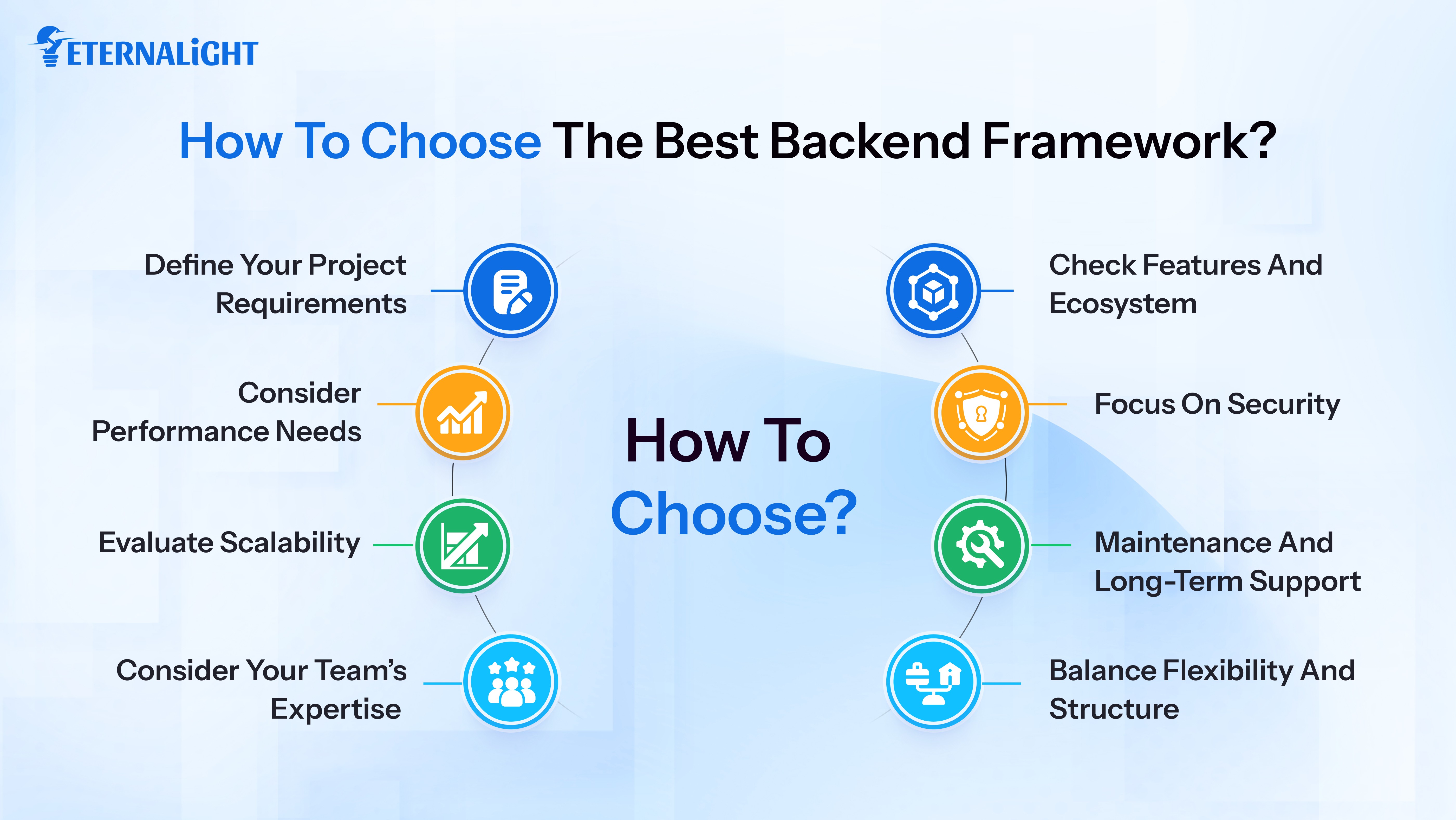
Choosing the right backend framework is not about picking the most popular option - it’s about selecting what actually fits your project needs. Every application is different, so your decision should be based on practical requirements rather than trends.
A well-chosen framework helps you build faster, scale easily, and avoid unnecessary technical issues in the future.
Start by clearly defining what you’re building. A real-time app, an eCommerce platform, or a content-based website will all have different backend needs.
When your requirements are clear, it becomes much easier to shortlist the right frameworks instead of getting confused by too many options.
Performance matters, especially if your application will handle high traffic or real-time interactions. In such cases, you need a framework that can process multiple requests efficiently.
Technologies like Node.js and Golang are often preferred for their speed and ability to handle concurrent users without slowing down.
Your application might start small, but it should be ready to grow. Choosing a framework that supports scalability ensures you won’t need to rebuild everything later.
Frameworks that support modular architecture or microservices make it easier to expand features and handle increasing user load.
The best framework is the one your team can work with efficiently. If developers are already familiar with a particular language or framework, development becomes faster and more reliable.
For example, a team skilled in JavaScript may find NodeJS-based frameworks easier to adopt compared to others.
Some frameworks provide built-in tools for authentication, routing, and database handling, while others require additional integrations.
A strong ecosystem with good documentation and community support can save time and make development smoother.
If your application deals with user data or financial information, security should be a priority. Many backend frameworks offer built-in protection against common threats.
Choosing a secure framework helps reduce risks and ensures better reliability for your users.
Development doesn’t stop after launch. Your application will need updates, improvements, and bug fixes over time.
That’s why it’s important to choose a framework that is actively maintained and supported by a strong developer community.
Some frameworks offer complete flexibility, while others follow a structured approach. Flexible frameworks are good for quick projects, but structured ones are better for large and complex systems.
The right balance depends on your project size and long-term goals.
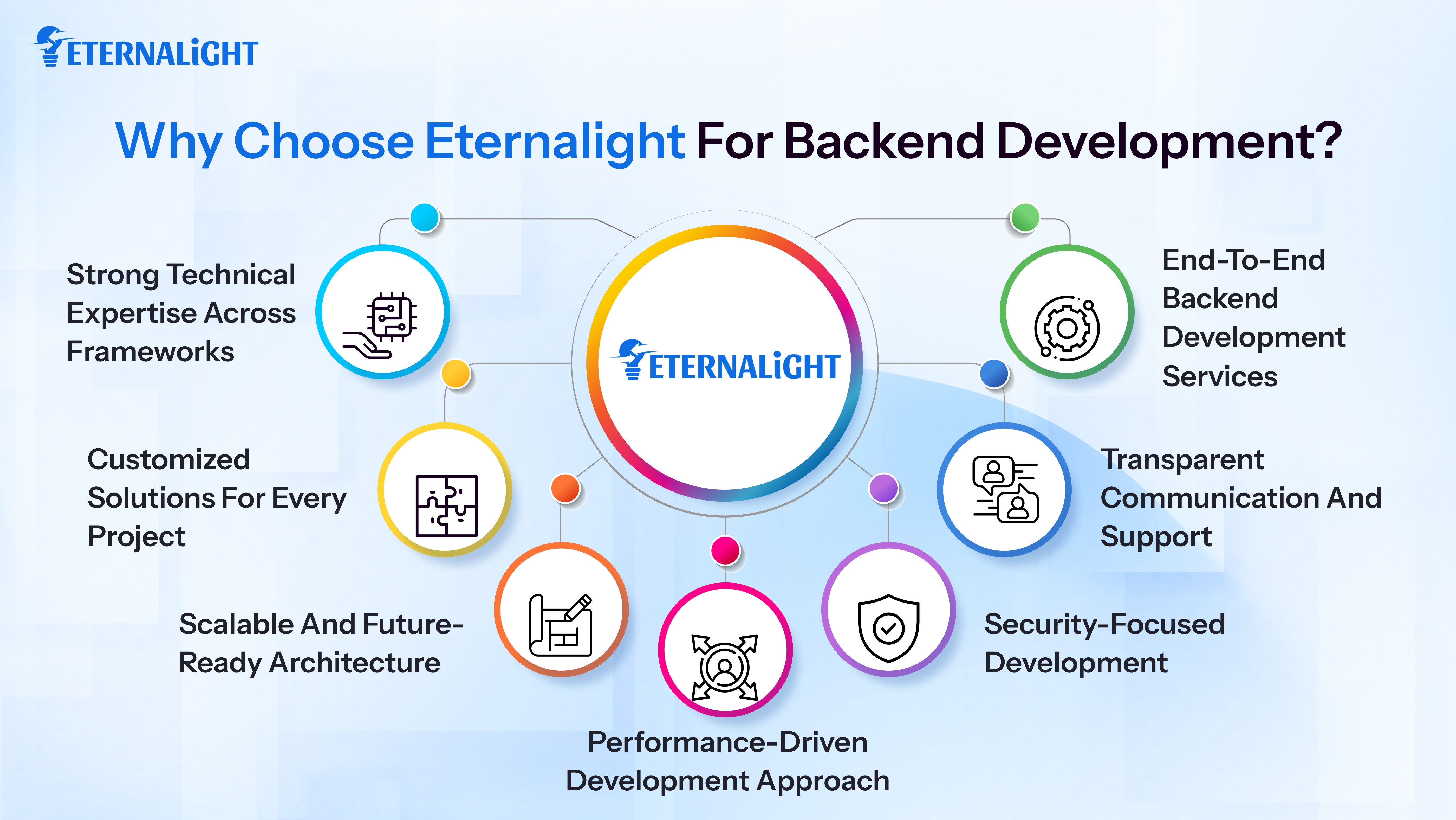
Selecting the right framework is only part of the equation. You also need the right development partner to bring your vision to life. A strong backend is not only about technology - it’s about how well it is designed, implemented, and maintained over time.
Eternalight focuses on building backend systems that are reliable, scalable, and aligned with real business goals.
Eternalight works with a wide range of modern backend technologies, including Node.js, Spring Boot, Django, and Golang. This allows the team to choose the most suitable framework based on your project rather than forcing a one-size-fits-all approach.
With hands-on experience across multiple domains, they ensure that the chosen technology delivers both performance and long-term value.
Every business has different requirements, and Eternalight understands that clearly. Instead of using generic solutions, the team focuses on building backend systems tailored to your specific needs.
Whether it’s a startup MVP or a complex enterprise application, the approach remains flexible and goal-oriented.
One of the key strengths of Eternalight is its focus on scalability. Applications are designed in a way that they can grow with your business without major rework.
By using modern architecture patterns such as modular design and microservices, they ensure that your backend remains stable even as user demand increases.
Speed and efficiency play a major role in user experience. Eternalight builds backend systems that are optimized for performance from the beginning.
From database structuring to API response time, every aspect is carefully planned to deliver fast and smooth functionality.
Security is treated as a core part of development, not an afterthought. Eternalight follows best practices to protect applications from common vulnerabilities and data breaches.
This is especially important for applications handling sensitive user data or financial assets.
Clear communication is essential for successful project delivery. Eternalight maintains transparency throughout the development process, keeping clients informed at every stage.
Even after deployment, ongoing support and maintenance ensure that your application continues to perform smoothly.
From initial planning and architecture design to development, testing, and deployment, Eternalight provides complete backend solutions under one roof.
If you’re looking to build a high-performance application, partnering with a team that offers reliable Node.js development services, robust Java development services, scalable Python development services, and efficient Golang development services can make a significant difference in your project’s success.
The backend framework you choose in 2026 will significantly impact your application’s performance, scalability, and future growth.
Frameworks like NodeJS, Spring Boot, Golang, and Django continue to dominate because they offer a balance of speed, flexibility, and reliability.
There is no universal “best” framework - only the one that best fits your project needs. By understanding your requirements and evaluating each option carefully, you can build a backend that supports long-term success.
Investing time in choosing the right backend framework today can save you significant effort, cost, and technical challenges in the future.

Kusum Sethiya
(Author)
Software Engineer
Frequently Asked Questions
Contact us
Send us a message, and we'll promptly discuss your project with you.