
Building software today requires a series of good decisions. A software project requires the right team, right tools and resources, right money and investment. Every stage from building to maintenance, matters and decides the fate of your project.
You can have the next brilliant idea, but if you're working with the wrong engineers or the wrong developers, your product will get nowhere, and you waste precious time and resources.
This is why more founders, CXOs, and product managers are choosing to build a dedicated development team.
Instead of scrambling to hire full time engineers or patching together a group of freelancers, they’re building a focused, committed team that works solely on their product, grows with it, and stays aligned with their long-term vision.
According to Deloitte's 2024 Global Outsourcing Survey, 59% of businesses outsource to cut costs, while 57% do it to stay focused on their core business. A dedicated development team helps you solve both problems at once. This guide walks you through how to build one from scratch and get it right the first time.
What Is a Dedicated Development Team?
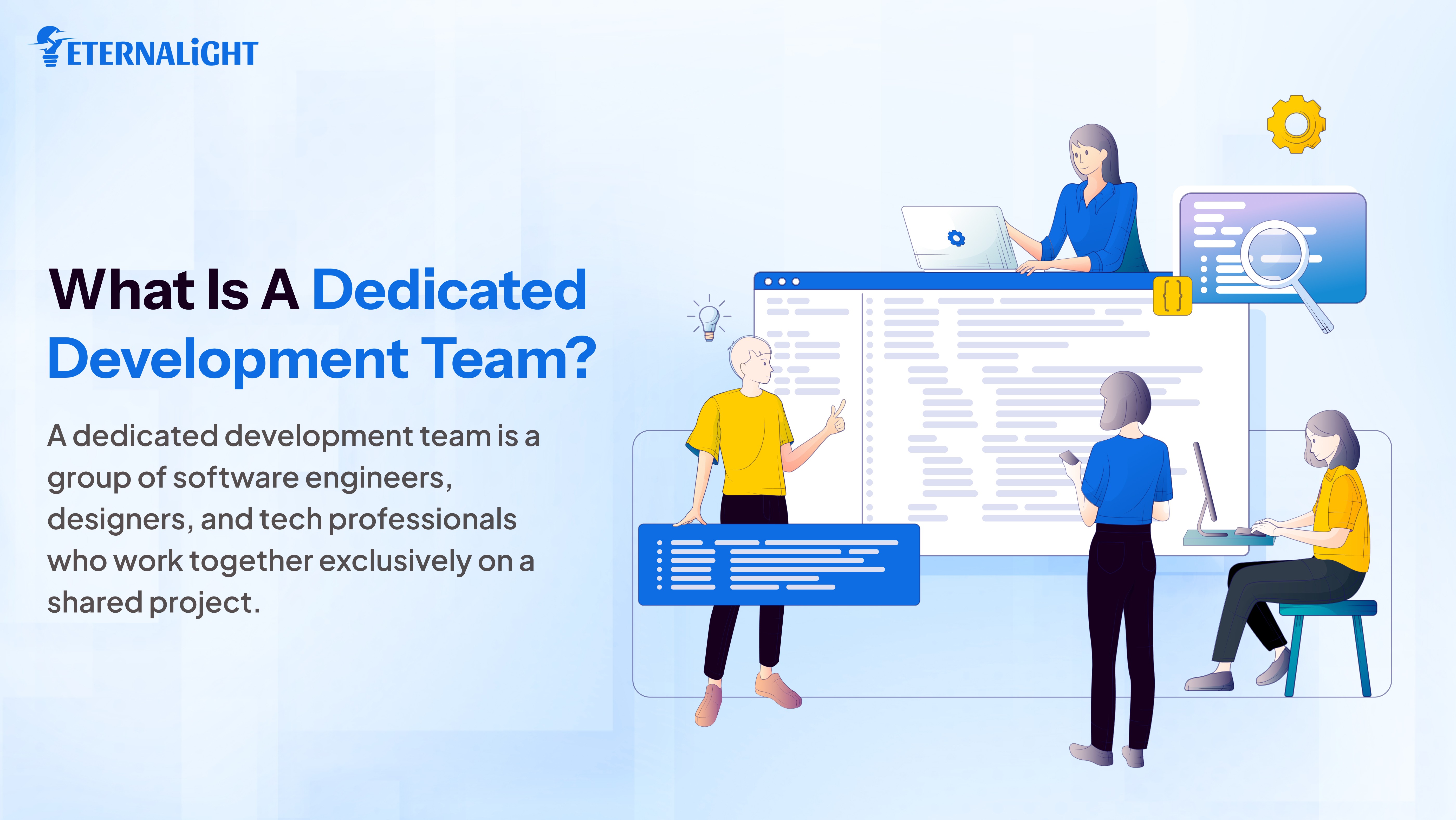
A dedicated development team is a group of software engineers, designers, and tech professionals who work together exclusively on a shared project. They’re not shared across multiple clients or brought in for a short stint. They work as your extended product team.
You control your roadmap and set the deadlines and priorities. The partner company just focuses on hiring, HR, infrastructure, and daily management.
This model is very different from a fixed price contract, where you pay for a definite output. With a dedicated team, you pay for the capacity and commitment of the people in your team. As your product grows, you can choose to scale your team or keep it the same. Having a dedicated development team also ensures that your team builds deep product knowledge over time, something a rotating group of freelancers never will. Software development companies can help you build the right team.
When Should You Opt for a Dedicated Development Team?
Not every project needs a model like this, but for the right situation, it is crucial to hire a dedicated development team.
Your project runs for six months or longer
Short-term projects benefit from fixed price contracts. Ideally, they do not need heavy maintenance or resources. Long-term projects need people who have a thorough knowledge of your codebase, your users, and the direction your project needs to take. A dedicated team builds that knowledge over time. You should absolutely hire a dedicated team if your project is long-term and requires good expertise.
You need to scale your engineering fast
The average tech hiring cycle in the US is supposed to be around 45 days per role in 2024, according to LinkedIn Talent Insights. That is way too long when you’re trying to hit a deadline early. A good, dedicated development team services partner can have engineers onboarded in two to three weeks and start work on the project. Scaling your team can happen even as the project begins; the important part is to get started.
Local talent is too expensive or too scarce
A lot of dedicated custom software development partners in Eastern Europe or South Asia are just as talented and charge way less per hour, depending on their seniority. If local talent is scarce, you can always outsource your team and find the best developers for your project at a reasonable price.
You want output without management overhead
Running a large in-house engineering team takes time and energy away from building your product. A dedicated team can give you the right output without needing you to manage recruitment, HR reviews, or performance cycles. You can always choose to add project managers and other types of required roles to your team to ensure the management overhead doesn’t become burdensome.
Key Roles in a Dedicated Development Team
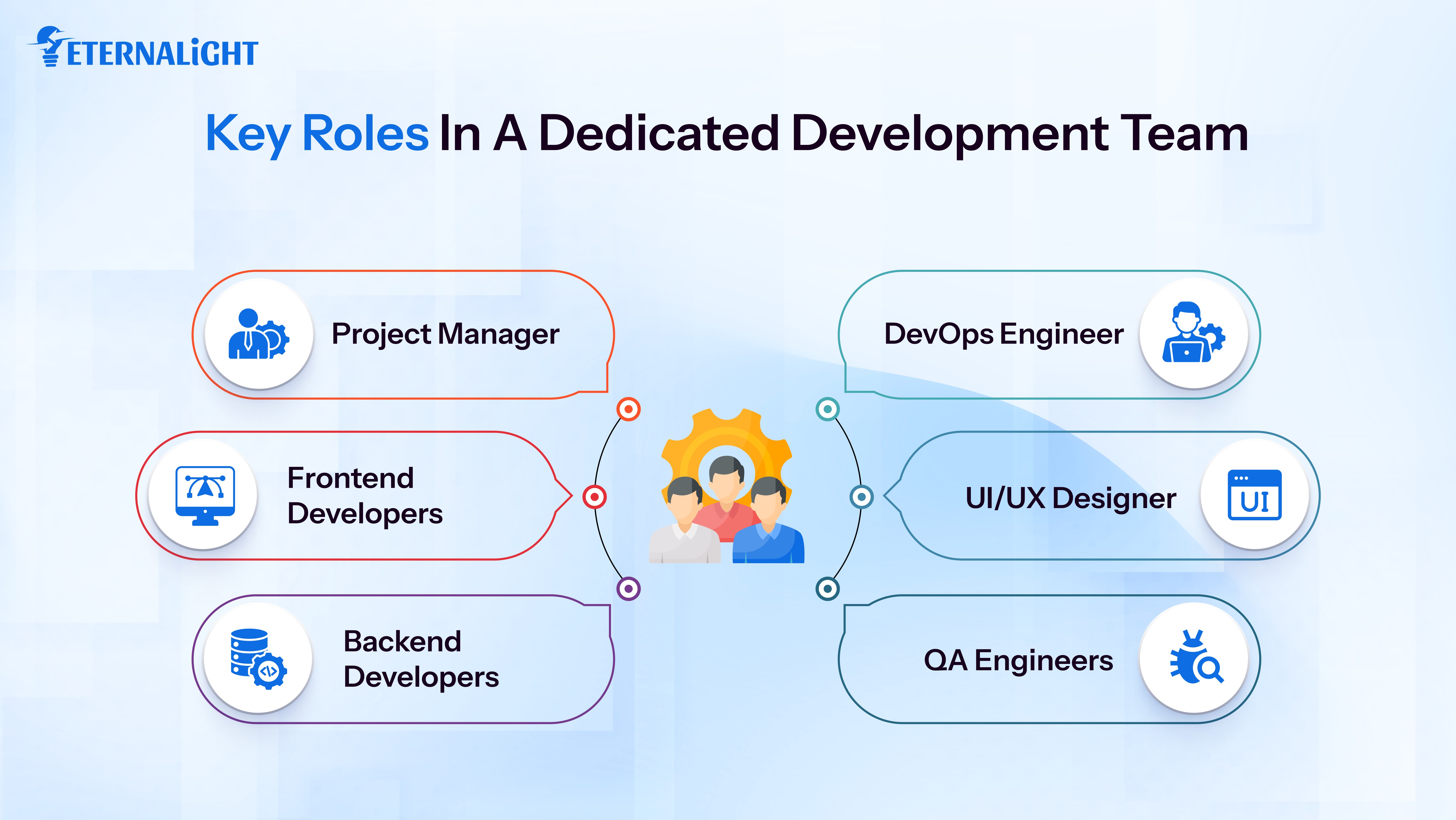
The exact composition of the roles and people you want in your team depends on your product. But most dedicated software development teams are built around these core roles.
Project Manager: A project manager is an essential part of your team. They coordinate timelines, track progress, and act as a bridge between your team and the engineers. This role keeps work moving forward and stops things from falling apart.
Frontend Developers: A frontend developer builds everything users interact with. Depending on your application stack, this means React, Vue, Angular, or native mobile development for iOS and Android. Frontend developers are an integral entity of your team.
Backend Developers: Backend developers handle the server-side. They focus on APIs, databases, authentication, and business logic. It’s usually the layers that people never get to see, but the glue that holds your application together.
QA Engineers: QA engineers will test every release before it reaches the users. A product without dedicated QA or a QA team is one bad release away from crashing and facing issues. A good QA engineer keeps your product moving and releases smoothly.
UI/UX Designer: The UI/UX designer is useful for shaping the product experience from a user's point of view. Poor design drives your users away and makes your product unusable. Having a UI/UX designer helps solve this problem by having a dedicated person ensure your app is easy to use for your users.
DevOps Engineer: The DevOps Engineer manages deployment pipelines, cloud infrastructure, and system reliability. You need this role before you start scaling.
Some teams also include data engineers, security specialists, or solutions architects, depending on the project’s complexity. Start with what you need and add roles as the product grows. The roles mentioned above are some of the commonly needed roles in a dedicated development team.
Step-by-Step Guide to Building a Dedicated Development Team
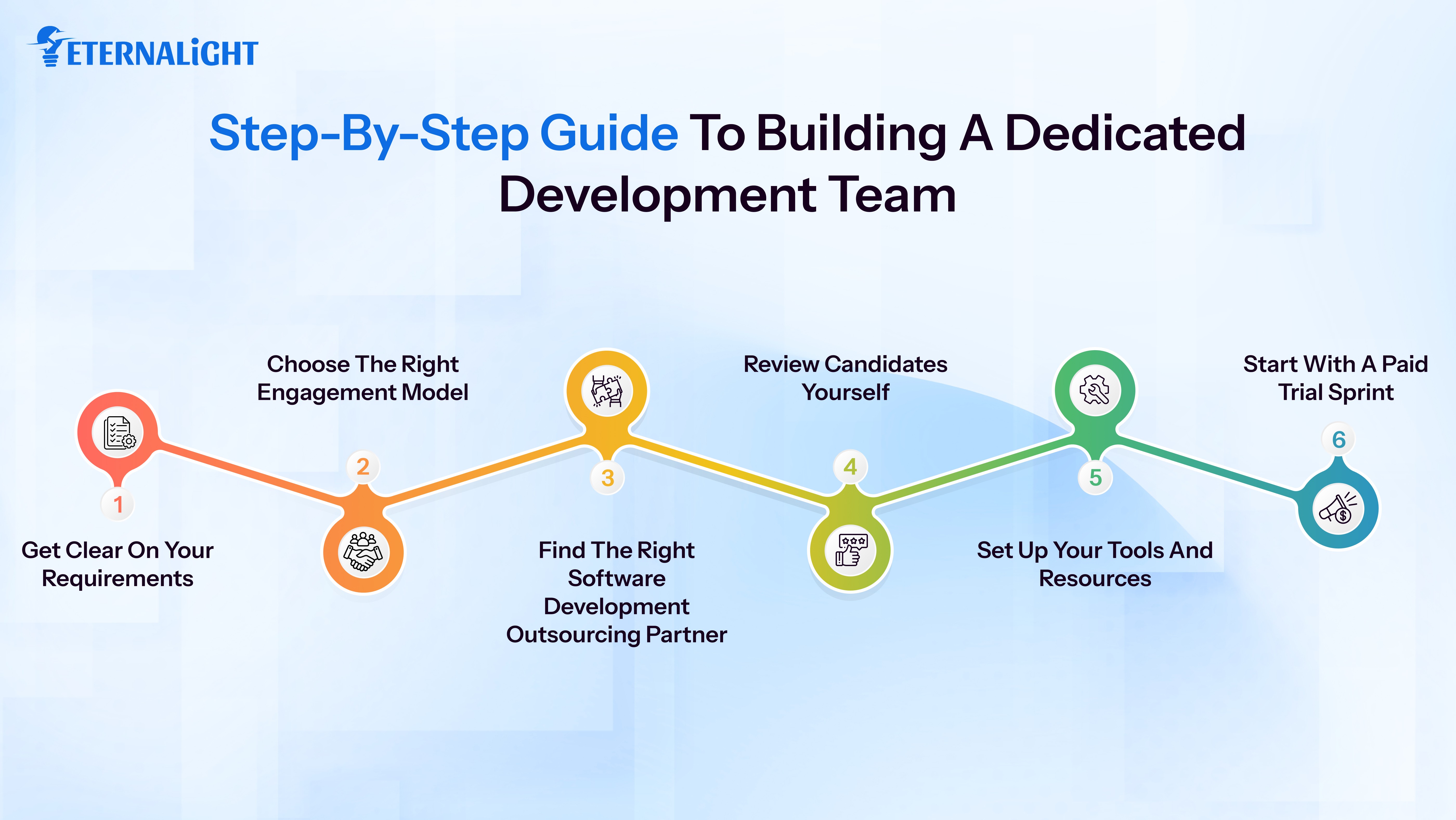
Step 1: Get clear on your requirements
Before you hire anyone, define what your requirements are in detail. What are you building? What's the tech stack going to be? What's the timeline and budget? Vague briefs produce wrong hires. When you spend time on research and write down exactly which roles you need, what seniority level they should be, it makes your hiring process easier. The clearer you are at this stage, the faster everything else moves.
Step 2: Choose the right engagement model
When you hire a dedicated development team, you have three main options to consider:
Fully managed means your partner handles everything. All you do is review the work and approve deliverables.
Staff augmentation means you add engineers directly to your existing team. You manage them alongside your in-house staff, with full visibility and control.
A hybrid approach combines both. You manage some functions, your partner manages the others. This works well when you have a partial in-house team already.
Most growing startups often start with staff augmentation and pivot to a fully managed model as the product grows. There's no single right answer. It depends on how much you want to manage day to day.
Step 3: Find the right software development outsourcing partner
Don't just search for dedicated development team services and pick the first result. Take a look at verified reviews and previous clients and see if the projects were satisfactory for them. Ask for case studies, especially ones that are specific to your industry. The right partner should be reliable and honest in their communications, especially regarding any shortcomings. If you want your project to be a success, you need the right partner.
We've also put together a detailed list of the best companies to outsource your product development if you want a good starting point.
Step 4: Review candidates yourself
Even when your partner filters and screens engineers before presenting them to you, run your own technical interview. A coding assessment, a problem-solving session, and a direct reference check. You're trusting these people with your product, the team you choose decides how well your product performs and whether it becomes successful or not.
Step 5: Set up your tools and resources
Agree on the tools and resources you need before work starts. Most teams usually run on Jira or Linear for project management. Slack for communication, and Notion or Confluence for documentation. Set daily standups, weekly and monthly reviews right from the beginning.
Step 6: Start with a paid trial sprint
Before committing to a long engagement, run a two week paid trial sprint. You'll get to see how the team communicates, how they handle feedback, and whether they can meet deadlines under real conditions. If something feels off, address it immediately. This way, you get to understand how well your team works and if you need any changes.
How to Choose the Right Dedicated Development Partner
Choosing a software development outsourcing partner is not just about price. The stakes are much higher than they seem. Keep the following points in mind when choosing the right dedicated development partner:
Portfolio relevance matters, even more than portfolio size. Have they built products similar to yours? If your project is fintech, your partner having a fintech background helps.
The hiring process tells you a lot about the quality of the team. Ask how they recruit engineers. The standards and requirements put into place during their hiring process help you identify the good partners.
Communication standards determine everything. Poor communication kills projects faster than anything else. Having a team where clear and reliable communication is prioritized is a win for your project itself.
Direct access to developers matters more than most people think. Direct access almost always leads to faster decisions and better outcomes.
IP and security practices should be clear from the start. How do they handle NDAs, data protection, and code ownership? Get everything in writing before sharing any proprietary information.
Cultural alignment is harder to measure but easy to sense. Teams that share similar work values and communication norms perform better together. A mutual respect and cooperation between team members is needed for things to run smoothly.
Conclusion
Building a dedicated development team is a great move. It takes some work to get started and to get it right. The right team gives you access to skilled engineers who care about your product, faster shipping cycles, and scaling your business the right way.
Start by defining your requirements clearly. Pick the engagement model that fits where you are right now. Find a partner with a track record you can verify and invest in setting up clear processes and communication expectations.
If you're ready to explore how a dedicated software development team could work for your project, reach out to our team. We've helped founders and enterprises build teams that deliver.

Gauri Pandey
(Author)
Technical Content Writer
Frequently Asked Questions
Related Blogs
Contact us
Send us a message, and we'll promptly discuss your project with you.

